Solar Power isn't Feasible!

Solar Power isn't Feasible!
This cartoon was on the cover of the book "SolarGas" by David Hoye. It echoes the Sharp Solar slogan "Last time I checked nobody owned the sun!"

Wednesday, February 18, 2009

Solar Powered Music Festivals: Solar CITIES calls all musicians to action!


From left to right: T.H. Culhane, Peter Padua, and Dr. Stephen Cass of the solar powered band "SolarPlexus" perform at the Roseville Electric Green Earth Day Festival in 2003


Coming off of the India Youth Climate Network (IYCN) Climate Solutions Tour performing with the awesome New York solar powered musical group "Solar Punch" led by James Dean Conklin and Alan Bigelow (with Andy Matina and Frank Marino), Musical Goodwill Ambassador Paul Lincoln (Broadway musical theater performer, lawyer and former organizer of Harvard Krokodiloe Alumni international tours) T.H. Culhane and Solar CITIES are working hard to organize as many solar powered musicians around the world as possible to use the momentum and media attention that the amazing IYCN has created to create an inflorescence of Renewable Energy powered performance events around the world that can help stop climate change in its tracks!

Calling all Bards, Calling all Bards: beat your swords into ploughshares, beat your brown electrons into green electrons, get with the beat, the beat, the beat!


Our goal is ambitious only on a political level. Technically it is pure "plug and play", easy as 1, 2, 3. We want to take the novelty out of solar powered performances.

Isn't it crazy to think that at a time when we have solar powered robots crawling over Mars, and solar powered satellites directing our global communications here on Earth we still think it is unusual to power an electric guitar (arguably a MUCH less sophisticated machine) with the same technology?

This has got to stop!

We want to make the idea of a solar powered or renewable energy powered band so mundane, so ho-hum, so just plain ordinary that it fails to generate any more stares or media attention.

After all, what is the big deal? Solar panels, bicycle generators, wind generators, fuel cells, micro-hydro generators and biofuel or biogas powered electric generators simply make electricity. As far as electrons go it is effectively the same electricity coursing through the wires and sockets that otherwise would be produced by filthy "clean-coal" plants, deadly "safer nuclear plants" and global warming inducing oil and gas plants.

Nobody makes a big deal when a rock band plugs their amps and lights and electric guitars into a conventional power-plant fed socket. So why the amazement when we plug into a solar powered plug? We must demystify the renewable-energy-fed sockets.

At Solar CITIES our goal is to make safe renewable energy yawningly "conventional" and thus make dirty deadly fossil and nuclear energy the "unconventional" technologies. Let the press and the public marvel every time somebody plugs into the "dirty electron pool". When the rest of us plug in to the sun and the wind and the water and the biomass fueled "clean electron pool" we want to see people simply shrug and say "so what else is new? That's how all of us (except really backwards people who don't know better or are enslaved by petro-nuke-dictators) get our energy. "

Below, I've reproduced an article written by Green Energy Utility Consultant Frank DiMassa back in 2003. At that time he brought to the Roseville Electric Utility Green Earth Day Festival in Northern California a San Diego based solar powered band I was in, called "Solar Plexus", that had been performing in various locations since 1998, using BP30 Solarex Portable solar panels for small gigs and setting up solar powered stages with parellel connected 100 Watt Polycrystalline modules for larger gigs. 10 years ago we solar musicians were novelties at fringe earthy-crunchy California eco-arts festivals, like the wonderful "Eco-Maya" festival in L.A. or at the Solar Living Center "SolFests" at Real Goods in Hopland. 6 years ago we began to be sought out for corporate sponsored events highlighting green energy. 5 years ago we were building and performing on solar powered stages in Egypt. Today we should be as common as clovers on a summer lawn.

Photo: Having constructed a solar and wind powered stage amidst the olive plantations of Wadi Foods outside of Cairo, Egypt, the Wadi Environmental Science Center gets ready for a rocking weekend of environmental workshops and demonstrations. It was the connections made at such concerts and environmental festivals that led to the current Solar CITIES work in the poor sections of Cairo. As Paul Lincoln stated to the press in India "once music opens the doors for dialog and fellowship, the serious work of development can occur. But music, culture and the arts creates the bridge for technology and idea transfer to take place. That's why we start with solar powered festivals."

The U.S. State Department funded Musical Goodwill Ambassador Band "Circus Guy", led by Michael Culhane, performs during its "Solar Circus" tour of the Middle East. Left to right: Frank Marino (drums), James Dean Conklin (guitar), Greg Ross (bass), Ted Stern (violin), Anais Mitchell (vocals, percussion), T.H. Culhane (vocals, guitar) and Mike Culhane (vocals, guitar) performing for children on the Solar and Wind Powered Stage at the Wadi Environmental Science Center, Egypt, 2004).

The technology is Homer Simpson easy. You just prop up a couple of solar panels facing the sun, plug them into a charge controller, plug the controller into some batteries, the battery into a DC to AC inverter and the digital amps (no tube amps please!) and LED lights (no incandescents please!) into a power strip plugged into the inverter. Then you rock the house. Doh!

So come on fellow musicians and events coordinators, what do you say? Before "2010 A Space Odessy" becomes a Gregorian calendar reality, can we all get together and stop adding to climate change and pollution, inflationary economics and international conflict? We will be happy to show you how.

Let's make solar powered music boringly commonplace, shall we?


Freedom of Choice and the Power to Choose
Written by Frank Vincent Di Massa, April 2003

Now in its 33rd year, Earth Day has become a vehicle for environmental organizations and retailers of “environmentally sustainable” products and services to reach out to the public at large. This year I was in Roseville, a boomtown just north of Sacramento, working a booth at the Green Energy Earth Day Celebration sponsored by Roseville Electric, a municipal, or City-owned, electric utility.

Roseville Electric (RE) was promoting their progressive Green Energy program that gives its customers freedom of choice, the choice to say “I want the power purchased on my behalf by the utility to come from clean renewable energy sources like the wind, sunlight, the Earth’s heat and the power of moving water.” Although participating customers pay a small premium for Green Energy, the electric utility matches their contributions dollar for dollar to build new renewables in town, like the 18.2 kW solar electric system gracing the top of Roseville’s new state-of-the-art Fire Station.

Also participating at the Earth Day fair were the City of Roseville’s Water Conservation and Resource Recovery folks, representatives from the local Shade Tree program, the Northern California Electric Vehicle Users Group, Social Justice Advocates of Placer County and others. The California Conservation Corps provided labor for set up and tear down of the booths.

Perhaps the highlight of the event was the solar-powered band, "SolarPlexus" (see photograph).

A local photovoltaics (PV) provider supplied a solar electric system to run the band’s amplifiers and equipment. The set-up was brilliant – four pole-mounted Sharp 165 Watt PV semi-crystalline modules glistening magenta and blue, a new Outback inverter and charge-controller and four Trojan 6-volt batteries. Of course, the system worked flawlessly, proving the point to anyone paying attention that solar energy works! (Most people still don’t understand that it does). I enjoyed talking to people about the solar energy system, helping them delight in the idea of clean electricity silently generated by modules right above their heads using an inexhaustible (for all practical purposes) power source 93 million miles away.

Like the sun that day, the SolarPlexes band was brilliant. Lead singer and bass player T.H. Culhane re-thought the lyrics to traditional songs and sang about sunshine, solar power, clean air and the great things that the City of Roseville is doing (Roseville is located in Placer County, the fastest growing county in California).

I have been providing technical and “education and outreach” support to Roseville Electric and others for the past four years and I lined up the gig for the band whose members are friends and associates of mine. Solar Band Leader/Guitarist and Film-maker Peter Padua has been playing Solar Energy Powered gigs with Culhane for several years now and even runs part of his house and production studio on PV. Culhane has created a completely solar powered urban apartment at the Los Angeles Eco-Village. Drummer/Vocalist Dr. Stephen Cass, who is an expert on Middle Eastern politics and Iraq-U.S. relations, has just come off of a musical goodwill ambassador tour of Syria (called by Bush part of "the axis of evil") with Culhane, where, they have learned that most people love Americans but hate our policies, blaming our addiction to oil for the underlying causes of the wars in the Middle East. Solar Powered concerts help prove that we can do without oil and still have a wonderful fun time! Thus, Solar Plexus is all about raising that awareness.

To help raise awareness, T.H. Culhane and I are currently producing an educational video about Renewable Energy for RE that includes animated Benjamin Franklin and Joe Roseville cartoon characters. Shooting the video has been a joy. On the same day we filmed at a century old small hydro plant in the Sierra foothills, and at ultra-modern wind turbines in Solano County: dozens of massive yet sleek wind machines, with huge white blades turning slowly in rhythm with the wind and with each other. Wind is the fastest growing renewable energy source worldwide and turbine manufacturers continue to spawn larger, more efficient turbines that coax increasing amounts of power from the wind.

All electric utilities should be as socially responsible as Roseville Electric, especially California’s mammoth investor-owned utilities, PG&E and Southern California Edison. Small city-owned electric utilities like Healdsburg Electric can lead the way too and my company, Utility Consulting (www.ucitd.com), can help them get there. In addition to consulting in the energy and environmental field for many years, I just finished building a solar thermal pool shed in my backyard to heat the Jacuzzi and pool and have installed a 2.5 kW solar electric system on the roof of my home. There is no substitute for hands-on experience. And as a pianist, I can't wait to get my hands on my solar powered keyboard and get out into the sun with the band and play!

Sunday, February 15, 2009

And now, for our next act...


What Darwin didn't know (couldn't know in his era!) but would probably immediately find a theoretical explanation for if he were alive today (Klaatu apparently figured it out in "The Day the Earth Stood Still") is that many of us large-brained naked apes seem "pre-adapted" for the fight against climate change and mass extinction events, and we actually feel energized, hopeful and ''in our element'' during this time of global crisis. We have been tinkering with ideas and technologies and solutions to environmental degradation for decades, long before it became "in-vogue", waiting for our moment in the sun, when 'natural selection' finally would favor sustainable development initiatives and renewable energy techniques and other "evolutionarily stable strategies" (ESS) over the maladaptive conceits of the short-sighted reproducers of transient, dangerous and inefficient forms of behavioral ecology.

It is the classic Darwinian struggle of "K-selection" behaviors versus "r-selection" behaviors. In the long run, game theory predicts, individuals and societies in harmony with the resource renewal rates of Nature will persist, while those who continue to exploit natural capital without replenishment will vanish. Now that we are near the breaking point, we are seeing the emergence of a host of hidden solutions, 'hopeful monsters' that have been waiting in the wings for centuries, hybridized with new serendipitous technological mutations. The beauty, of course, is that this revolution in Evolution is non-competitive on a personal level: there need be no losers because all of us can change our behaviors. Nobody and no gene pool needs to go extinct. Natural selection, when acting on our large brained species, really favors human behaviors, not individuals or pedigrees. This is why we reject eugenics and push for equal opportunity and education, liberty and justice for all.

Artificial selection, on the other hand, is often about focusing on the individual, celebrating the achievements of one or another temporary package of the genetic and cultural mux. Given that this is the way of the Primate world, and I am as anthropoid ape as the next fellow, I have to admit that being selected by a major international media service -- my very favorite media service for the past 4 decades -- fills me with great pride and joy. But I am also aware, on an existential level, of the immense responsibility that goes along with being among the 10 other human beings now joyfully being singled out in magazines, radio, television, web and newspaper reports all over the world for our leadership in projects that were forged collectively with our many colleagues and fellow stakeholders -- on a planet of more than 6.5 Billion Homo sapiens. What Darwin did know all too well (as an intensely religious and moral scientist) was that the success of any individual in the lottery of life depends as much on the behavior of the collection of con-specifics surrounding and supporting him or her, and the lucky environments they happened to be born in. We National Geographic Awardees owe a great debt of gratitude, to our families and friends and colleagues and all the people (and non-humans and spiritual forces) who helped us increase our "fitness" and flourish, not just helping us to survive, but to succeed with our stubborn beliefs that 'being of service' to "God and Country" and Creation was the most important job description one could wish for. How fun to now get recognition and thus "fit in" to our changing social environment with ideas that once seemed "at the margin."

Being chosen to be one of National Geographic's Emerging Explorer's for 2009 is one of the greatest honors I could imagine. I have been reading National Geographic and marvelling at the exploits of the people featured in its pages since early childhood, when, as a schoolboy living near (and infatuated with) Chicago's Museum of Science and Industry, I inherited my father's venerable collection of American Nat Geo explorers magazines dating back to the 1940s. On my first international trip (to my ancestral Middle East) at the age of eight, I discovered my mother's father's collection of International Nat Geo magazines in the family home in Baghdad. It seemed that wherever we went in the world after that, National Geographic was there with us, opening up new worlds to discover. The joy of discovering through National Geographic was reinforced in our family every Christmas when we would sit down to watch Frank Capra's masterpiece "It's A Wonderful Life" wherein young George Bailey shows his future wife a copy of the magazine that lined all our bookshelves:

George: "Say, brainless,don't you know where coconuts come from?
Look it here...from Tahiti, Fiji Islands, the Coral Sea!"
Mary: "A new magazine! I never saw it before."
George: "Of course you never.Only us explorers can get it.
I've been nominated for membership in the National Geographic Society."

And now, nearly 4 decades later, when our family opened the February 2009 issue of this venerated magazine, we found that "Thomas Taha Rassam Culhane" (the collection of genes and memes that I call "me") has not only been nominated for membership in the Society, but has been honored as one of National Geographic's Emerging Explorers. It is one of the most exciting professional achievements I could have dreamed of!

This great honor, however, now implies even greater responsibility. The 2009 award is for our past Solar CITIES work innovating, building and installing DIY solar hot water systems in the poorest communities of Cairo, Egypt, and launching a U.S. AID funded "Green Collar Jobs Training Program" among the Coptic Christian and Islamic communities that surround the "macabre" city of the dead, bringing new life to slums and informal communities that face grave environmental challenges.

But as they say in Hollywood, "you are only as good as your NEXT movie". With the climate changing in dangerous ways, and prices rising and economies collapsing one has no laurels to rest on. The question is always and ever, "what now?"

We have a chance to use the publicity and goodwill generated by National Geographic (and the previous National Public Radio pieces on our work) to make even greater strides toward eradicating the scourge of poverty and environmental degradation. How will we use it?

And now for something completely different...

I've just returned (or, let us say "emerged", emerging explorer that I am), from a three week trip of discovery to the Indian Sub-continent, traveling from Pune to Mumbai to Ahmedabad to Udaipur to Jaipur to Delhi (and many places in-between) with the India Youth Climate Network's (IYCN) "Climate Solutions Road Tour". We traveled half the country in a caravan of solar/electric and Jatropha fueled bio-diesel vehicles, searching for functioning pieces of the anti-poverty/anti-climate-change puzzle that we can assemble and weave together into a safety net that can preserve and protect human and non-human diversity and dignity (see Thomas L. Friedman's piece on the tour here!). What we found in Pune, at the Appropriate Rural Technology Institute (ARTI), was the missing piece for our work in Cairo, a solution so simple and yet so radical that we are still giddy from the staggering implications of it all.

Kitchen-waste powered kitchens: The urban biogas solution

If you spent much of your life growing up in New York, as I did, you might remember the despair the city fell into when the garbage collectors went on strike. Black plastic bags teeming with flies and rats piled up along the streets, emitting a powerful nauseating stench. The same tragedy recently spoiled the beauty of many of Italy's cities (particularly Naples). Of course, in Cairo and the cities of other mis-managed economies, the spectacle of mountains of smelly garbage -- most of it kitchen waste from typically irresponsible urbanites who in all countries and cultures seem never to have learned to compost or bothered to engage in source separation -- is an everywhere-all-the-time-thing.

Meanwhile, in Germany, where Solar CITIES has its home office, and where we do compost all our organic waste (so we can keep our garbage around for weeks or months at a time without it creating any nuisance at all), Russia has threatened in recent months to cut our (Un-)Natural Gas supply, prompting a fear-based decision by policy makers to start reviving the dangerous and irresponsible (particularly to future generations, like our baby son) nuclear energy (read "let's use deadly radioactive materials to boil water") program.


What we learned in India is that in one fell swoop we can solve all these problems, simply by turning all household, yard and food-market organic wastes into clean-burning biogas.

During the two days I spent with Ashden Award winner Dr. Anand Karve and his daughter, bio-gasification expert Dr. Pria Karve, visiting homes where families cooked meals for us on stoves powered by yesterday's garbage, I discovered how easy it was to build a backyard, roof or porch mounted biodigestor and eliminate all the smell and disease potential of garbage while creating an endless supply of truly natural gas.

The secret is to think like a sacred cow

Dr. Karve's great insight was that the methanogenic bacteria that produce natural gas eat food too, and are happy with our left-overs. All over the planet people have been using cow dung and other animal manures from which they have tried to squeeze a few kilocalories of useful energy using methanogenesis. It works, but the input to output ratio is low -- a mere 100 kg of methane (CH4) per tonne of feedstock. The low efficiency of the system demands that about 40 kg of cattle dung (from 6 to 8 head of cattle) must be made into a slurry and introduced in the digestor every day, and must ferment for 40 days and nights (enough time to flood Mesopotamia) before useful gas is produced. The space, animal dung and labor demands, to say nothing of dealing with 80 to 100 liters of effluent every day, make the system a chore for rural people and an impossibility for urban dwellers.
But Dr. Karve started thinking like a sacred cow -- reasoning that the bacteria in the cow's stomachs don't eat animal dung -- they make dung and biogas (the methane that cows burp and fart into the atmosphere, allegedly adding to the greenhouse effect) while eating food that has been chewed and partially digested by the cow. The solution, of course, was to simply "recreate a cow's stomach" in a plastic barrel, introduce the bacteria and some spoiled food (kitchen and market waste, flour swept from the bakery floor, rotten inedible fruits from garden or street trees, non-edible oilseeds, etc.) and let the bacteria do their magic. At the end of the day, every tonne of feedstock produces 250 kg of methane (dry weight basis), and it does so in a mere 24 hours, effectively increasing the efficiency of the system 400 times! A family of 4 or 5 (such as Paul Lincoln and I visited) merely has to put in 1 kg of feedstock in the morning and another kg in the evening to get enough biogas to cook two full meals a day. The feedstock (mostly plate scrapings and kitchen scraps) is simply mixed with water in a blender and poured into the digestor feed pipe. Only 10 liters of effluent slurry is produced each day, used to irrigate rooftop and side gardens and flower boxes. Getting the gas, which is piped into the kitchen from the digestor with a common garden hose, is as easy as turning on the stove.

Having seen this system in operation in two different household's in different parts of the city, and eaten meals generated by this clean, inexpensive and renewable resource, I'm now poised to transfer the technology to our colleagues' homes in inner-city Cairo, arriving in Egypt next week.

And so, on to our next act...

Many of our stakeholders in the city have no access to direct sunlight because of urban density and shading, but all have access to organic garbage. As a complement to our solar hot water systems, Indian designed urban biogas digestor construction will become Solar CITIES second "green-collar jobs training program", hopefully sparking a whole new renewable energy industry that can bring inflation relief, dignity, health, safety and business opportunities to the urban poor.

Hopefully the next time our work makes it into the media, our fellow explorers on planet earth will see not just the beginning of a million solar roofs in old Cairo, but an inflorescence of Indian household bio-digestors that will help keep the city's streets and air clean while helping fight climate change. I know my Iraqi grandfather, now in heaven, and always proud of the innovations of the Middle Eastern Civilization he was heir to, will smile when he picks up a future celestial edition of National Geographic and learns that his grandson followed up our first act of introducing solar energy systems into the indigent areas of the Arab World by transferring to the Judeo-Christo-Islamic world, a great technology from Hindu India, that equally great civilization to the East. We know he admired India, which he read all about in his National Geographic magazines in Baghdad, because he named his daughter, my mother, "Hind".

To my grandfather, Noel Rassam, of Mosul, Iraq, I dedicate act two of the Solar CITIES Emerging Explorer mission.

Sunday, December 28, 2008

Solar Powered Public Baths in Historic Cairo


Solar Powered Public Baths and

Early Co-Generation in Cairo: 
Using otherwise "waste(d) heat" to heat the famous Arabian public baths
 
(Excerpted from Chapter 3 of T.H. Culhane's Thesis: "Getting into Hot Water")


 ”What watery glory it all was: To be steamed, scrubbed, rinsed and scented according to medieval Cairos public-bathhouse ritual was to be cleansed like nowhere else on earth...There are still in Cairo half a dozen traditional hammams  that have been busy washing bodies for centuries...”
Feeney, J.,The Joys of the Bath, Aramco World 2004, online at http://www.saudiaramcoworld.com/issue/200402/the.joys.of.the.bath.htm.


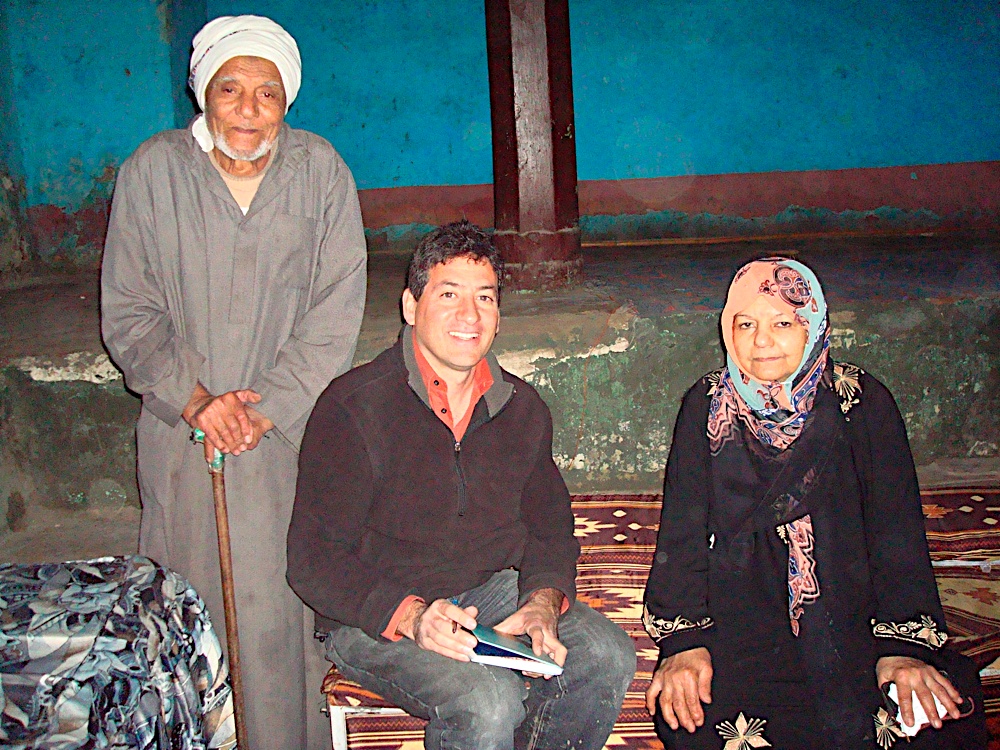
Solar CITIES co-founder T.H. Culhane sits discusses solar hot water options with Umm Omar and her brother, who are from the original Islamic Wahi (Oases) groups who recycled waste paper for co-generation of cooking heat and public bath heating before turning the trade over to the Coptic Zabaleen. Umm Omar owns one of the last surviving public baths in historic Cairo and would like to revive it as an environmentally friendly health spa for the community if she can secure funding for a large enough solar hot water system.  Solar CITIES provided her with a small 200 liter demonstration system, but it needs to be ten times that size to make the business viable.


It is not that there is no tradition of creating designs in the built environment of Cairo to maximize the efficiency of material values to create human use values. In the particular case of hot water demand there is a time honored tradition, going back a century, in which the trash recycling community gathered  waste paper from all over the city to distribute as fuel. Since Cairo, like many arid land cities, lacks  wood resources, the recycling of wood products predates the urban recycling revolutions appearing in the west.

The trash recyclers would sort and deliver waste paper and wood scraps to the Fava bean
merchants, who built their ovens next to the public baths.


As legendary educational reformer and environmental advocate, Dr. Laila Iskander, who has devoted more than a quarter century to championing the rights of Cairo's Zabaleen told UCLA's visiting Urban Planning group in 2006,  "Recycling has a long history in Egypt.  Nothing went to waste. The ubiquitous Egyptian food, ful (made of fava beans) requires low heat, but traditionally there was no firewood and no oil, so cooks burned wastepaper for low grade heat, then used the waste heat to heat the water for public baths. Profit from recycling drove the market. "


The bean merchants and the public bath owners and the trash recyclers developed a unique symbiosis for co-generation.  They  built extensive networks of copper pipes and heat exchangers that carried the waste heat from the daily bean cooking into elevated 2000 liter cisterns that supplied the baths with hot water.

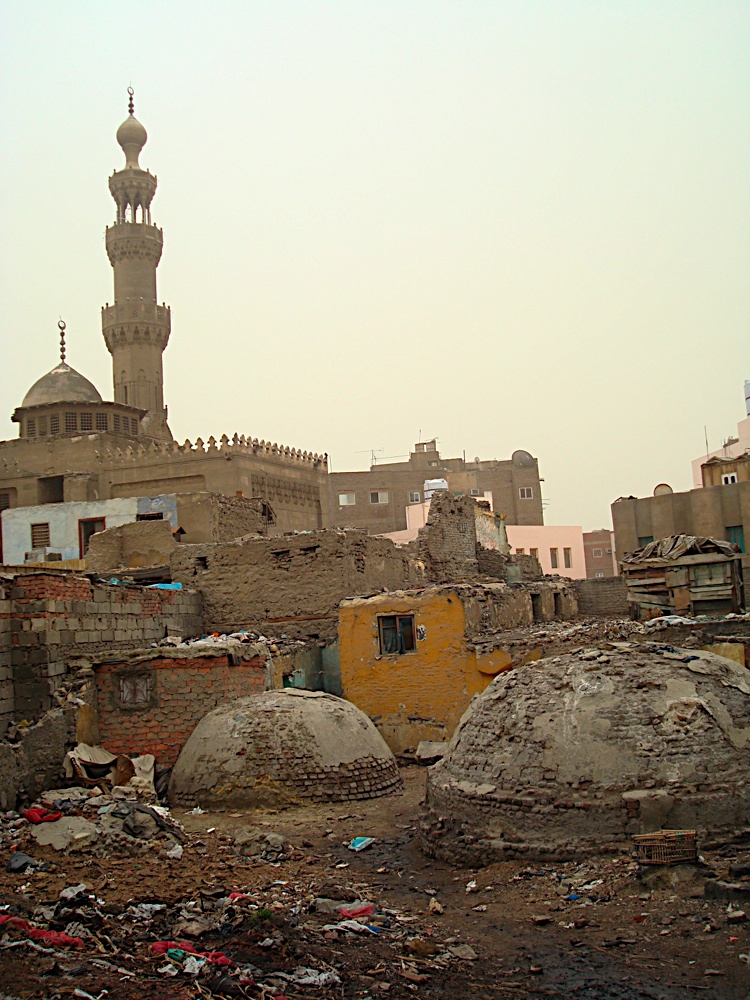
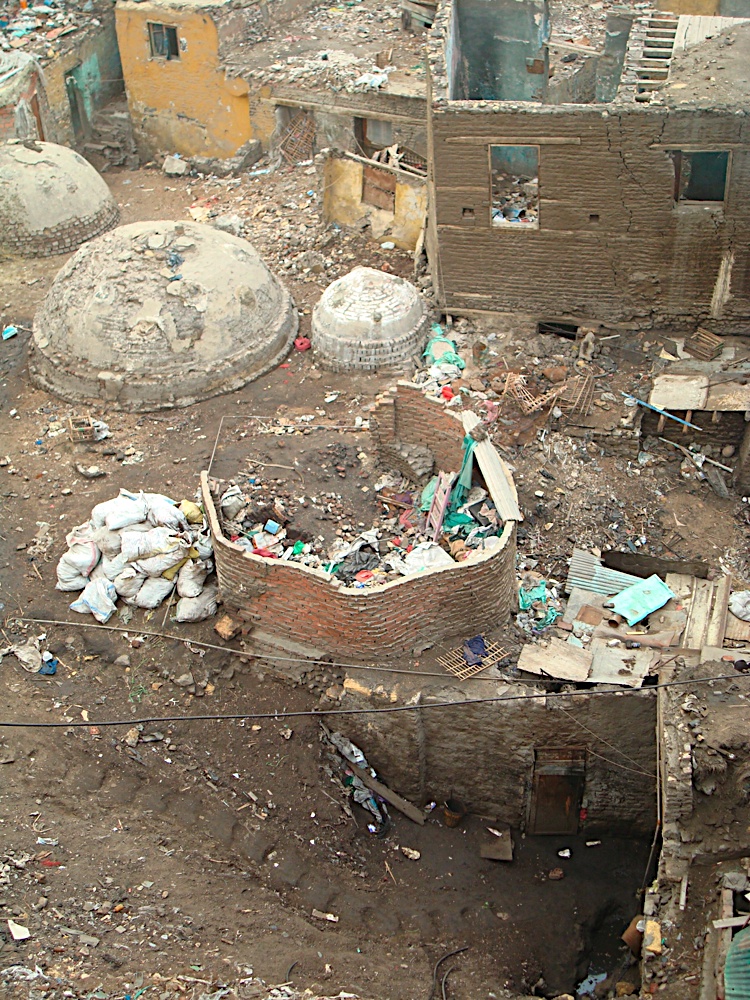
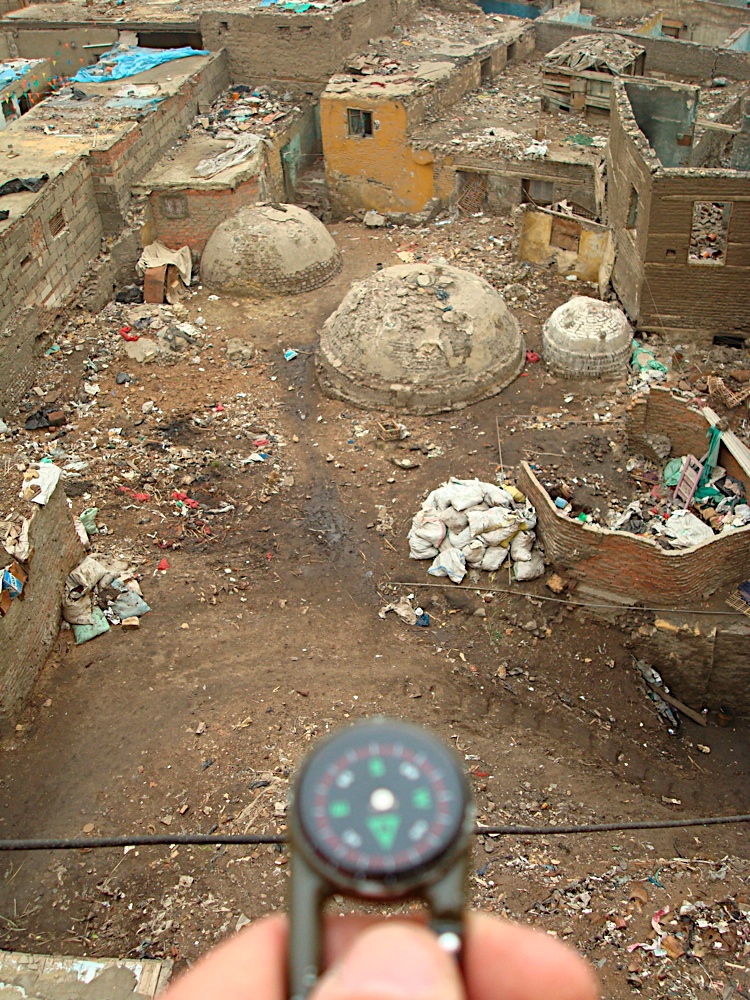
 The site of the bean cookery (the door in the stone wall)  and the remains of the heat exchanger (the round wall)  that once powered the baths. The domes are the lighted roofs of the public bath, with colored glass inlays.

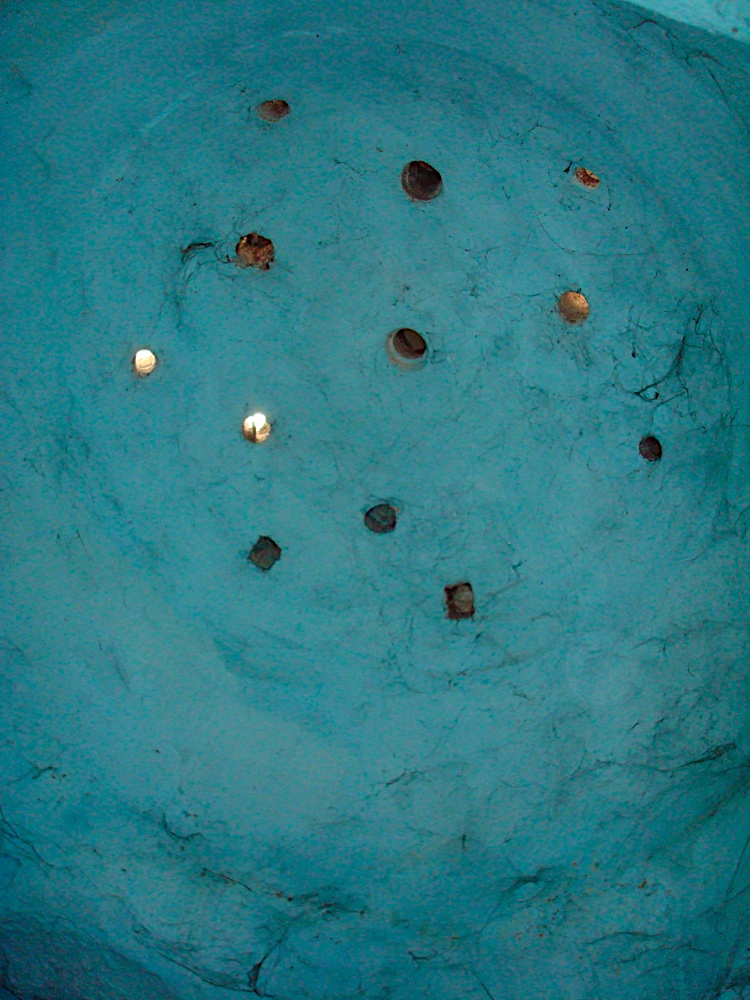
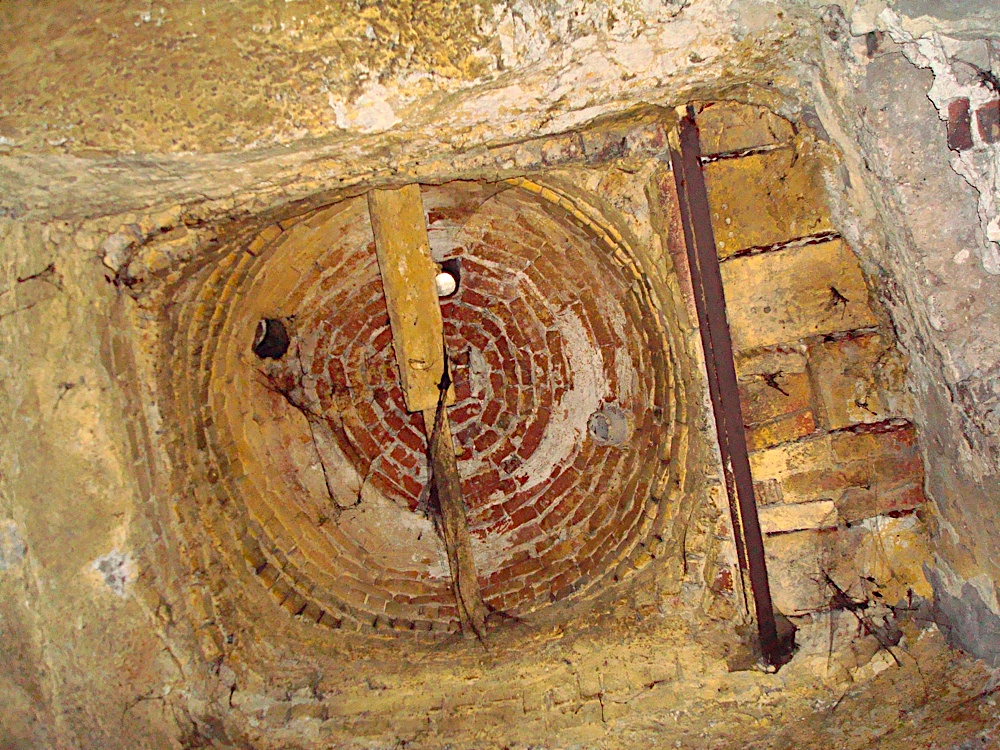
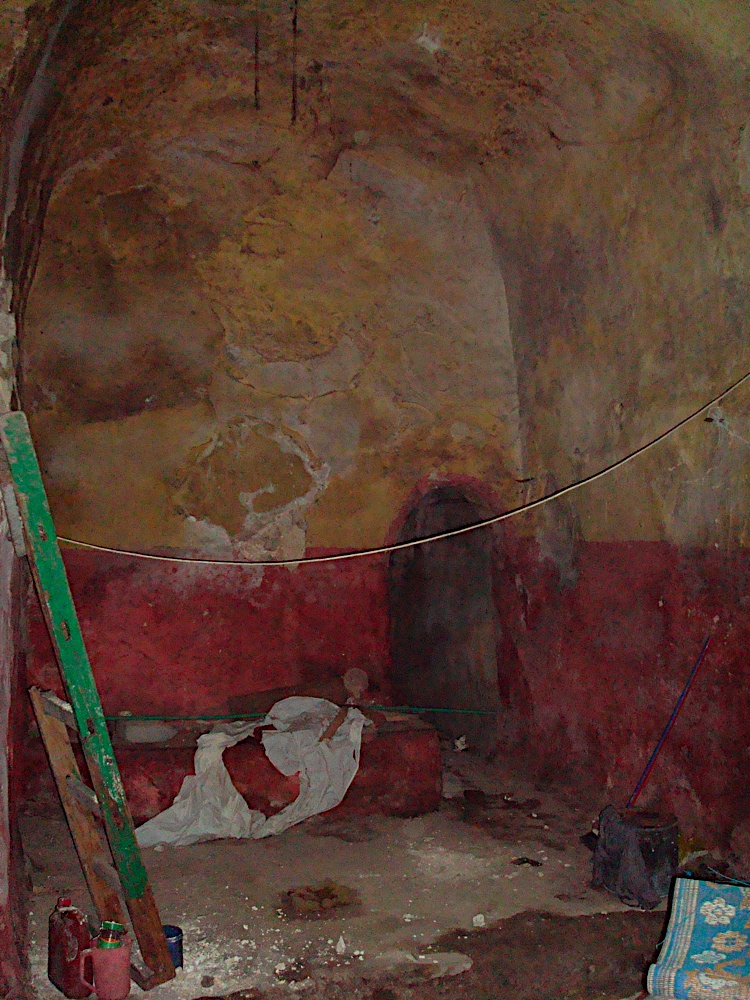
The dome from the inside, showing the marvelous traditional way to introduce natural lighting and to recycle glass bottles.
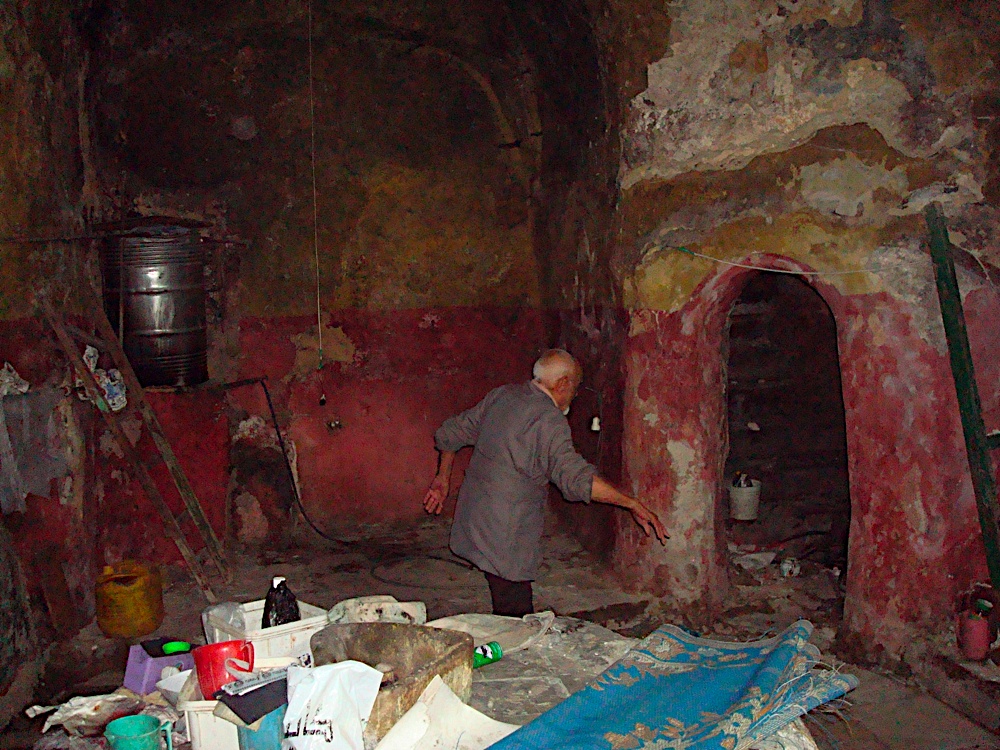
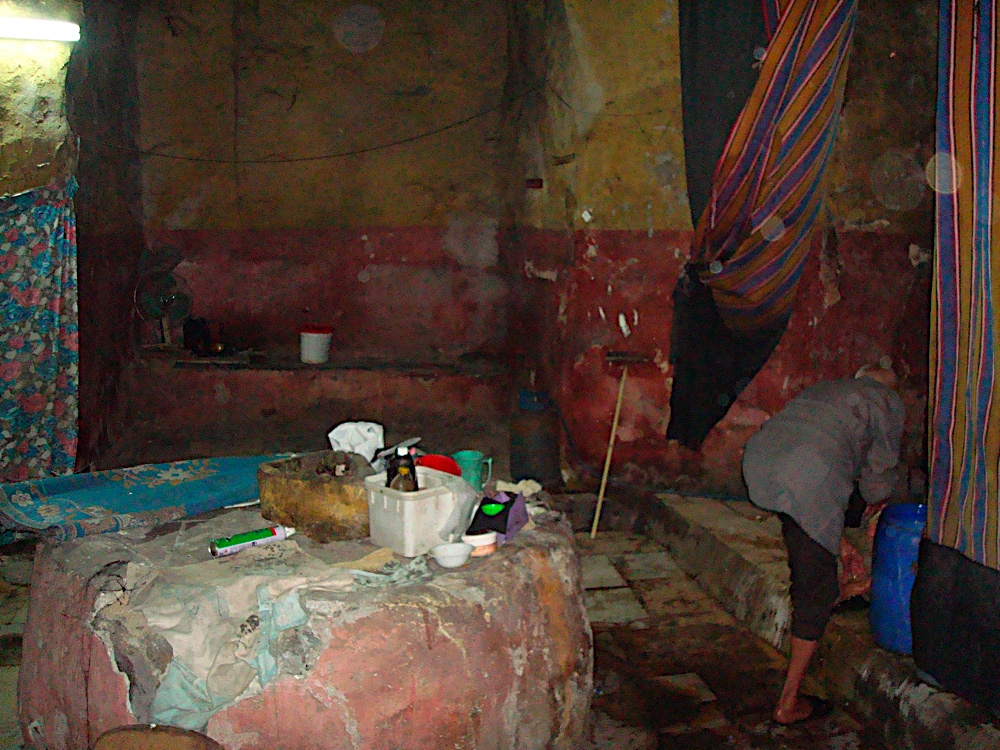
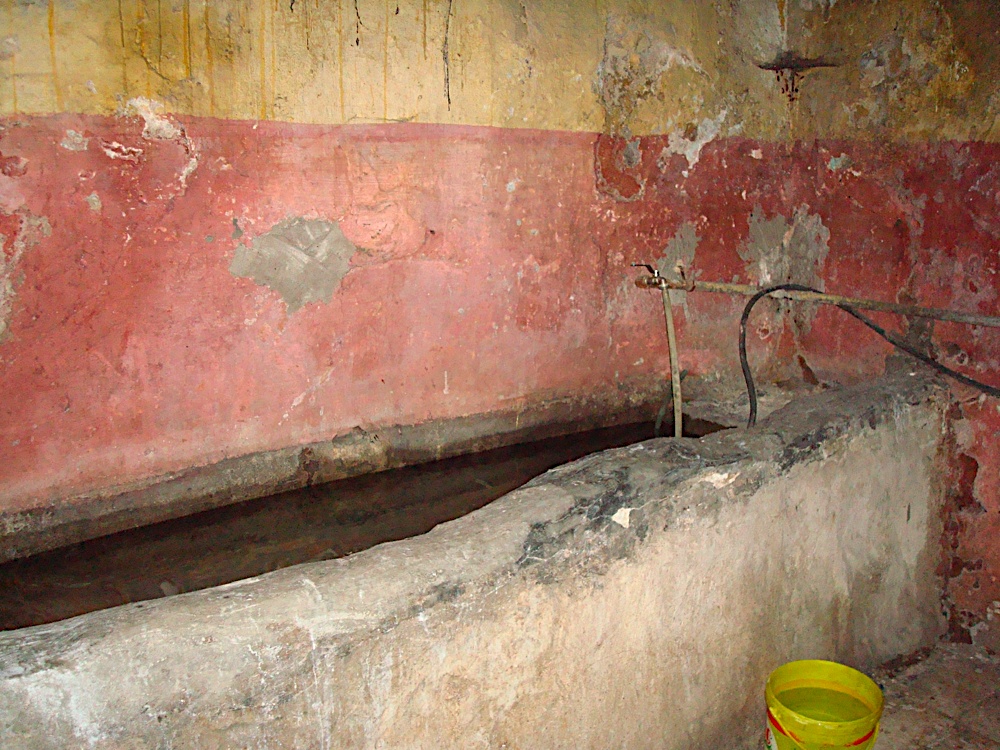
The 2000 liter cistern that once supplied the bath with all its hot water, heated by the bean cookery.  To fill this with hot water today would require 10 Solar CITIES solar hot water systems. Since the materials to build each system costs about 500 dollars, we estimate would need a grant of merely $ 5000 dollars to provide the daily running-cost free pre-heating that could help revive the bath. Additional costs would be incurred for construction, installation, hiring labor, running pipes and improving insulation. We would also want to install an instant on-demand condensing bio-gas backup system for cloudy winter days.   With $10,000 we estimate we could pretty much cover everything.
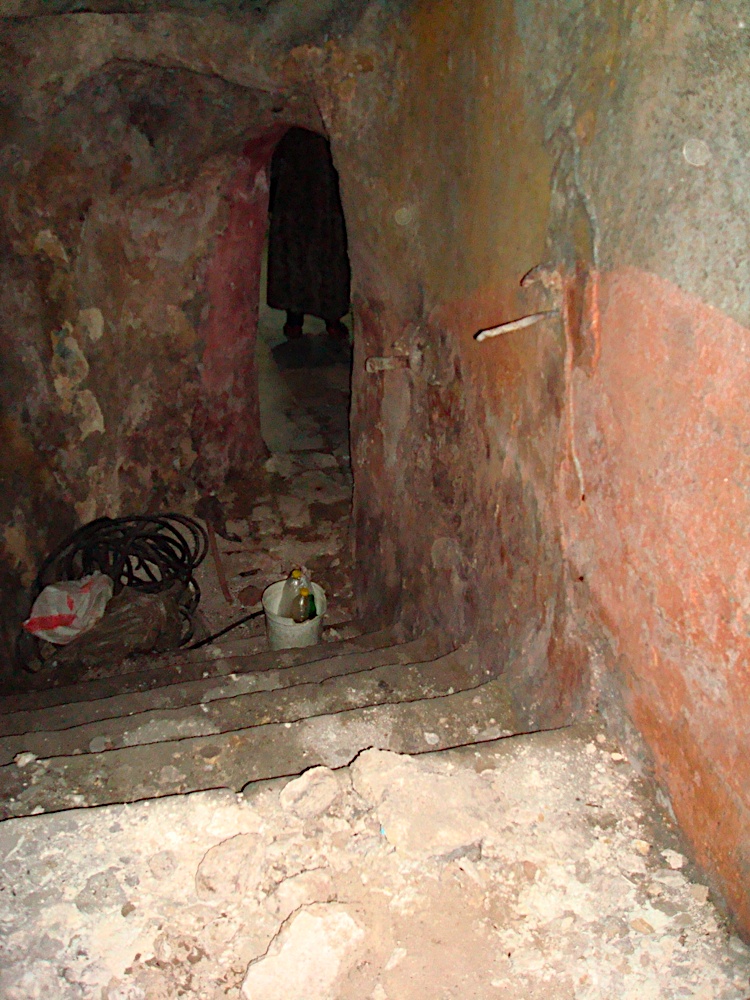
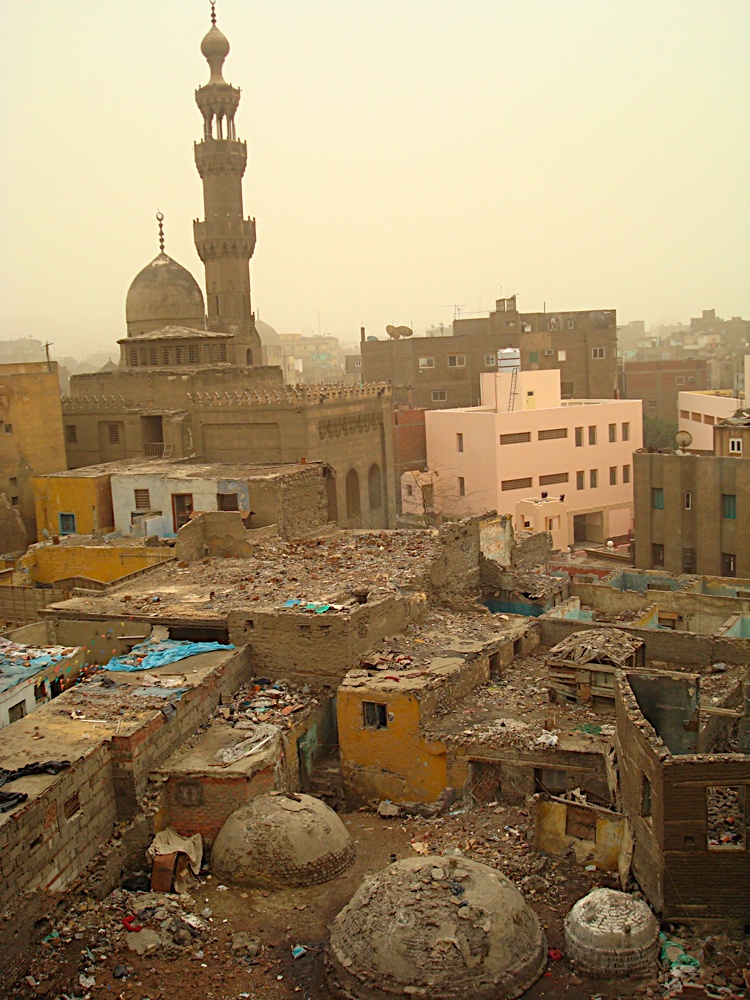
The view from the water tank to the domes of the bath, showing the distance we would need to run pipes.

Half a century ago, inner city Cairo still had over 300 of these bean-cooking/public bath installations. In the time of the Mamluks it was said that a resident could visit a different bath every day.  It is ironic to anybody who has had to suffer through the infamous ”black cloud” month that has poisoned the air
of Cairo since the late 1990s that it was an environmental clean air ordinance that led to the demise
of the waste-paper-bean-cooking-public bath infrastructure. Waste paper burning was considered to
produce too much smoke for the inner city and the large bean cookeries were shut down.

As "natural" gas canisters became available the bean sellers dispersed, setting up a multitude of decentralized cookeries.  The giant heat exchangers that served the baths fell into disrepair. Meanwhile, another move toward  decentralization, with the provision of white goods as solutions for water heating, drove people who  could afford it to abandon the practice of attending the public baths and to begin bathing at home.


This wasn’t inevitable however, as public baths and private baths were not always perceived as substitute goods. Doris Behrens-Aboseif writes in ”Islamic Architecture in Cairo: An Introduction” (Behrens-Abouseif 1989) that during the Ottoman era

”Provision of private houses with hammams did not, however, diminish the role that public baths had played in Egypt since Roman times and whose functions were far wider than hygiene. Their primary aspect was social, particularly the women’s baths, which were comparable to clubs. Women in particular enjoyed the opportunities the hammams offered to gather, away from their houses, and their only opportunity to go out without their husbands. Marriages were often arranged in the hammams where the matchmakers went to look for potential brides... Ibn al-Hajj criticized women’s visits to hammams, saying they merely led women to show off their clothes and jewelry, adding that such female gatherings were harmful. On the other hand, in the tale of Abu Sir and Abu Qir in the Arabian Nights, is the comment ”Your city is not perfect unless it has a hammam”. Ibn Khaldun wrote that hammams are a mark of highly civilized cities, since luxury reveals wealth and prosperity.” (p. 42). 

At the time the baths also were believed to be able to cure diseases and served medical functions and were considered ”lucrative businesses.” It is unclear whether the loss of the public baths has more to do with them competing with home bathing, which, given the statistics we’ve revealed in our study, seems unlikely, or whether they shut down because of rising fuel costs, a drop in the standard of living of the potential clients and a resurgence of fundamentalism that revived Ibn al-Hajj’s fears of the baths being immoral. We do know that at least one of the remaining public baths in Darb Al Ahmar was shut down recently because of alleged homosexual behavior (one of the tragedies of intolerance) in an environment no longer considered "family friendly". 


Nonetheless, the combination of falling demand and rising fuel costs for heating large quantities of water led the baths themselves to fall into disrepair. Today there are only two baths remaining open in the Darb Al Ahmar area; one of them is a block down in the Abu Hureyba district on the street where I live.


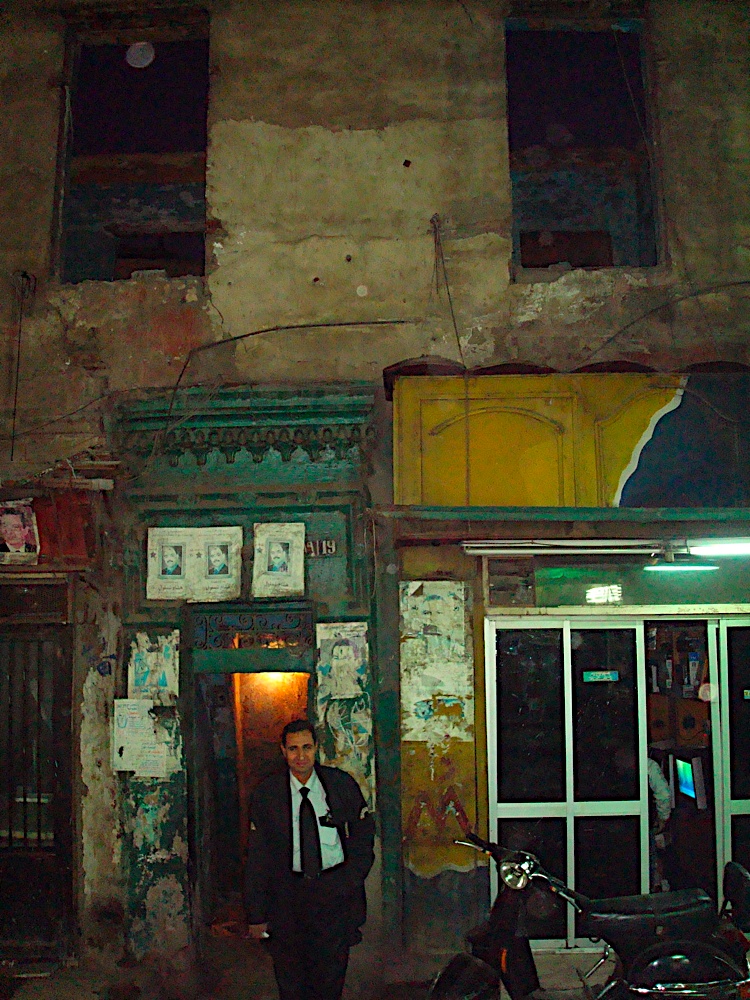
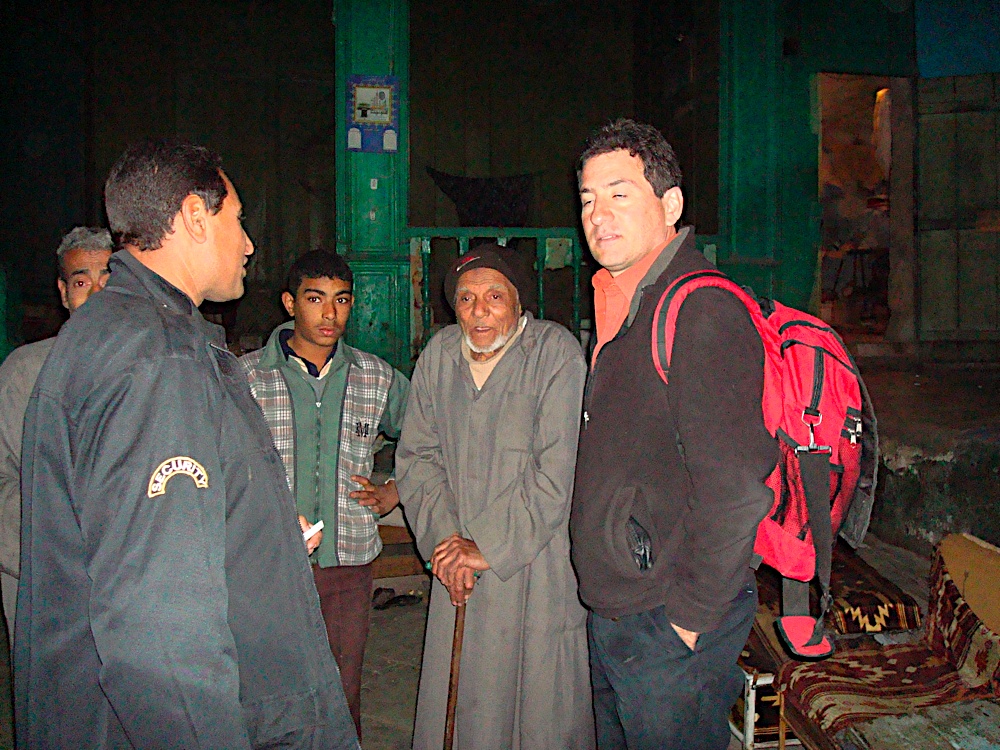
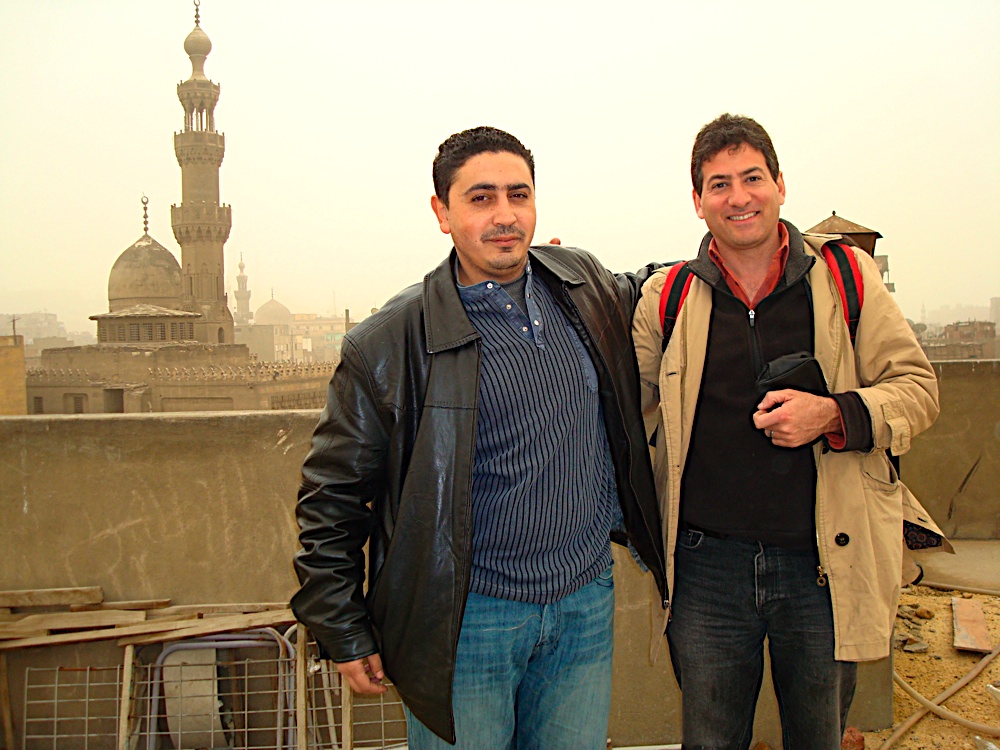
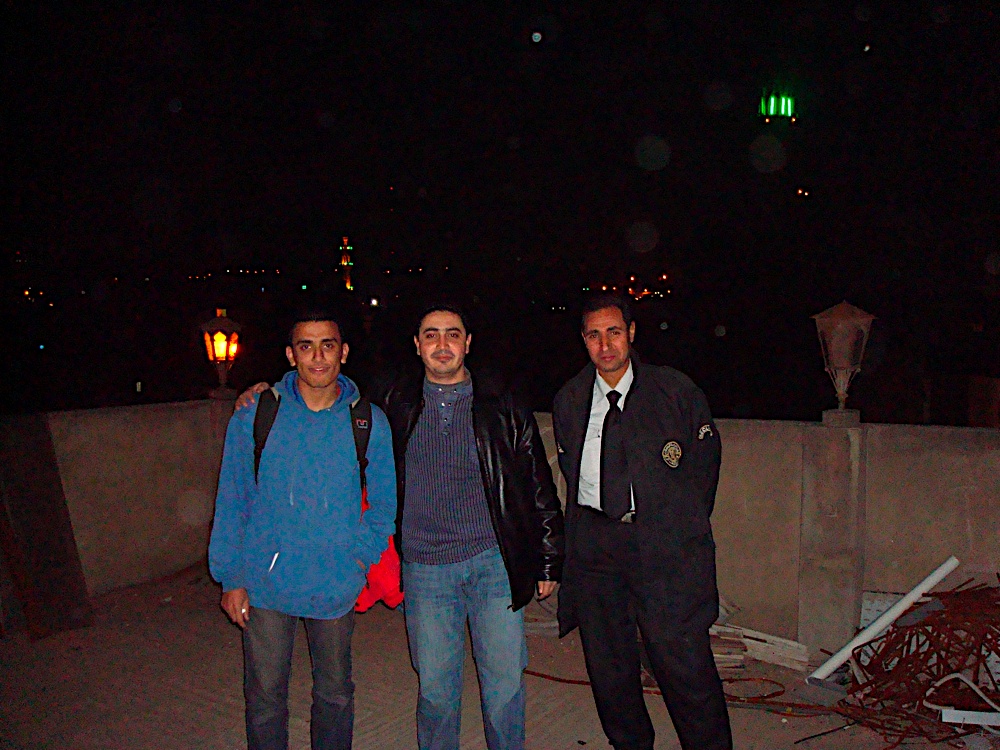
 Aga Khan Security Guard and Darb Al Ahmar resident, Karam, who is also a certified plumber and has helped Solar CITIES build its systems, introduced us to the public bath owners, who are friends of his, saying "we must bring solar hot water to our neighborhood and use it to revive the bath tradition that I enjoyed as a child!

Umm Omar, the owner of the Darb Al Ahmar Street public bath,  told me her family are Wahis, the original Muslim trash recyclers from the oases who started gathering waste paper for heating beans and water over a century ago, and then contracted with the Zabaleen to provide the paper when the Copts migrated to the city several generations later. Rather than helping these enterprising families continue their ancient traditions by helping them implement ways to provide clean inexpensive heat, the municipality in recent years simply prohibited them from engaging in their cogeneration activities, citing ’environmental standards’. Today, mostly using gas bottles (though I have observed a fuel oil burner in the bath as well), they can afford to heat only one tub.

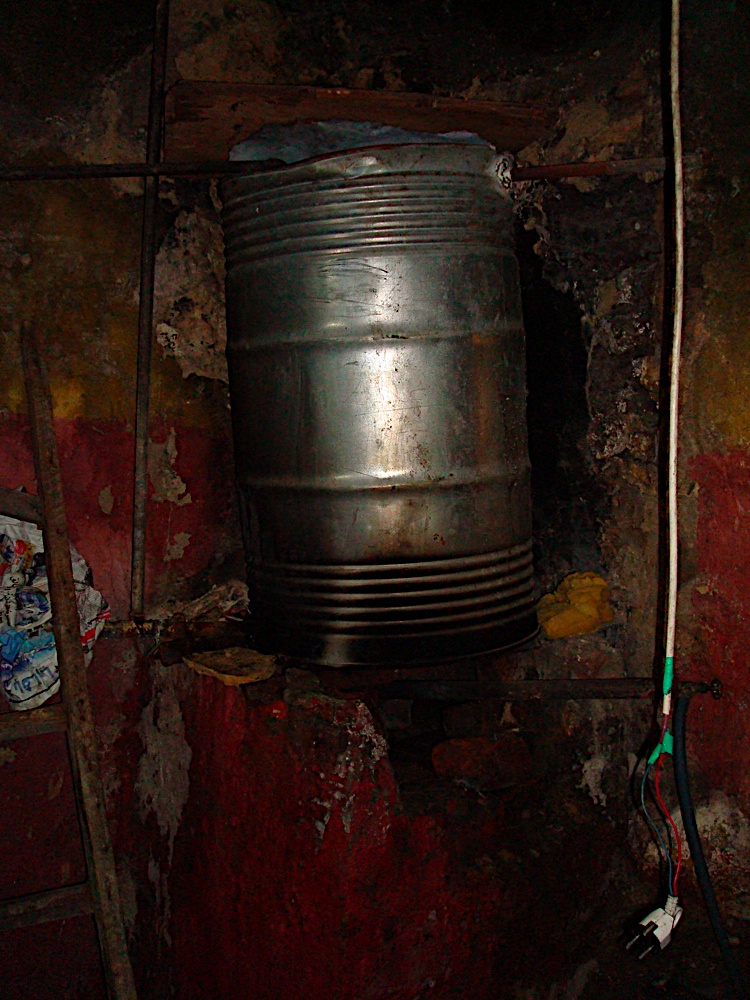
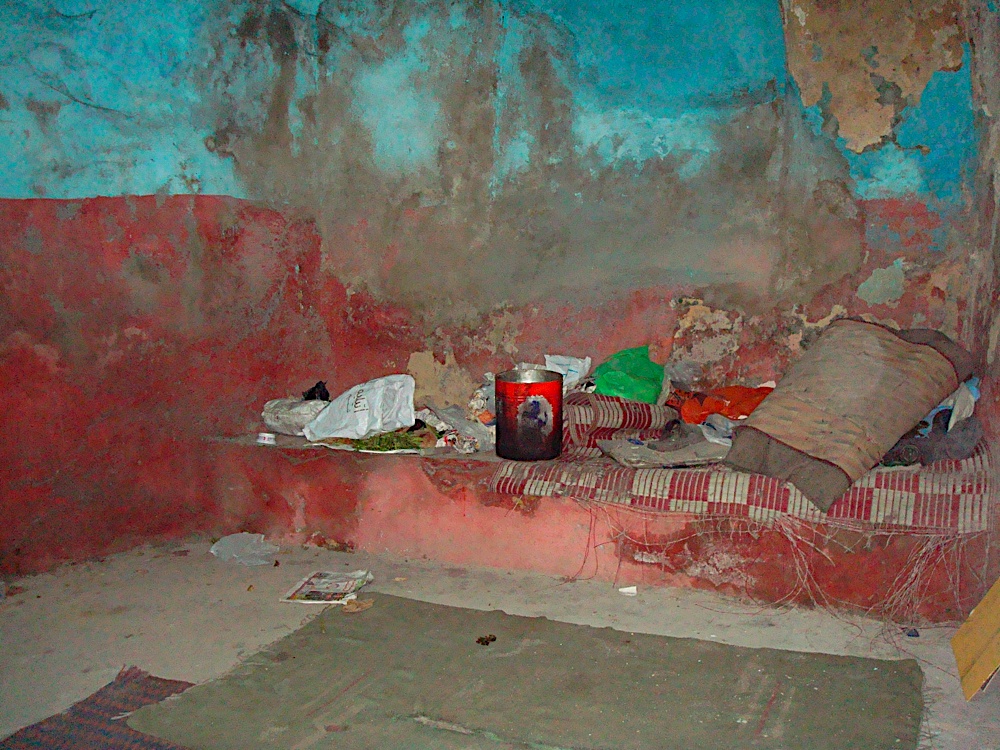
 (Picture depicts the current dangerous, unhealthy and expensive way (oil and gas, sometimes scrap materials)  that the public bath heats the small quantities of water they can now afford to  use for their diminished clientele. Solar CITIES wants to raise funds to replace this system with a safe, clean and inflation resistant solar hot water system, built by the community)

They only open for a few hours a day. They say they cannot cover their operating costs and may be forced to close. Residents surrounding the bath talk about their fond memories of being able to take long hot baths; mothers talk about being able to wash a large group of children all at once, rather than slaving away for hours preparing small quantities of bath water.  But "environmental laws" dis-articulated from policies to integrate new environmental technologies, prevent the re-emergence of the old co-generation traditions.


The contradiction here is that state provision of a centralized amenity once created economies of scale and business synergies that created greater human use values than ”freeing individuals to self-provision”.The Wahi Zabaleen-Bean-cooker-Bath system was an Industrial Ecology system that predated the recent Industrial Ecology Movement by a century. It demanded coordination from different stakeholder groups, public and private investment, and participation by civil society. And yet it provided human use values to a greater proportion of the population than is seen today.

 The once beautiful, joyously painted baths have fallen into disrepair because they cannot afford to meet running costs. Solar energy could help solve this problem and revive this glorious ancient tradition.


”Unlike the grassroots environmentalism movements of the West, Egypt’s environmental initiative originated with the state, following some prodding from the international community,” writes Salwa Sharawi Gomaa.  This explains why an attempt to re-introduce industrial ecology concepts may actually rely on the international community now getting involved in a refocus of Egyptian environmentalism so that it reflects a sustainable development ethic in sync with the needs of the burgeoning urban poor, rather than an attempt to mirror the bourgeois environmentalism of the Western well-to-do.

In her analysis of the interactions between the Egyptian government, Environmental Non-Government Organizations (ENGOs), the Green Party and foreign donors, and the development of Egyptian Environmental Policy,  Gomaa lists the top environmental concerns in her country: Air  pollution, caused in large part by an absence of comprehensive zoning laws, Water Pollution, caused by
oil discharge, agricultural chemical runoff, and large volumes of untreated waste water, and raw solid waste.

She suggests that in reality agricultural drainage water and other forms of waste water ”is a
problem that can easily be turned into an advantage if the water is properly treated and utilized instead
of discharged”, and illustrates how many of Egypt’s environmental problems are a result of sloppy
thinking, bad policy and lack of implementation rather than hopeless consequences of rising population. But one area where she is in agreement with more recent urban planners, who adress population, like Abdallah Abdel Aziz Attia, professor of architecture and urban planning at Ain Shams University, a strong advocate of decentralization, is in the need to return to the 1979 Master Plan.

”Finally, Egypt is faced with the problem of land degradation due to urban encroachment. The volume of rural-urban migration in Egypt is currently at a disturbing annual growth rate of 3 percent. Given Egypt’s limited resources, such a high level of urbanization poses an environmental problem of enormous proportions, which is reflected in the huge number of shantytowns that are rising in major cities and in the development of slum areas within the towns and cities themselves. Notwithstanding these concerns, the environment has only recently developed into a policy issue encompassing legislative measures and a complex and diverse network of political actitivities both within and outside the government.” 
(preface from Environmental policy making in Egypt By  Salwa Sharawi Gomaa University Press of
Florida, 1997.)


Unfortunately, current environmental laws, rather than encouraging out of the box thinking, have actually, in this particular case, inhibited the synergies between the activities of the two communities
that once provided hot water options to the area. Particularly damaging have been regulations limiting
co-generation and dooming the public baths.

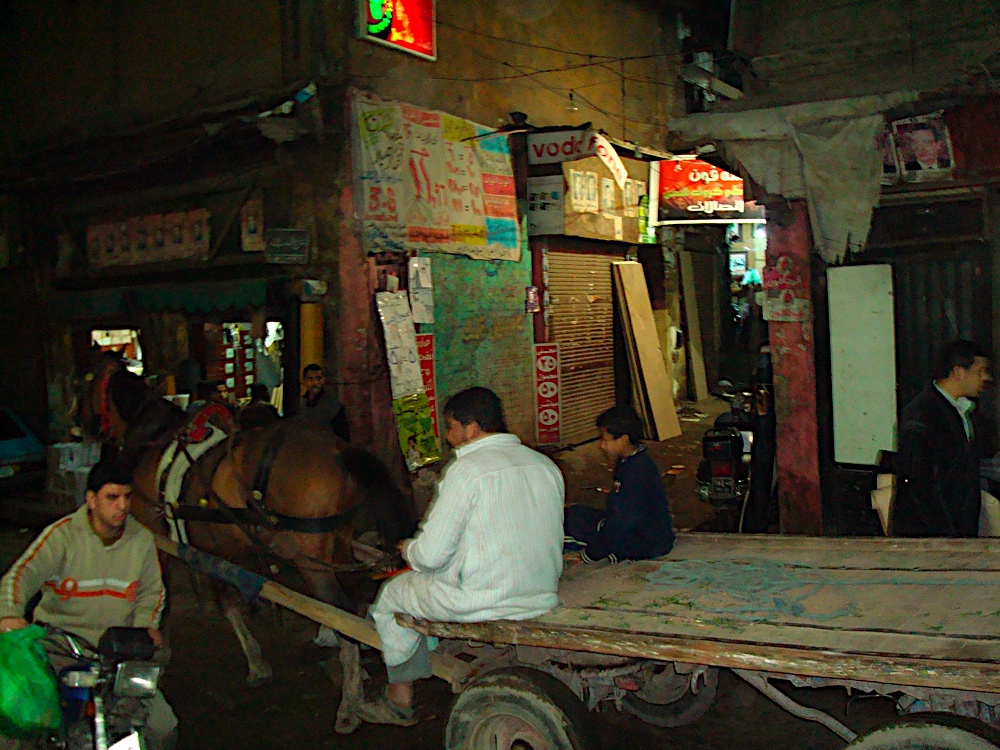
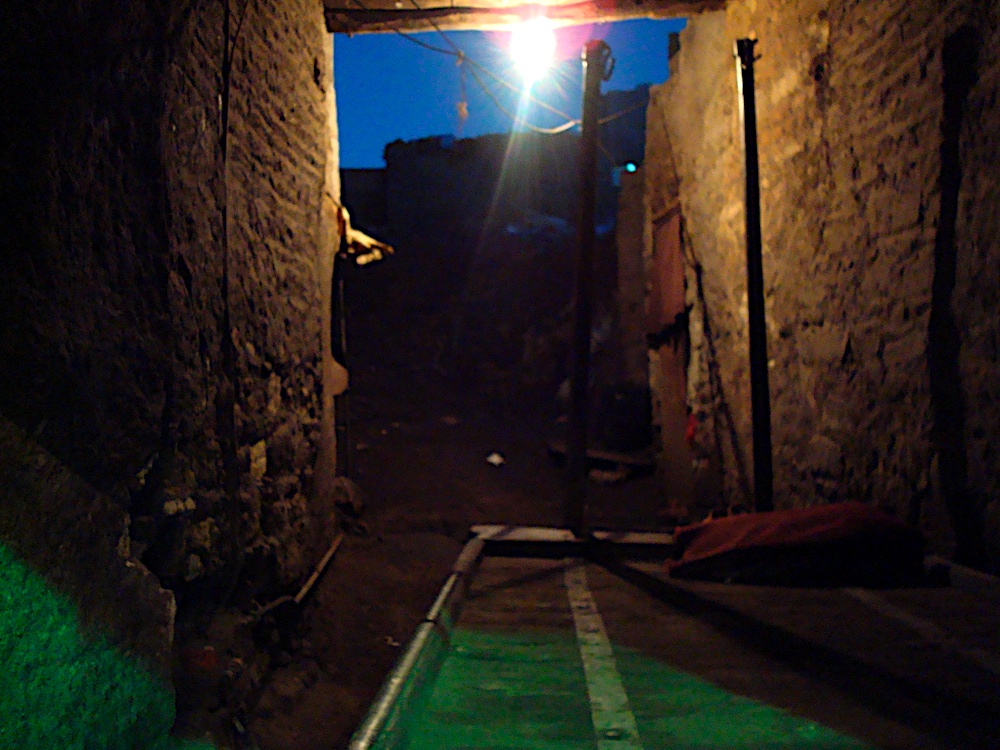
 The alley behind the bath where the beans used to be cooked using recycled waste paper.

But there is a way that these environmental laws can be used to revive the baths.  If Cairo is serious about its clean air legislation, and if Egypt wants to participate in combatting climate change (in fact they have set up a climate change ministry to do so) then one way to create a win-win would be to use Clean Development funds and Carbon Trading monies and redirection of utility and energy subsidies to do as Tunisia has done and launch a massive solar hot water initiative.  The emblem for this could be the revived Public Baths.  Since co-generation through waste paper burning (once the cheapest way to provide heated water) is unfeasible, another form of waste heat -- or rather "wasted heat" could be used -- the heat of the sun.

Since Cairo has one of the highest rates of solar insolation in the world, the running costs of the public bath would be almost nil.  On the few cold cloudy winter days that Cairo experiences, the heat could be supplemented by the burning of biogas (produced from city garbage, as they do in Pune and in Kerala state in India), which would be carbon neutral (and in fact preferable to the current practice of letting it rot in the streets, turning into the more potent greenhouse gas, methane).  The Zabaleen could once again supply the bath with the organic waste used to generate the biogas, completing the historic circle. And the gathering of the waste to feed the biodigestor would create a financial incentive for keeping the streets clean.

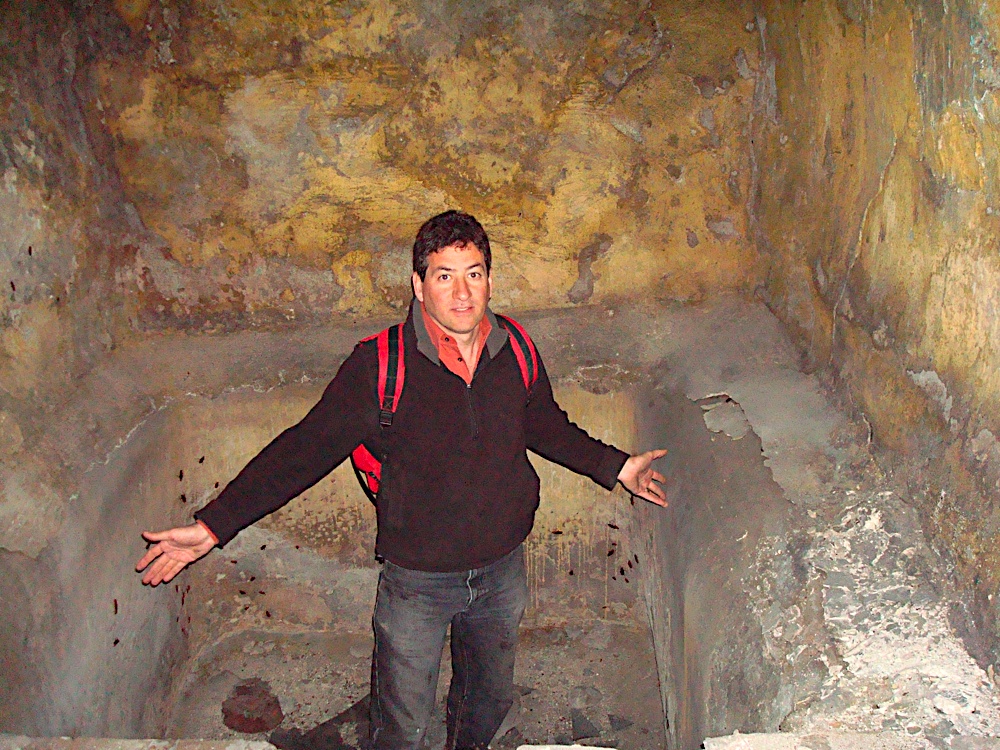
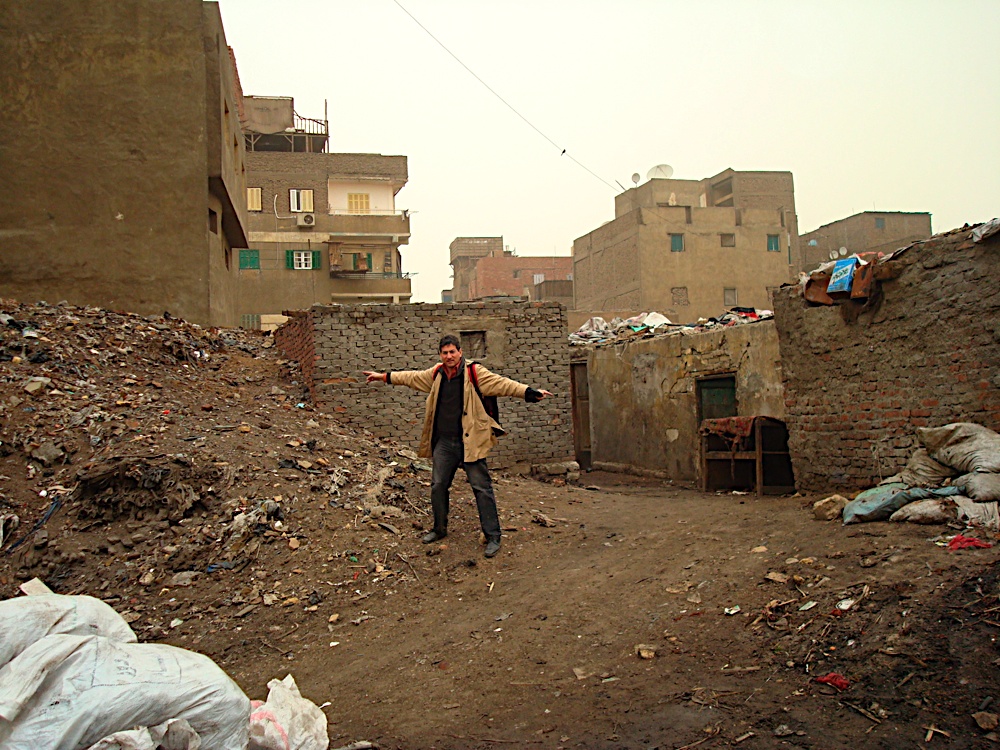
Thomas Taha Rassam Culhane demonstrates the spot, in front of the old 2000 liter water tank, where the solar hot water panels could be mounted.

Ironically, as if Allah had intended it (yes, we believe He did!) , the open space in front of the water tank that is ideal for placing the solar panels turns out to face both the Abu Hurayba mosque AND DUE SOUTH.  Nothing could be more perfect -- the area behind the bath, built up over a mountain of garbage, is perfectly situated for solar energy.


With minimal investment capital (estimated to be at around $10,000 U.S.) a new industrial ecology system could be created that could improve the environment and the health and hygiene of the community, as well as create a place of dignified relaxation and socialization to bring people together as in days of old.


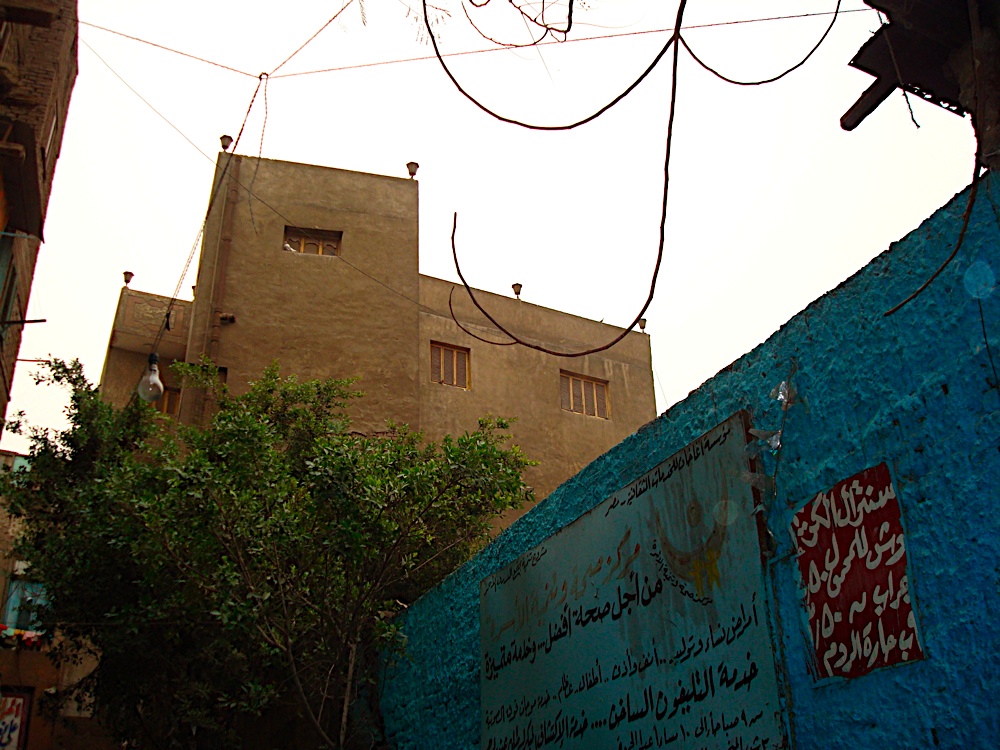
This textile business owner, Ali, who lives and runs his factory in the building directly above the baths, has fond memories of his mother taking him to wash there when he was a child.  He would like to see the baths reopened, and allowed us to install a demonstration Solar CITIES hot water system on his factory roof so that community members could see for themselves how simple it is to build solar hot water heaters and how reliable they are, and lead discussions of how solar energy could be used to revive the baths.


The Public Bath in blue, and the business owners factory/home above it. 
Karam, the factory owner and an employee of the bath discuss where the solar panels could be placed, and security issues to prevent them from being stolen or broken. One of the issues affecting infrastructure investments is whether or not vandalism will be a problem or not.  One of the Solar CITIES systems in Manshiyet Nasser is inoperable because children living in a taller building threw stones at the system and broke the glass. Education and public awareness must also accompany the solar effort.
Solar CITIES associate Mahmoud Dardir of the Abu Nimrus Environmental Science Center,  who grew up in and still has family in Darb Al Ahmar, comes to an agreement with Karam and the factory owner, Ali, that they will build a demonstration system on the roof over the bath.
 
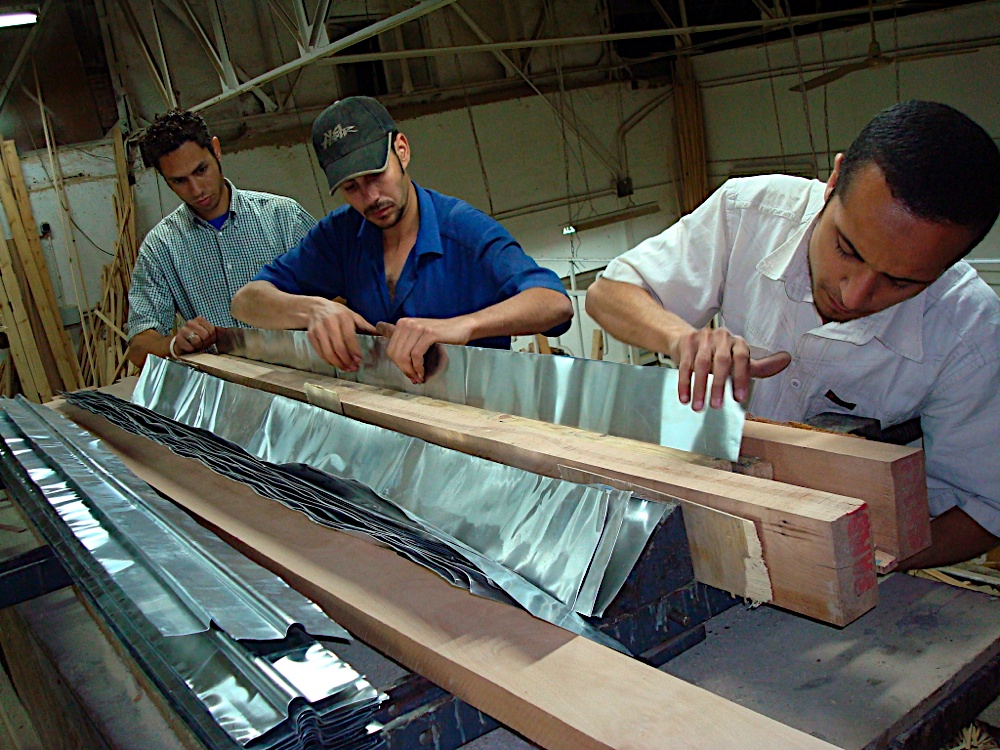
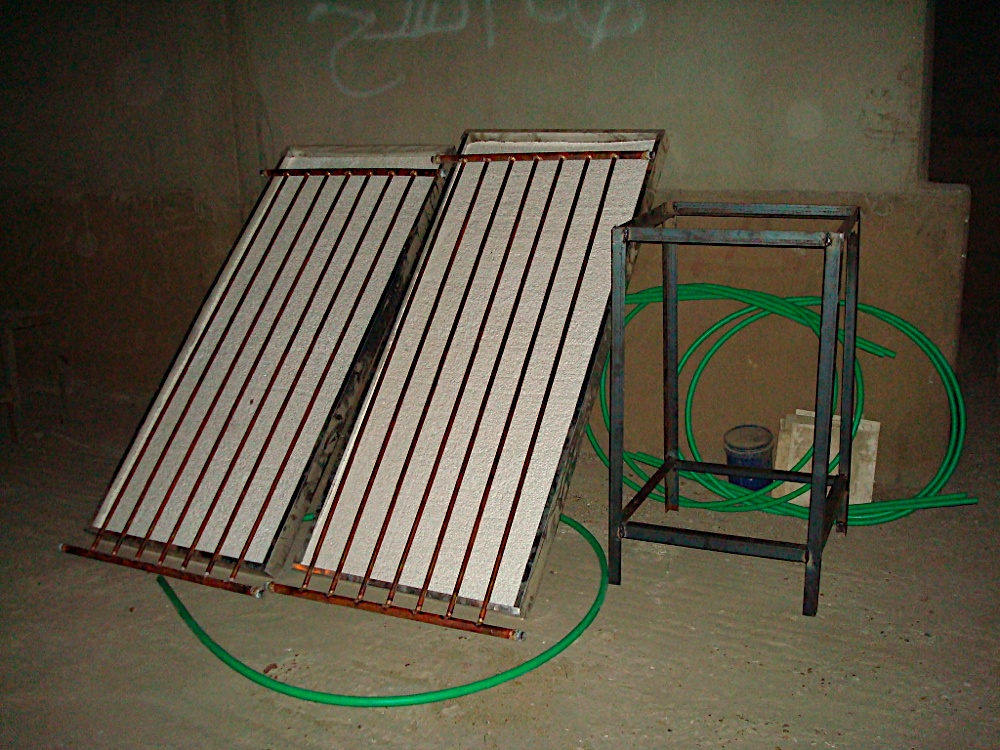
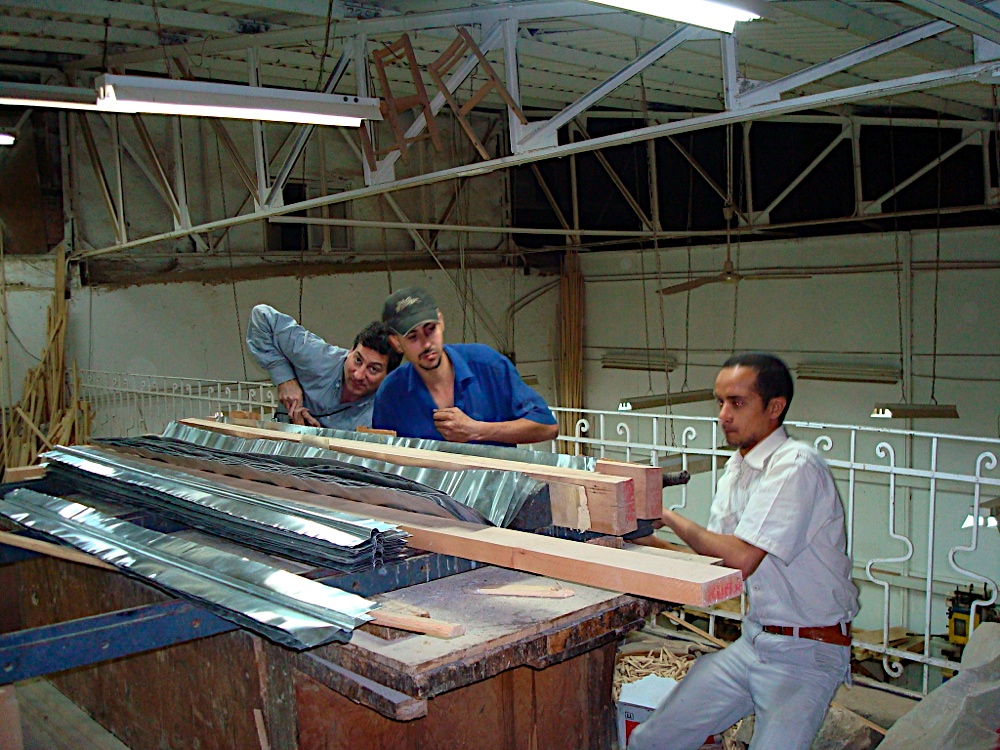
Once the agreement has been made, production work begins at the Aga Khan carpentry workshop where vocational trainer and Solar CITIES innovator Mustafa Hussein has invented a labor saving device for bending the aluminum sheets used as heat absorbers in the solar panel.  T.H. and Ayman Fathy, the brother of Solar CITIES green-collar trainer Hanna Fathy, help bend the sheets.

 Hanna joins in the fun.


All in the family:  Ayman, who drives a recycling truck as his day job, offers to use his truck after hours to work with Hanna to transport the iron solar tank stands that were welded in the Zabaleen community , and the aluminum, machined in Darb Al Ahmar, to the baths.  In this way the Zabaleen continue to offer their historic service to Darb Al Ahmar, but now are introducing solar energy into their portfolio of environmental industrial ecology solutions.


 The system starts to take shape on the roof.


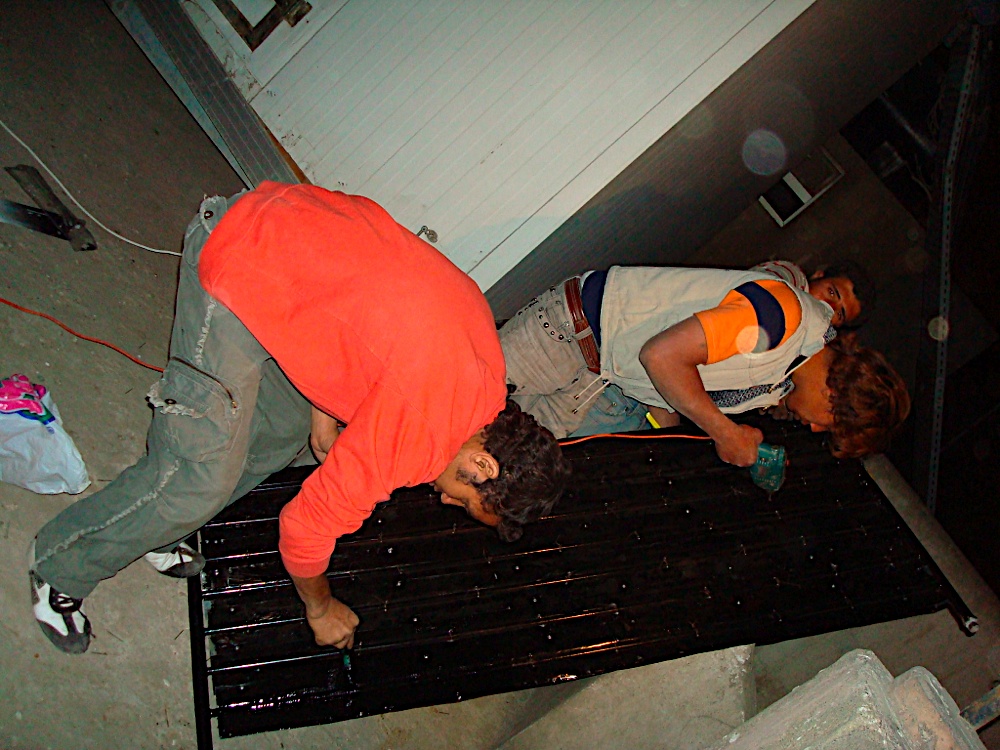
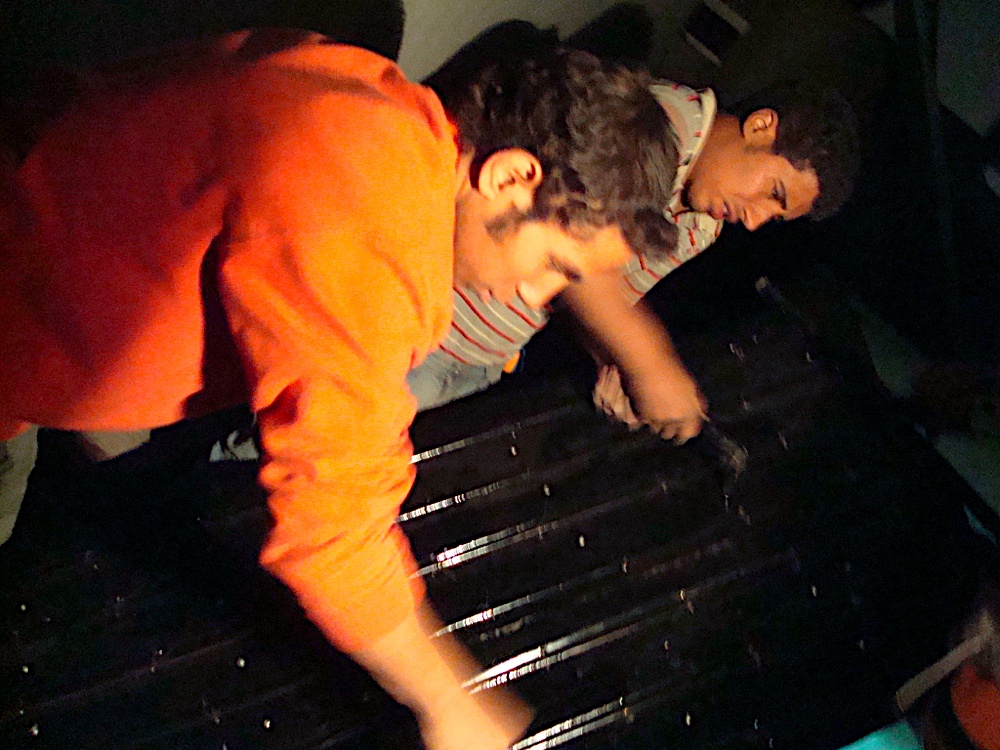
Zabaleen Recycling School Teachers and Solar CITIES engineers Adham, Nabil and Moussa work after hours in Darb Al Ahmar to paint, tie and rivet the aluminum sheets onto the copper pipes that were welded in the Zabaleen community.

 
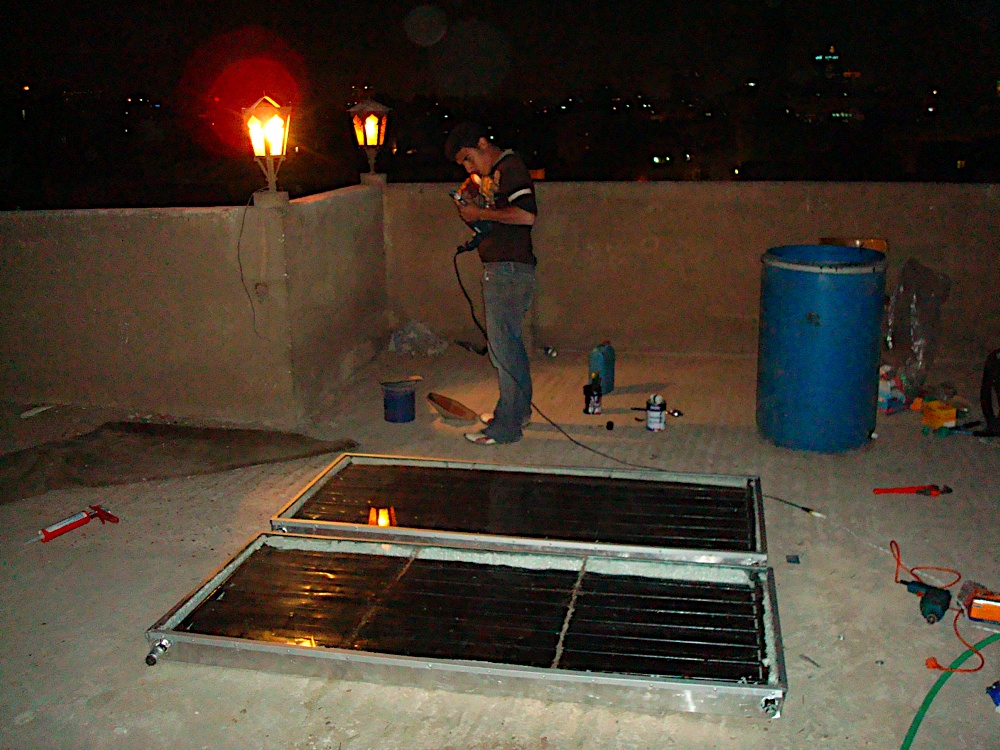
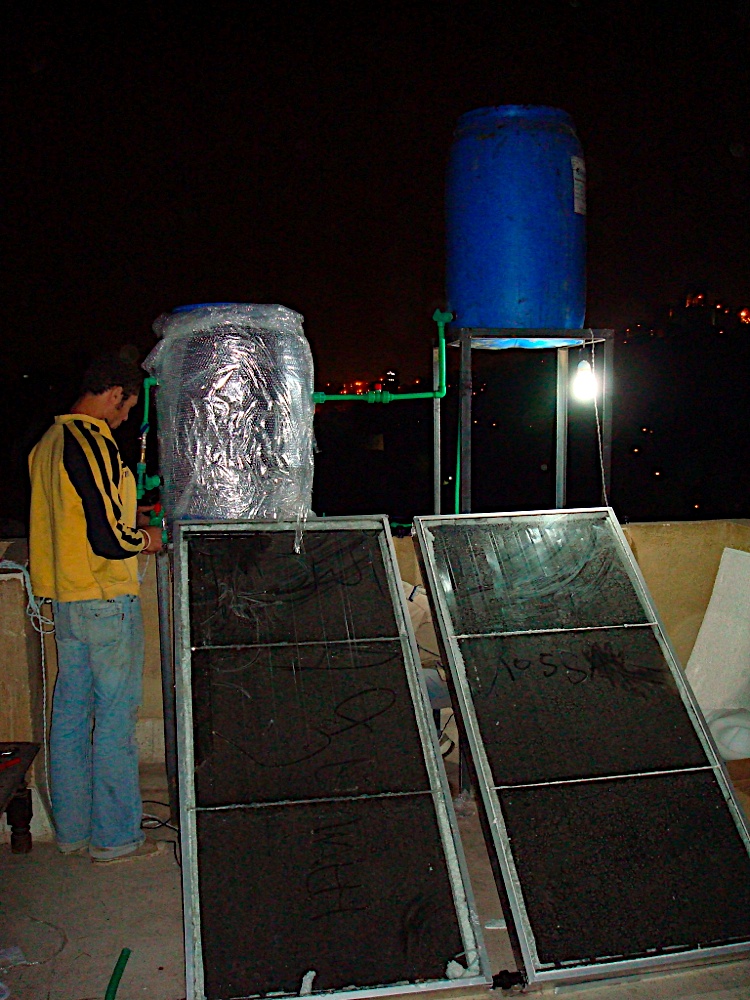
Zabaleen Solar Technician Mousa works late into the night building the system on the factory owner's roof in time for the visit of National Public Radio producers Liane Hansen, Davar Ardalan and Ned Wharton, who did a program on Solar CITIES work.
 
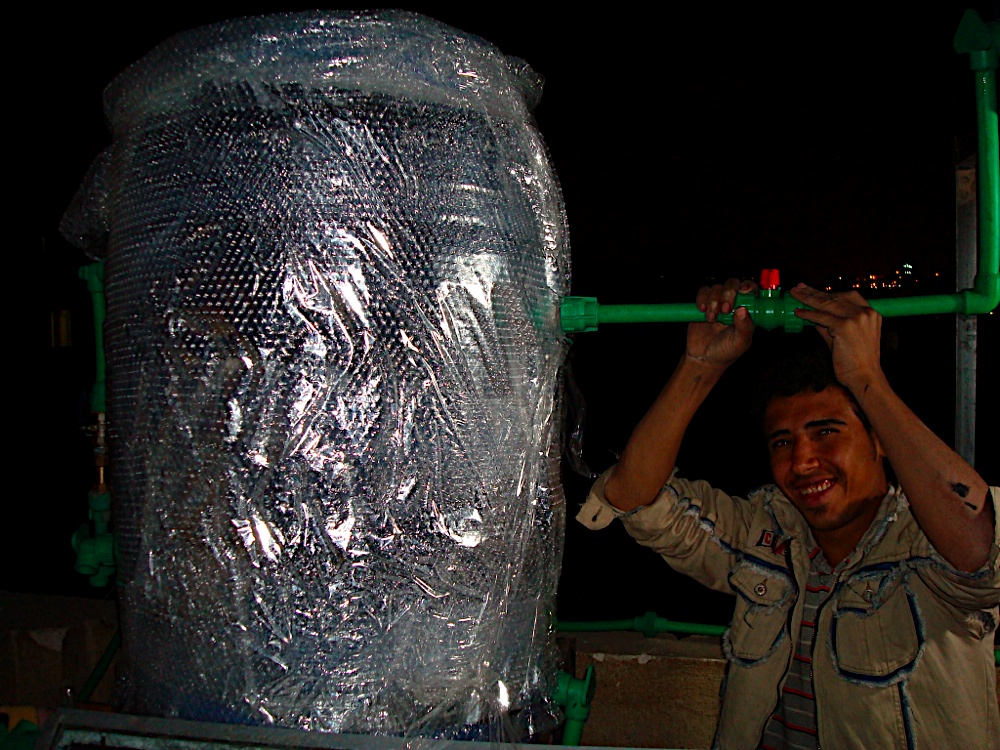
Mousa adds plumbing to his skillset as he connects the system to the bubble-wrapped recycled plastic water tanks that are one of Solar CITIES innovations for keeping the systems low cost.
 
Hanna checks for leaks before the sun comes up and makes the water to hot to work with. 
 

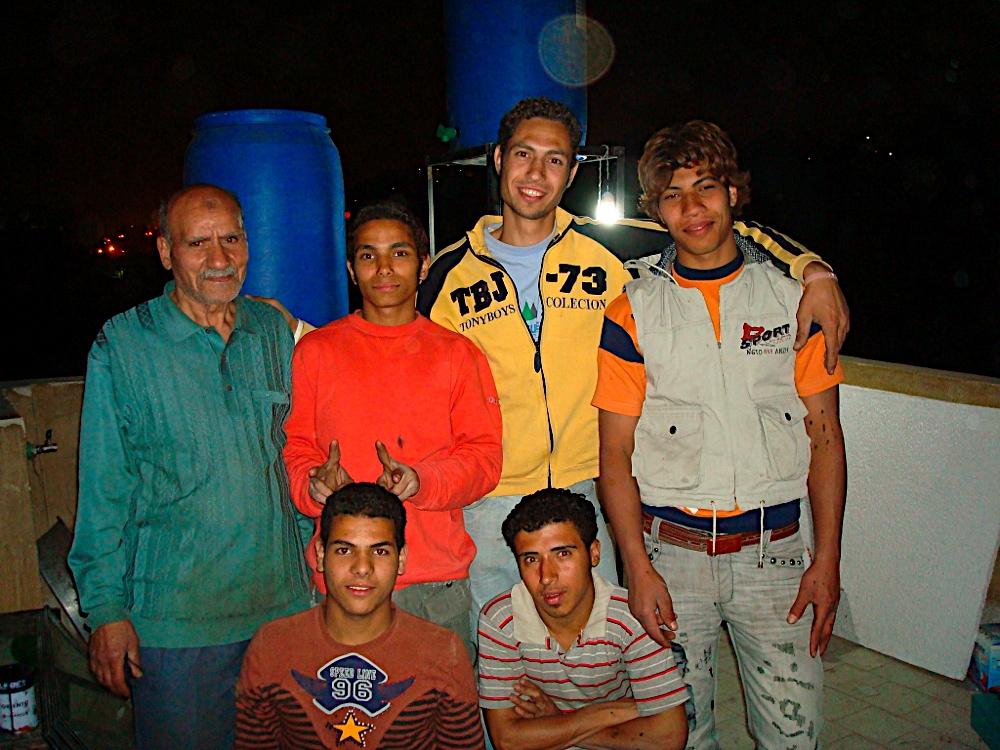
The Roh El Shabab NGO Solar CITIES crew, Adham, Hanna, Nabil, Abu Nob and Moussa, stand next to Darb Al Ahmar resident 'Am Hussein, on whose roof they simultaneously finished a solar hot water system, running back and forth in shifts from the bath to Am Husseins roof, so that NPR will have two satisfied families  to visit when they come to do their story.
 
An exhausted but satisfied Hanna Fathy, the Solar CITIES coordinator, inventor, and green-collar jobs trainer for this Roh El Shabab (Spirt of Youth) program, prepares to make the long walk home across the Al Azhar Park and the City of the Dead, hoping that international exposure will help raise funds to enable the team to build enough collectors to revive Cairo's historic public bath and the tradition of the Coptic Christian Zabaleen  and the Muslim Wahis of Darb Al Ahmar working together to find co-generation and cooperative solutions to solving environmental problems.