Solar Power isn't Feasible!

Solar Power isn't Feasible!
This cartoon was on the cover of the book "SolarGas" by David Hoye. It echoes the Sharp Solar slogan "Last time I checked nobody owned the sun!"

Wednesday, September 16, 2009

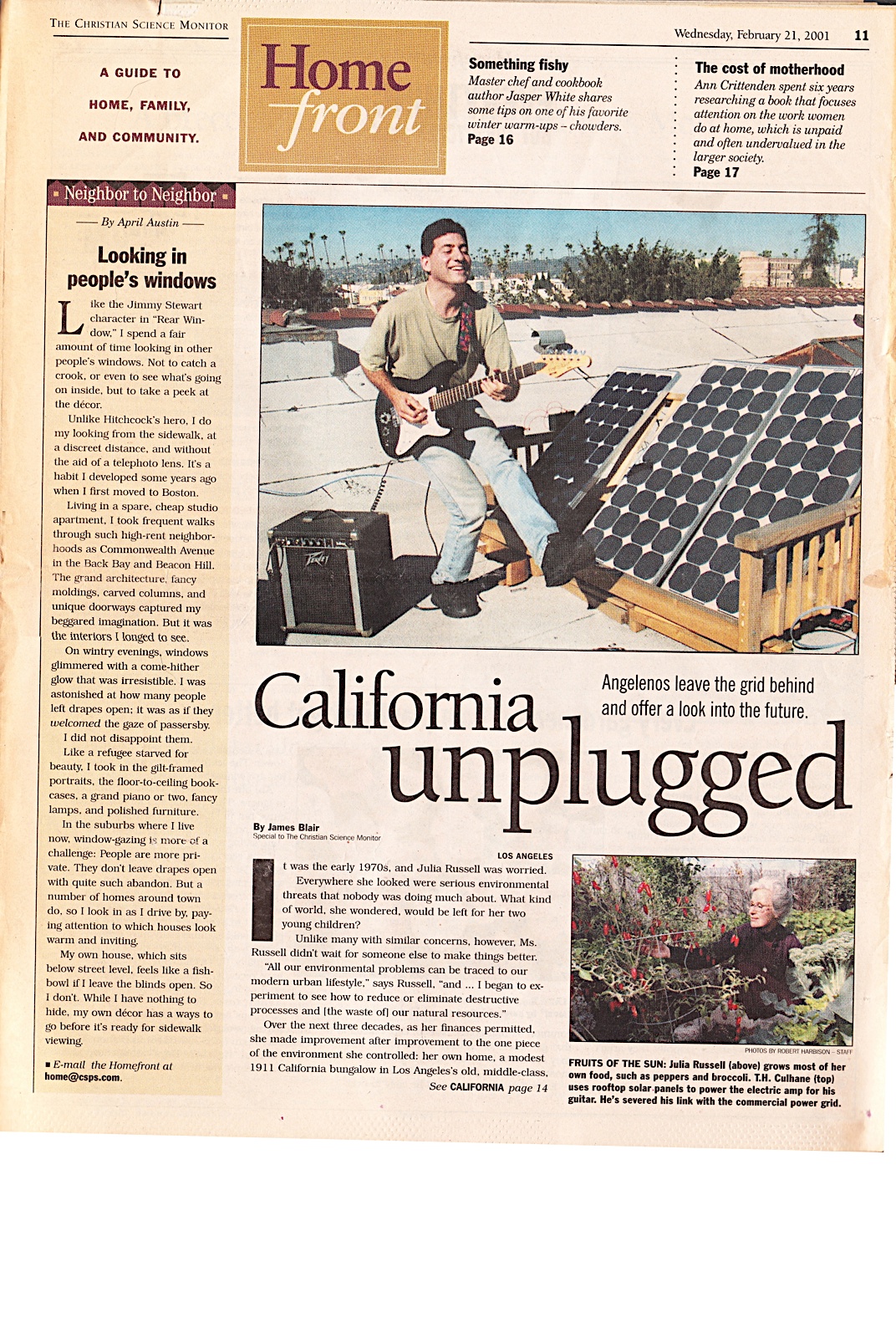
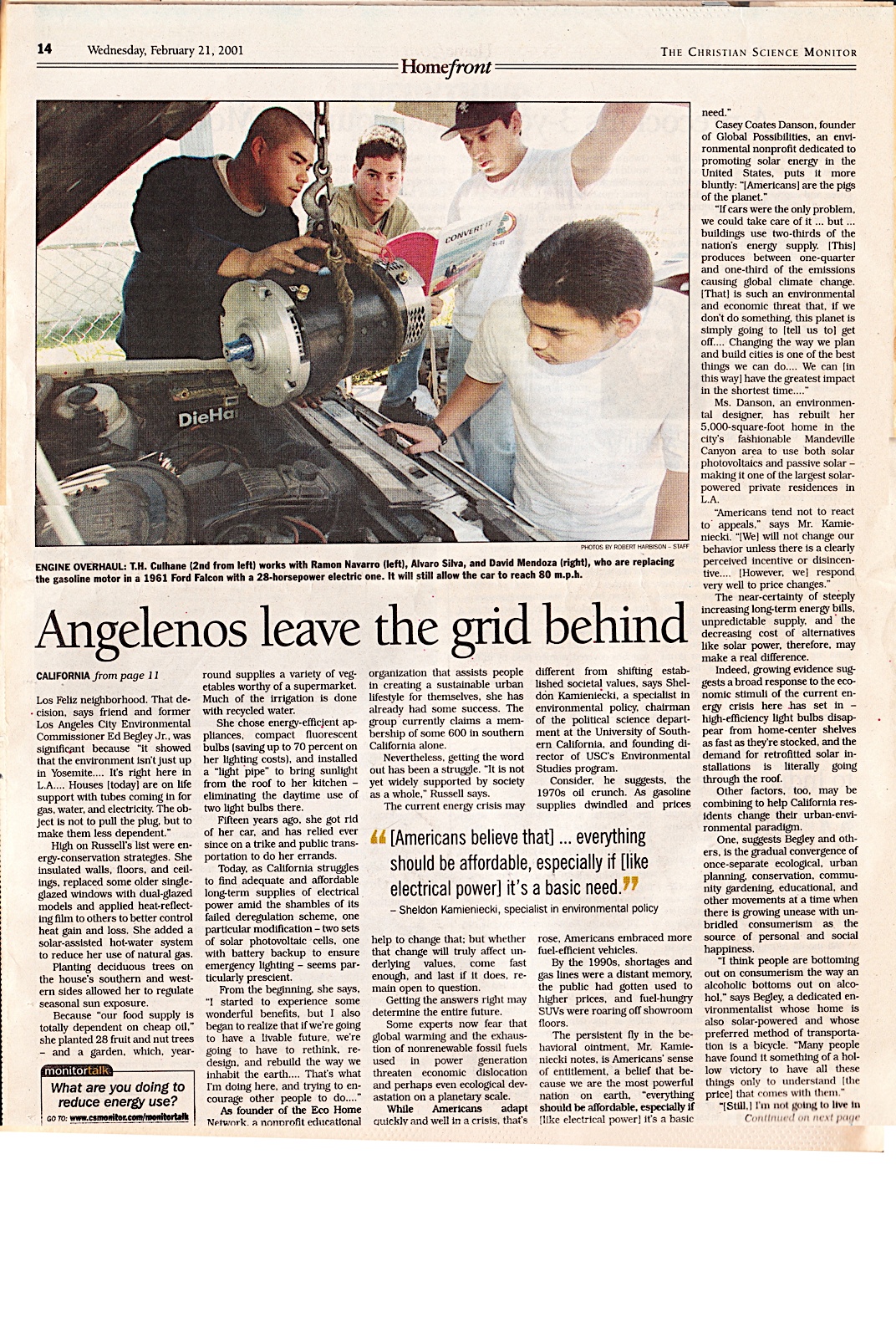
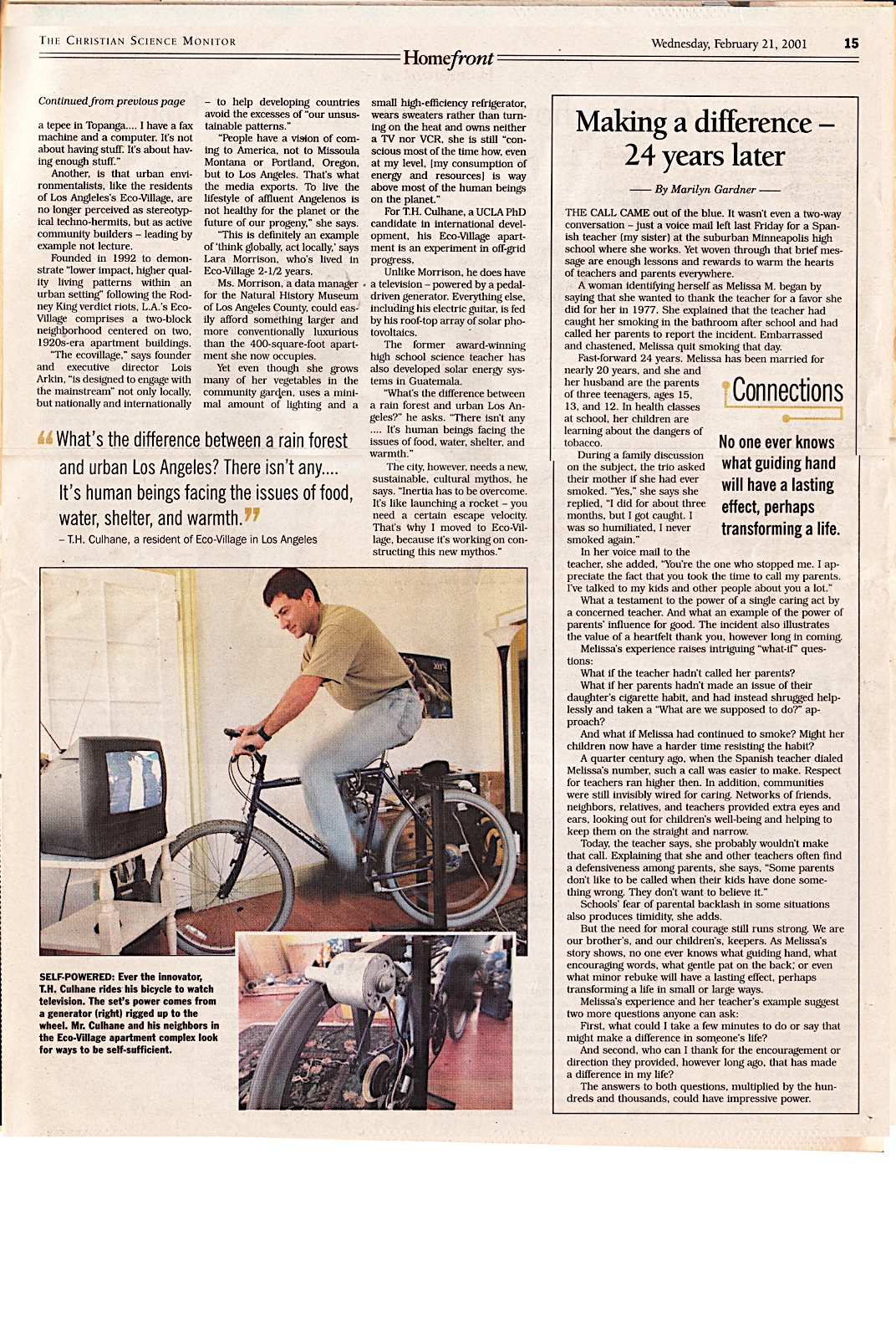
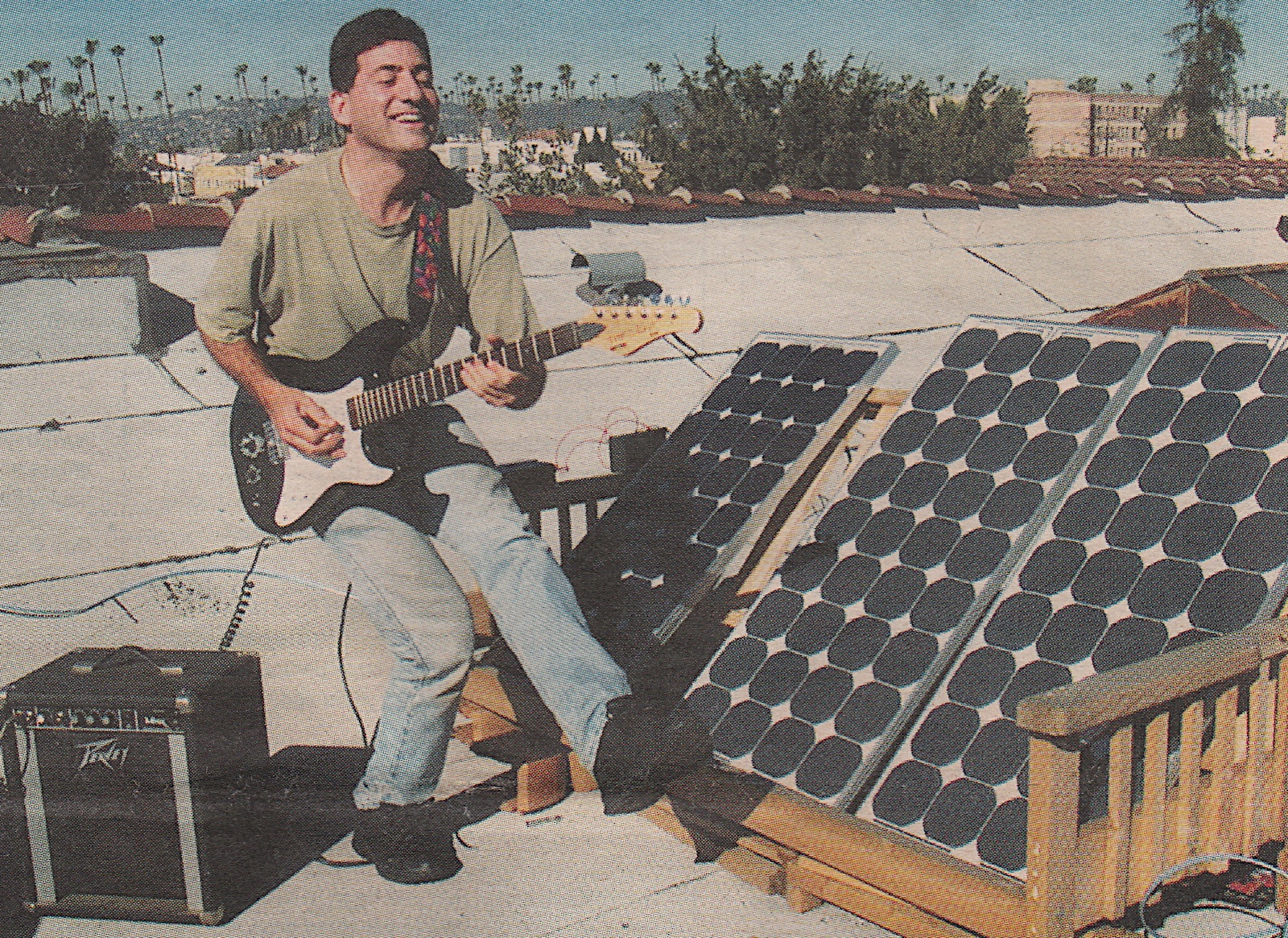
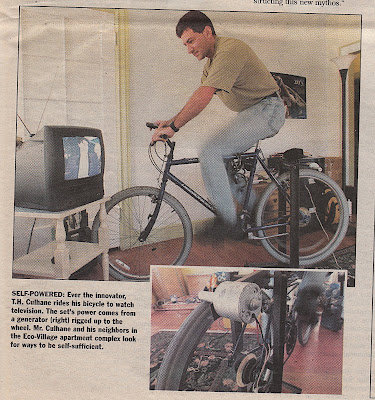
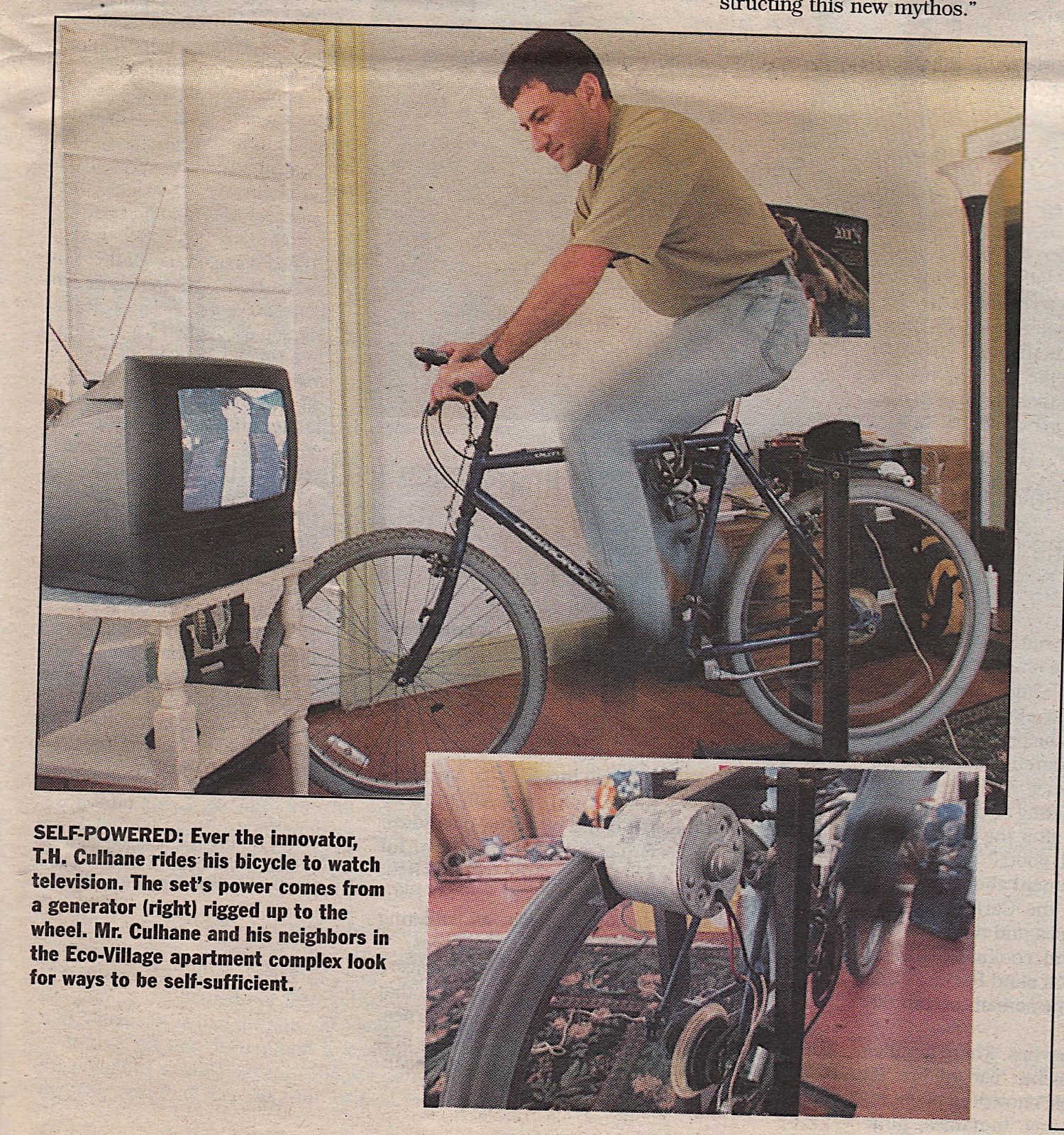
California Unplugged: Solar CITIES at the Los Angeles Eco-Village in 2001

Digging through our archives we found this 8 year old Christian Science Monitor article talking about our activities at the Los Angeles Eco-Village at the turn of the century (!) which also features our colleagues, friends and inspirations, Julia Russell, (founder of the Los Angeles Eco-Home ), Lois Arkin (founder of the Los Angeles Eco-Village) and Lara Morrison (one of the guiding lights and board directors at the LAEV).

You can download a high-resolution PDF of the article here:

http://solarcities.eu/Articles/Christian Science Monitor.pdf

Now that we are working on eco-home/eco-village concepts in Cairo, Egypt, Essen, Germany and Santa Rosa, California it is great to go back and see how we started. Thought you might enjoy sharing the history too!


A special treat is seeing this picture (below) of Alvaro Silva from Solar South Central when we were working on an electric car conversion using Mike Brown's book "Convert It".
The actual electric motor shown in the picture made its way from the L.A. Eco-Village to Solar South Central, then all the way to Cairo for workshops there and is now here in Germany awaiting its chance to be part of an electric car conversion here.
Meanwhile Alvaro was recently working with us on the green-retrofit of the 460 Lucas home in Santa Rosa and will be coming to Cairo to work with us in October. What goes around the world, comes around the world!


Friday, September 11, 2009

Animation of a simple telescoping biogas digester


For this simple animation describing just how simple it is to build your own biogas digester I downloaded Google Sketchup 7 and then used Google 3D Warehouse to download a model of a digester by roilbilad130 called "Biogas untuk limbah dapur" (which is Indonesian for "Biogas for Kitchen Garbage"). I changed the food inlet pipe and the fertilizer output pipe in the model to reflect the way they work in the ARTI India systems we have been building in Cairo and Germany and set different sequence animation key frames in Sketchup and did screen capture in Snap Z Pro. Building real digester is about as easy as building a digital one in sketchup -- it really is just two plastic barrels, one inverted inside the other, with three pipes -- one to get the food in, one to take the liquid fertilizer out and one at the top to deliver the gas to your cookstove or generator. 1000 liter tanks should get you about 2 hours of cooking gas a day if you live in a warm climate. As shown, we intend to use psychrophilic bacteria at the bottom to increase cold weather production.

The psychrophils can be obtained from lake mud in the arctic circle area. We will be obtaining our samples working with Dr. Katey Walter Anthony and Laurel McFadden at the University of Alaska, Fairbanks.

Dr. Anand Karve, inventor of the household biodigester process in Pune India reminded me to "think like a sacred cow": cows eat food, not manure, he told me, and the bacteria in the cows stomach and intestines also eat that food, mixed with saliva and water. The goal is to replicate the inside of a cow's digestive tract to help the bacteria get the most energy from the food. We only use the dung/manure to"innoculate" the system on the first day because it is the easiest non-invasive way of getting the "bacterial biogas experts" out of the animals' guts and into the tank.

In many respects making biogas is similar to making yoghurt. If you have a friend who has an active culture of methanogens from their own biogas digester (or from a septic tank, or from their baby's diaper (:)) ) just put them in. If you don't use manure, however, I'm not sure what or how much to feed them in the beginning. We will let you know as soon as we do since to culture the psychrophils from the arctic mud we will need something to encourage their growth.

The process working with mesophils from animal dung, however, is started very simply by taking about 40 or 50 kg (maybe 4 to 6 10 or 15 liter buckets) of manure (we used horse manure in Germany, cow manure in Egypt, but any manure will do) and mix it into the bottom container with water (this is per 200 liters of water but we just go ahead and fill the whole thing even up to a 1000 liters of water; it may make the wait time for first flammable gas a bit longer as it takes the bacteria time to reproduce and fill that volume, but it worked fine for us as we didn't want to haul in more manure.). Then put the top barrel on and open the top valve so all the air escapes and the top barrel sinks down into the bottom barrel all the way.

You then close the valve at the top so no air can get in and just let it sit there for anywhere from 2 weeks to a month (depending on climate). During this boring period the bacteria will multiply. At first they will just produce CO2. After a few weeks open the valve and flame test with a candle (we didn't use a flashback arrestor! Doh! :) ) . The first couple of times the escaping gas will blow out the candle. Eventually, after a few days, the methane content will exceed 50%.

Once the gas starts to burn you can start feeding your digester ground up food waste (mixed in a blender with water, about 1 to 2 Kg a day, but start slowly so as not to overwhelm the bacteria; start with 200 grams then 400 the next day etc.). Soon the CH4 content at the top of the tank will exceed 60% (since CO2 is water soluble it can get up to 70%) and can be directly used in cook stoves and engines. Hope that helps explain it. It works well and is fairly simple you'll find. Give it a try !

Remember you only have to put the manure in THE VERY FIRST DAY. After this no more manure is needed (though our neighbor at Imbrahm Recycling who has a 1 million Euro commercial operation says adding some fresh manure every couple of months keeps the bacterial colony in top form. Logically the bacteria are symbionts in animal guts and, having co-evolved there, reproduce there best. In the artificial environment of a plastic tank there is no guarantee that succeeding generations of bacteria will be selected for the right traits.). To start another digester, however, you don't need manure, just the effluent from another active digester! Started with this active culture the waiting time is much shorter.

The following description of the process by inventor Dr. Anand Karve of ARTI India in his paper "Taking Action to Rid the World of Indoor Air Pollution" is very useful and can be found in its entirety at proceedings of the CleanAirSIGe-conference: 16 -27 July 2007:

"The current process of biomethanation, which uses feedstocks like cattle dung, human feces, distillery effluents etc. is highly inefficient, because the nutritionally available calories and nutritive value of those substances is quite low. Common sense tells us that the energy output of a system must be matched by the input. Methane has a calorific value of 11000 kcal/kg. If one wants a high output of methane from this system, it must also receive input having a correspondingly high calorific value. Nowadays, municipal solid waste (MSW) is also being used as a source of methane. Food rests in the MSW have a relatively high calorific value. But in the process currently being used MSW is subjected first to aerobic fermentation, in order to reduce its bulk. The predigested material, having very few calories left in it, is then fed into the anaerobic digester for producing methane. This is called a biphasic fermentation system. As a rule of thumb, one can state that biogas production systems operating on human or animal faeces, distillery effluent, or two phase digestion of municipal solid waste, all produce about 100 kg methane per ton of feedstock. The traditional biogas generating systems require about 40 days to complete the process. The time can be shortened by using thermophilic bacteria and digestion under higher temeperature, but the input to output ratio remains unchanged.

'Use of cattle dung as the feedstock is the main factor limiting widespread use of methane as household fuel in rural India. The present domestic biogas plant requires daily about 40 kg cattle dung (from 6 to 8 heads of cattle). Because the dung must ferment for about 40 days, the size of the biogas plant is also large. Restrictions of space, money and absence of sufficient animals prevent many aspirants for having a biogas plant based on this technology. The servicing of this plant requires mixing the dung with water to make the feedstock, filling it into the biogas plant and the disposal of about 80 to 100 liters of effluent slurry. These chores must be done daily and they are considered to be a bother by the users.

"ARTI developed in 2003 a new biogas technology which uses high calorie feedstock, consisting of starchy or sugary material. This material is capable of producing about 250 kg of methane per ton of feedstock (on a dry weight basis) and the reaction takes only 1 day to complete. In the case of a household biogas system, application of daily just 1 kg of feedstock is enough to provide a family with sufficient biogas to cook all the meals. The material that can be used as feedstock in the new biogas system consists of waste grain, seed of any plant species, oilcake of non-edible oilseeds as well as nonmarketable or nonedible fruits (wild species of ficus, overripe mango and banana). Even the flour mill can be used as feedstock.

"Because of the smaller quantity of feedstock and also because of the short reaction time, the digester size and also its price are drastically reduced. The gas holder of the domestic model of the new compact biogas plant has a capacity of just 750 to 1000 liters which is enough to cook two meals for a family of five. The user applies 1 kg feedstock in the morning and another kg in the evening. The total effluent slurry generated daily by this system is hardly 10 liters. Thus, this system does away with the daily drudgery of handling huge quantitities of cattle dung and the daily hassle of disposing of about 100 liters of spent slurry. The new biogas plant would be available at a cost ranging between Rp. 10,000 to 12,000. This technology brings cooking fuel in the form of methane within reach of every household.


"The apparatus itself consists of two plastic water tanks, which are generally available in shops selling sanitary ware and plumbing hardware. The top of each drum is cut open so that the smaller drum can nest in the larger one. The outer drum serves as the digester and the inner drum, which is placed upside down into the outer drum, serves as the gas holder. The inlet pipe for the input is a vertical pipe fitted inside the gas holder. It runs along the entire length of the gas holder. The gas outlet is also fitted on the inner drum.

"To begin with, the system is loaded with a slurry containing about 250 kg cattle dung and water. Then one waits about 2 weeks, til the gas emanation begins. The gas is tested by burning it. Once it starts producing combustible gas, one can start applying the high calorie input, as explained above.

"According to an estimate by the World Health Organisation, about 3 million people in the world die every year as a consequence of exposure to suspended particulate matter in the air, and that 85% of the deaths are due to indoor air pollution. The indoor air pollution is caused mainly by traditional cookstoves, using traditional biomass based fuels. Considering India's share in the world population, the estimated deaths due to indoor air pollution in India come to annually about 500,000. Although acute respiratory infection is the single largest category of deaths in children under 5 years of age, indoor air pollution remains a neglected topic in India, because the number of persons killed annually by polluted water is much higher than that killed by polluted air. It must, however, be emphasized, that while polluted water can be made potable by filtration, chlorination, boiling, reverse osmosis, distillation etc. there is no simple treatment to purify polluted air. It is therefore necessary to reduce the pollutant load in the air at the source itself. Methane as cooking fuel would prevent these deaths. It is nonpolluting, renewable, cheap and CO2 neutral.

"In addition to household fuel, it can also be used as fuel in internal combustion engines."

We at Solar CITIES urge you to build your own digester - even if you never used the fuel, you will find that it is much better than composting for dealing with kitchen garbage and making fertilizer!


T.H., Sybille and Kilian Culhane next to a telescoping digester they built with Hanna Fathy on his roof in Manshiyet Nasser's Zabaleen community, Cairo, Egypt.

Thursday, September 10, 2009

Running a small engine on household biogas (Biogas untuk limbah dapur) using "bricking' for gas pressure


A hearty thanks to British engineer Marcel Lenormand for prodding us to finish a project a long time overdue with a well timed blog comment: "Does 'bricking' the digester's floating dome produce insufficient pressure to feed the engine?".

We'd wondered the same thing but since we hadn't built a cage to hold the floating dome in place we couldn't test our intuition that the simple act of "bricking" would actually work because every time we put bricks on the gas filled dome it would tip over.

In India we had observed that some of the ARTI Urban Biogas systems families had built had various "cages" to keep the dome level as it fills but, swamped as we've been,  we hadn't put in the time, effort or money to complete our own digester. Like many of the urban poor we engage in what the literature calls "Incremental Housing" and "bricolage" (putting things together in a hodge podge fashion using whatever materials are available or lying around).

But the day after we had done our first engine conversion trial and met with success using a hand-drill water pump for pressure we got so excited to see if mere "brickage" with the "bricolage"  would do the trick we ran off to Bauhaus and bought the cheapest materials we could think of to make a cage to enable us to allow us to experiment with "bricking" -- a bunch of plastic plumbing pipes, elbows and fittings. Still it wasn't cheap -- 35 Euro for everything (this explains why so few people bother -- bricking isn't necessary for using the gas for cooking so the extra expense isn't needed if you aren't running a generator).

The results shown in the video above prove that 4 3.5 Kg bricks (so 14 kg) is enough to keep the generator going when the pressure regulator primer is depressed (this indicates that without the regulator it would work just fine at that pressure), while the addition of two more 4.5 kg bricks, bringing our total to 23 kg (about the max weight of a full suitcase on an airline) provided enough pressure to keep the engine running and producing electricity with the regulator attached without keeping the primer depressed.

We could adjust the regulator to allow more gas in under the 14 kg pressure but for now we want to keep it set the way it came from http://www.propane-generators.com/a-c_kits.htm so that if we need to use a standard CNG bottle we can.  The idea is to be able to use our biogas when we have it but also be able to run the household using the most climate friendly fuels available on the days when sunshine is not enough here in cloudy Germany.


(A note to our critics and to fossil fuel and nuclear industry shills and lobbyists: we concede that home-made biogas electricity generation and cooking fuel from garbage , do-it-yourself solar hot water, and self-wired PV systems may not be "economical". Thus we will try to build our own backyard nuclear power plant, rooftop oil refinery and basement coal gasifier next and see how they pencil out. We hear Ahmadinejad has some extra centrifuges; anybody got the other feedstocks?)

Tuesday, September 8, 2009

Generating electricity from biogas made from household kitchen garbage turns out to be "child's play"


Summary:

On September 7 2009 we made family history by running a 650 Watt 2 stroke electric generator on kitchen-garbage-produced-methane on our porch in Germany. The procedure turned out to be pathetically simple, calling into question why many members of our species think we have to fight wars for foreign oil, and why we risk our children's futures with climate change and nuclear proliferation and the poisoning of our air, land and water when we can turn our "garbage" into clean burning fuel.

The engine was converted using a $189 type A carburetor kit from
http://www.propane-generators.com/a-c_kits.htm
in a couple of hours on a Saturday.

Converting an engine to run on biogas is child's play...


O.K., it isn't something a baby can do, but it certainly doesn't take any special training! We are not mechanics or engineers yet we found it extremely easy. The work consisted of removing the bowl float from the carburetor and then drilling out the carburetor with a hand drill. We then inserted a simple pipe connected to a gas fitting and stopped up all vents and holes (including the gasoline inlet) with black silicone. It was amazing that all the delicate engineering that goes into a carburetor for getting the right fuel-air ratios and getting the gasoline to vaporize correctly become superfluous. We found that converting a carburetor to allow an engine to run on biogas (or any source of methane) is actually a process of radically simplifying the carburetor.


The only unresolved issues are how to lubricate this two-stroke engine (our 4 stroke kit won't 't have those problems) and the best way to increase the pressure of the biogas. All are fairly trivial problems. The point is you CAN generate home power using your kitchen garbage and eliminate waste and filth and pollution and greenhouse gases.


Details:


The natural gas kit conversion for small engines is rather easy to apply. The kit cost $189, the engine/generator cost $110.

I used a two-stroke engine because it was cheaper, but we may run into problems with lubrication.

When we get to Cairo in October I will convert a larger 4-stroke engine. I bought another conversion kit for the same price for the 4-stroke engine/generator that will have no lubrication problems (and it allows hybrid tri-fuel use -- gasoline, propane and methane (biogas) can all be used, so when one is unavailable you simply switch to the other fuel).

I'm NOT a mechanic.

I'm NOT an engineer.

Far, far from it.

I was a musician, a writer, an actor and a high school teacher who later studied Urban Planning and Public Policy.

If I have any skillset is simply that I know how to read and I'm not afraid of manuals; this was my first attempt to do anything like this. A qualified week-end mechanic could use the same principles to convert their car to run on biogas.

Producing the biogas took 24 hours but the bacteria did all the work for us
-- from Saturday's kitchen garbage (food waste) we got Sunday's clean generator fuel (and fertilizerfor our rooftop garden).

Biogas is climate neutral and releases no toxic byproducts when burned.

Producing electricity from biogas using off-the shelf items is so pathetically easy
it is almost scary. It makes me wonder why people think we have to go to war for foreign oil, poison and pollute our land, air, fresh-water and oceans with oil spills, endure climate change, risk our children's lives with potential nuclear meltdowns, radiation and threats of terrorists
acquiring "dirty bombs" etc.

We know now that we can produce our own clean electricity using our own kitchen garbage, solving our energy and waste problems at the same time. Yes, quantity is an issue and it is doubtful that a family of four could produce enough waste to generate all their electricity (even saying "super size me!" all the time!) but the principle can be applied to community energy management; if all the wastes from kitchens, cafeterias and restaurants were used it would scale up nicely.

Improvements and scale-ups will come in time.

Help and suggestions are welcome.

We will continue this work in Egypt in October using a 4 stroke engine so we won't have to worry about oiling. When we get back to Germany we will purchase a 6.5 HP Hercules 4 stroke 2000 Watt generator and do the tri-fuel conversion on that.

But two-stroke engines are less expensive and more durable, and more common in developing countries

So, on behalf of the world's poor, we want to figure out how to use them.

What energy crisis?

Let's get out of this mess, shall we?

Saturday, August 29, 2009

Continuing refinements to the "endless shower" system.

Imagine if you could take a 10 minute hot shower  every day using only the amount of hot water that fills the green watering can pictured above (2 gallons or about 8 liters).  Imagine how much water, energy and money that would save you... imagine how much greenhouse gas reduction it would permit if we all did it!  Imagine if we could give everybody their right to enjoy bathing in clean hot water every day.  Imagine the effect on health and hygiene and comfort and well-being. Imagine the impact on productivity and dignity. Imagine the end of water wars...
 
 
In my obsessive empirical studies of hot water demand and dogged persistence toward the goal of adequate clean fresh water for everyone I have developed and started using a recycling shower system. People ask, "how can you take a shower using the same water over and over for 10 minutes?" I ask "how does it differ from taking a bath?" Actually, the recirculating shower I developed, which has an inline filter, is cleaner and more flexible.  
 
Tonight, after "spelunking" on my belly and back in the crawl space under the house with a video camera and lights looking for places to hook up the graywater system that will turn all shower and bath water into edible landscape irrigation, I washed off the grime and dust and cobwebs using my recycling shower with a new "bucket" technique. The yield: a nice 10 minute hot shower using only 2 gallons (7.5 to 8  liters) of water.
 
 I'm liking it more and more every day myself. Still can't get over how simple it is to cut water and energy consumption by up to 10 times with NO sacrifice in utility or lifestyle quality. I remember that one of the thing that cost Jimmy Carter the presidency was the misperception that he wanted us to "stay in thedark and wear sweaters" and Obama was ridiculed for saying we should keep our tires inflated to reduce energy consumption. The "bourgeoisie" everywhere (not just America) do NOT want to sacrifice, not even to save their own civilization.  So I'm looking for solutions that require little or no sacrifice at all but simply DO MORE WITH LESS. This one is almost scary in how obvious it is. Am I the only person doing this? I can't believe it. If you are reading this please give it a try so we are at least two and can compare notes...
 
My thesis research shows that most under-capitalized Cairo residents living in Manshiyet Nasser (where 60 % of the population heat bathing water on the stove) and Darb Al Ahmar (where 25 % of the population heats bathing water on the stove) use 10 or 20 liters per person per bath. The limiting factors are the size of the containers people can safely put on their stove (anything over 20 liters weights too much) and the amount of time people are willing to wait to heat it (10 liters can be heated in 5 to 10 minutes, 20 liters can take 20 minutes to a half an hour, depending on the strength of the stove flame). The water used is then slowly poured over the body, pausing to lather up. The most frustrating thing is when you miscalculate the amount of water you have left and can't get all the soap and shampoo off of you or out of your hair.

This invention is targeted at those who are limited to 10 liters, which, when recycled, provides adequate water to bath and clean for 10 minutes of CONTINUOUS showering -- no pausing in the cold to lather up. The first 3 to 5 liters can be used to rinse off all the soap and discarded down the drain. The next 7 to 8 liters can be used to luxuriate. in the shower, enjoying the warmth. Note the water only needs to be heated the once. A normal shower of that length would consume 40 to 50 liters of hot water.
 
My goal initially  is to create a useful, replicable system for families in Darb Al Ahmar (like us) and Manshiyet Nasser who heat water on the stove and are restricted to using a 10 liter bastila. With this system that 10 liter bastila can be brought to 40 degrees (bath temp) in about 10 minutes and then one can stand in the ... Read Moreshower using it for 10 minutes -- imagine a hot shower for 10 minutes using only 10 liters of water. Normally we use 40 to 50 liters for a shower of that length (and Americans use 100 liters for a shower of that length!). We, of course, heat our water using a solar hot water heater we built. We get 200 liters of hot water from the sun every day, and now need only 20 of that each day for me and my wife to take long hot showers. That leaves a huge surplus of hot water for washing clothes and dishes and cleaning and we can splurge and fill the bathtub! My bathroom redesign hopefully will make it all turn-key and replicable everywhere.

In my song "Maey, Oh Maey, the water song" (http://melodic-mnemonics.blogspot.com/2009/01/maey-oh-maey-water-oh-water.html) I claim that since we live on a water planet we shouldn't ever have to worry about water scarcity. Now that I've got showering down to 8 liters for 10 minutes of luxury I think I can recycle that 8 liters through my shmutzdecke slow sand filter for re-use the next day or so. Then we've got to take these solutions on the road in India and Egypt  again.
 
The next step is to "prettify" this system so that it is easy to install and use without disrupting the bathroom.  No tubes, visible pumps or batteries or buckets.  I've already made progress toward this.  The battery is already solar powered and easily recharged with a small 25 watt foldable panel like we took on tour of Morrocco and India. The system is entirely portable and can be taken with you anywhere in the world to be used in homes, hotels and even out in the field when camping.  Only the aesthetics need to be improved.
 
I'll keep you posted!

Wednesday, August 26, 2009

Extending the range of biogas digesters using Extremophiles

Lest one believe that psychrophils only have potential for winter biogas production it is worth noting that this summer in Essen, Germany, in mid-July, the average daytime temperature was highs of 16 degrees C ( 60.8 F) and lows of 13 degrees C (55 F) with a couple of days peaking at 24 degrees C (75 F). 15 Celsius is generally considered sweater-wearing weather and professional biogas producers have had to add heat to the systems (resulting in profit losses) to keep them productive. Our own mesophilic biogas system on our porch, which prefers temperatures of 37 degrees C (body temperature, 98.6 F) , has given us very poor performance this summer with the temperatures being at the bottom of the mesophiles range. We have supplemented by putting in heating coils connected to our solar hot water system at additional expense. But Katey's bacteria are at their best at this new European summer temperature range. We can expect that temperature swings will become the norm as climate change continues, threatening conventional systems that use warm-loving bacteria with unexpected shut downs and performance drops. But it isn't only the northern countries that can benefit from this; we believe our psychrophilic digesters can immediately address biodiversity and social challenges in tropical and subtropical areas.

Working with National Geographic Explorers in Residence Dereck and Beverly Joubert and fellow National Geographic Emerging Explorer and Ethnobotanist Grace Gobbo we intend to build identical systems our testing phase in Botswana and Rwanda at the Joubert's networks of eco-safari lodges and in villages at the edge of critical habitats and in Tanzania at or near The Jane Goodall Institute at the Gombe Reserve so as to determine whether or not biogas can be an effective solution to that part of the deforestation problem caused by the collection of cooking and water heating fuel.

Although these African sites are considered tropical locations, NG Explorers confirm published reports that, for example, at Gombe temperatures in July can be as low as 11 degrees C, with an average minimum of 19 degrees. Most importantly, many of the remaining forested and vegetated areas that serve as the last strongholds of great apes and other endangered megafauna are areas pushed up into the mountainous parts of the country where the altitude can create almost alpine temperature regimes.

In the Usambara mountains of Tanzania, for example, the average temperature at 900 meters is a mere 19 degrees. Even at 300 meters the mean temperature is only 24 degrees C (see W.D Newmark, Conserving biodiversity in East African forests,Springer, 2002) . While this is far too cool for the normal methanogenic bacteria found in biodigesters, Katey has shown that her psychrophiles, while happy at 0 degrees, perform best at 25 degrees C, a temperature at which mesophiles generally shut down production. This suggests that the use of these Arctic extremophiles is ideal for African deployment of biodigesters in the very environments whose biodiversity is most under threat.

The goal is to discourage any regress to the use of wood fuel in these critical forest edge habitats as well as in the lowlands during colder times. Grace shared with us that the the chimpanzee populations are very threatened because of habitat destruction but ironically even the scientific research stations and park protection facilities use fossil fuels, wood and charcoal for cooking and heating and have a hard time disposing of their waste, thus providing an example to visitors that only exacerbates the very problem they are struggling to solve. Meanwhile the Jouberts have documented a surplus of "rotting yams and other poverty class produce" in most of these areas that could completely eliminate the need for collecting firewood. A viable year-round biogas system (coupled with solar energy systems) could mitigate and even solve many habitat destruction root causes, particularly as the high profile of the Joubert's safari eco-lodges and the Goodall Institute act as catalysts for regional and international change.

What the Walter-Anthonys and the Fruetel-Culhanes have decided to do is to start using psychrophiles and mesophiles together in the same digester, much in the same way the Chinese (and now development agencies) have done "stereo-breeding" of different species of fish in the different temperature zones of aquaculture tanks to improve productivity. The cold loving bacteria will occupy the colder bottom strata, while the mesophiles will occupy the upper, warmer parts of the tanks thermocline. It might even be possible to populate the top region of the digester with thermophiles and have "a bacteria for all seasons". Theoretically, if the tank is designed correctly, the psychorophiles will dominate in the winter and the mesophiles (and possibly some thermophiles?) in the summer, but both will hang on during the periods when the temperatures are not optimal for them by occupying the parts of the tank most suitable to their metabolism. And together they will keep the system producing gas all year round. In this way, it is surmised, the winter energy costs for keeping a biogas digestor at the appropriate temperature can be reduced, hopefully to the point where it makes sense to depend on biogas and obviate the need for fossil fuels. (It would also obviate the need for external garbage disposal, since all the other household wastes would remain clean and easily recyclable, and it would eliminate most need for composting, which tends to shut down in the winter time; the biogas digestors would produce liquid fertilizer all year). The key is finding the right combination of bacterial species that can work together across different temperature regimes.

Tuesday, August 25, 2009

The do-it-yourself endless hot shower: never have to fight over water again

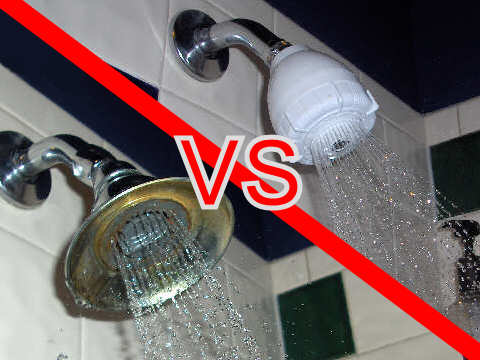
Low-flow shower heads? Nice idea, old paradigm.

No more "low flow" shower heads for this bad boy! No more 5 minute showers! I just took a 10 minute hot shower at a delivery rate of 3 gallons per minute and used only 5 gallons for the whole shower. What?!! That's 18 liters, less than the average for the Cairo poor who heat a 20 liter bastila on the stove and must pour it over themselves in less than 3 minutes. Do the math: with a federally recommended low flow shower head delivering 2.2 gpm you would use 22 gallons for a 10 minute shower. The best available low flow shower head delivers 1.5 gpm, which would use 15 gallons (56 l). The ultra ultra efficient low flow heads deliver 0.8 gpm and that measly shower still uses 8 gal (30 l) in 10 minutes. By using my water recycling pump I used only 5 gal , with a normal shower head that has three settings -- massage, pulse and flow. Try that with a low flow shower head! Annual US family of 4 H2O cost for 5 minute showers w/1.5 gpm head is $44. Ours: $14, and we get 10 minutes!

What we're interested in at Solar CITIES is providing "the other 90%" (the have nots) with the same luxuries the 10% haves have, WITHOUT increasing our ecological footprint, without using substantially more energy or water or other resources than the world's "poor" already use. The idea is to raise the standard of living world-wide, not lower it.

How do we do it? Read on below!

______________________________________________

HERE IS AN ENERGY AND WATER CONSUMPTION TABLE FOR CALIFORNIA. NOTE THAT IT REFLECTS EXCESSIVE USE AND RIDICULOUSLY LOW PRICES.


The Flex Your Power website is a comprehensive statewide resource for energy efficiency, providing information and tools to help California consumers and businesses save energy and money.

Cost-Effectiveness Example
Performance Base Modela Recommended Level Best Available
Water Use Only
Gallons per minute/cycle 2.5 gpm 2.2 gpm 1.5 gpm
Annual Water Use 18.250 gallons 16,060 gallons 10,950 gallons
Annual Water Cost $73 $64 $44
Lifetime Water Cost $590 $520 $350
Electric Water Heating
Annual Energy Use 2,370 kWh 2,120 kWh 1,540 kWh
Annual Energy Cost $142 $127 $92
Lifetime Energy Costb $1,070 $960 $690
Lifetime Energy and Water Cost Savings - $200 $600
Gas Water Heating
Annual Energy Use 131 therms 120 therms 94 therms
Annual Energy Cost $53 $48 $38
Lifetime Energy and Water Cost Savings - $100 $350
aThe flow rate of the base model just meets the current Federal standards for showerheads.
bLifetime energy cost is the sum of the discounted value of annual energy or water costs, based on average usage and an assumed showerhead life of 10 years. Future energy price trends and a discount rate of 4.1% are based on Federal guidelines (effective from April, 1998 to March, 1999). Future water and wastewater treatment costs are conservatively assumed to increase only at the rate of inflation.
Note: Metric Conversions: 1 gallon = 3.8 liters By reducing the demand for hot water, a household reduces the amount of energy needed to heat the water. In this way, a low-flow showerhead helps to cut the emission of 376 pounds of climate-changing carbon dioxide each year and a faucet aerator helps to prevent the release of 83 pounds of carbon dioxide per year.

In Germany we pay 3 Euro for every cubic meter of water, about 4 times more than Americans. And our energy costs are 4 times higher too. But this doesn't stop us from living a quality life style and paying LESS for each "unit of satisfaction". The trick is always to "do more with less". The idea is to achieve high efficiencies and Pareto optimality wherever possible.

The Culhane Endless Shower:

I've finally created an easy easy easy way to take almost "endless" hot showers using hardly any water or energy. Recycling 25 liters (6 gal) to 50 liters (12 gallons) of solar or biogas heated bath water is enough to luxuriate in a half an hour long shower using a simple 12 volt RV water pump and a 12 volt 7 amp hour hobbyist battery. Imagine never having anybody tell you to "get out of the shower -- you are going to cost us an arm and a leg" or "you are using all the hot water, get out so someone else can take a shower" again. Imagine if we could stop the regional and international conflicts over water! The 12 volt Flojet (or Surflo) 3.5 gallons per minute water pump is run by a 12v battery charged by a 200 dollar 55 watt solar panel each day for over an hour of showering. When I finish the housing the unit will be portable and can be taken to countries that experience water stress and life-threatening water wars to supplement our Solar CITIES Solar and Biogas water heating systems. As for me, I'll never go back to using a regular shower again...


Back when I was a kid in the late 1960s and early 70s, before the OPEC Oil embargo, we didn't think much about water and energy costs (they were heavily subsidized and thus appeared cheap), but that doesn't mean we weren't conservative. My grandmother, Isabel Culhane, who raised our parents during the depression and the rationing of World War II, was a paragon of recycling, victory gardening, second hand shopping, do-it-yourself pride and conservation.


Every summer Grammie would hold a "grandchildren's camp" at "the house that Jack Built" on Montague Road amidst the cornfields of rural Rockford Illinois. She would invite her 16 grandchildren to fly, drive or bus in to her midwest country abode from all over the U.S. (as far away as New York and San Francisco) where she would instill in us frontier survival values and the American can-do ethic. We would visit Maury Patrick's farm and spend two or three months learning how to sheer sheep, card and spin their wool, gather berries and bark and make our own dyes and pies, and learn weaving, wood carving and other pioneer day skills. Occassionally a mid-west storm would knock out the electricity and we'd be forced to "rough it"; like my hero, naturalist Georges-Louis Leclerc Buffon (1707-1788) , I used to gather lightening bugs ("fireflies") in mason jars to make my own disaster proof lanterns to read by under the covers. We thought it was grand fun.


What we didn't like, however, was the limited amount of hot water. Imagine: 16 grandchildren, a grandmother, and a guitar playing, prank playing and sometimes irascible Uncle Mark all sharing ONE bathroom for an entire summer, every summer for years, and a mere 80 gallon hot water tank for all those guests. The rule of the house was "you must take short showers and use as little hot water as possible". Otherwise -- no hot water for anybody.


It never occured to us in those days to build a solar hot water heater. It never occurred to us to install a tankless hot water heater (instant on-instant on-demand). America didn't offer up such consumer goods in those days (it would take 40 years and the end of a series of oil administrations before we would see these things become marginally common place in the good old U.S.A). Instead we would fight.


Uncle Mark would boom to my brother (who had a penchant then, and still does, for languid daydreaming in the shower) "Michael, get the hell out of the shower, your time is up!". Grammie would intone "girls, please take shorter showers so the boys can get in" (girls got first dibs of the hot water tank at grandchildren's camp -- common courtesy, women and the little children first).

I remember vowing that one day, "when I grow up -- I'm going to be able to take endless hot showers. Nobody will EVER tell me to cut my shower short again."

Fast forward to Egypt in 2005 when Sybille and I moved in to an unfurnished apartment in Cairo, and found that we could not afford to put in the four electric hot water heaters that the plumbing of the building demanded. We spent a miserable month heating water on the stove and pouring it in the bath until we learned enough and were able to use social capital to construct a solar hot water system. Once that was done the rest of our time was quite enjoyable, providing we stayed within the limits of the 200 liters (55 gallons) of hot water that we could heat each day.

We went on to form Solar CITIES and build and install three dozen solar hot water systems and 5 urban biogas systems in poor communities in Cairo, a feat that earned us a National Geographic Emerging Explorer Award in 2009. You would think we had the hot shower thing licked.

But for all our success in do-it-yourself hot water goodness, two things kept gnawing at me. 1) The idea that when taking a hot shower, all the heat you have expended so much money, time and effort capturing falls on your body for mere seconds before tumbling down the drain -- a huge and unconscionable waste that belies our efforts to help "the other 90%". 2) the sheer amount of water used, hot or cold, just to stand there and feel a waterfall on your body can not be justified in an era when fresh water is in short supply and people are fighting water wars in India and other nations that are claiming lives.

How to construct an endless hot shower that allows the luxury we crave without the resource wastage we decry?

I had done some experiments on the subject when I was a resident of the Los Angeles Eco-Village from 1999 to 2003, but hadn't put them into long-term effect. In Germany, where water costs over 3 Euro per cubic meter (the most expensive in the world), even though we have a fancy vacuum tube solar hot water heater, I was feeling miserable because of the sheer amount of water we were wasting every day (we could see it because we collect all of our gray water in a tank outside the bathroom window to flush the toilet and irrigate the rooftop garden). Between me and my wife and our baby son we were using up 1000 liters every two days. The water bill at the end of the month was a shocker. So it was back to taking short showers, solar heater or no.

Tonight I decided enough is enough. Frank DiMassa and I drove to RV specialists in Santa Rosa (on Yolanda) where Curtis, the owner, sold me a Flojet Premium Quiet Quad Model 4406-143 Type IV 12 Volt self-priming RV water pump (3.2 gallons per minute, consuming 3.3 amps). It cost $95 dollars. I also bought an in-line filter for it. The rational (which I used when I took my L.A. Eco-Village apartment off-grid for three years): Imagine your home to be a mobile-home without wheels. An RV that you use for living instead of recreation (an LV?).

By outfitting my static home with solar panels and a 12 volt water pump run off of a 12 volt 7 amp-hour sealed hobbiest battery (you can find them at Home Depot for security gates), just like you would in a mobile home, I have finally achieved the holy grail of an endless hot shower.


Well, not quite endless, but at least a half an hour to 40 minutes of hot water, without using more than 50 liters (13 gallons) per shower. I can even get it down to 25 liters if I want to, and still get about 30 minutes out of it. I've found that after 30 minutes I'm sick of being in the shower anyway. So for my purposes, the shower is endless. 25 liters can be recycled through a slow sand filter water purifier and used again the next day, so it is in some sense endless if you use recycled water.

The set-up is very very simple (see picture). The pump (which is very very quiet) sits on a table in the bathroom. it is connected to a little 12 volt battery which will be recharged by the solar panel. It has an on off switch and a 10 amp fuse in line with the positive wire. The water intake is fitted with a 1/2 inch hose adapter and 10 feet of hose. At the end of the hose is the in-line water filter that Flojet makes for the pump. This prevents hair from getting into the pump. The water outflow is a 1/2 " thread connector connected to two flexible shower hose for length (joined by a male-male 1/2 " nipple). Before the shower head itself I put a fixture that lets me turn the water on or off; this also turns on and shuts off the pump automatically without having to get out of the tub to flick the switch on the battery until I'm nice and dry (the pump senses a lack of water flow and shuts off by itself).

And that is it. Now I fill the bathtub with just enough hot water to cover the in-line filter (which sits at the bottom of the tub where the soap bubbles don't hang out) and then start showering. Since the pump is self-priming I don't have to do anything. The water stays warm far longer than I care to stay in, and I can just forget myself, daydreaming, shampooing, shaving, massaging sore muscles. Nobody can EVER yell "get out of the shower, you are using too much water" or "too much electricity" or "too much gas" or "you are using up all the hot water, leave some for somebody else." That 25 to 50 liters is MINE to use for as long as it stays warm. And you can actually get two or three showers out of it if you keep each shower to 15 minutes or less.

Improvements: I will build a nice water-tight, vibration proof housing for the pump and the battery with the switch on the outside so it can be easily carried to any bathroom anywhere and instantly set up, and will make it a portable endless hot shower to be taken to arid countries where people are fighting wars for a resource that should never be in short supply.

We live on a water planet. As Silvia Earle said, "we should call this the planet Ocean, the planet Water". There is so much of it!
Wouldn't it be nice if we no longer had to fight to use it?


Comments:
Kabir liked this on facebook.

Culhane replies:
Thanks for liking, Kabir. I was galvanized into action when IYCN (was it you?) posted the link about the water wars in India that were claiming so many lives. I can't any longer take long showers without thinking about all the people who not only "have not" but are dying in the struggle to have very little. This is National Geographic's Water year. So between the Shmutzdecke slow sand water purifier we built on our porch and this little water recycler we have new projects to bring to Cairo this October and hopefully around the world. Try this out -- it really is simple and effective. Cheers, T

Mustafa liked this on facebook.

Culhane replies:
Thanks for liking Mustafa -- I will hope to bring a working model to Cairo in October. Meantime, check and see what the price of a 12 volt water pump is in Egypt. What is happening with your house that collapsed? Are you moved into your new place in Darb Al Ahmar? Have you been able to put up the solar hot water system? How is your family? What a tragedy you faced! If you get in touch with Omar Nagi and Hanna (who is about to have a baby) and with Hussein Al Farag this week you might be able to connect with Kimberly from National Public Radio who is there looking at Solar Hot water and biogas and the Solar CITIES initiative. It would be great for you to connect with everyone! I will facebook friend suggest them to you.

Elisa commented:
5 minutes is plenty of time for a shower - why should anybody take a longer shower unless it is a medical/life sustaining measure. great for large families where 5 minutes of hot water per person may be a luxury - to the others of us who want to 'luxuriate' under hot running water i say 'suck it up'. get clean & get out:-)

Culhane replied:
Good point Elisa, but old paradigm. Since my energy costs are nil to null (solar heating and PV for the 12v battery) and my water use over 10 minutes is lower than the lowest ultra low-flow shower-head using 5 minute shower taker (i.e. about half of what the miser would use), what would the objection be? Everyone else is simply throwing water and heat down the drain that only passed over their body for mere seconds. That is the travesty. With my recycling shower the same water and heat is used over and over again until the heat is gone. And then the water is used to irrigate the garden and flush the toilet.

Amanda liked the link on Facebook.


Culhane replied:
Thanks for liking Amanda! One thing I neglected to mention is that if the bathroom is well insulated (double pane glass windows etc.) the same 5 gallons can last even longer than 10 minutes -- it is all about delta T -- the temp difference between the water and the air.  If the bathroom (or shower stall) is warm and steamy the hot water just cycles around and around and around without losing heat to the air. So a 10 minute shower can turn into a 20 minute shower without using any more water or heat energy (and just about 30 watts for the pump, easily supplied by solar).


Sybille liked the link on Facebook.


Culhane replied:
Thanks for liking the link Sybille. We should be able to cut our expensive German water bill (where water costs us 3 euro every 1000 liters, which is currently every couple of days, the most expensive water in the world!) down to a fraction of what we are now spending. I know that our greywater is recycled into the rooftop garden and the ... Read Moredownstairs garden and flushes our toilet, so we don't waste it, but now imagine that a 10 minute shower won't use more water than two toilet flushes! That is gong to be amazing, huh? The idea for our Solar CITIES project should be to provide the same luxuries to the 'have nots' that the 'haves' have, WITHOUT raising the ecological footprint at all! I think it is achievable if we rethink the way we do things.
Posted by T.H. Culhane at 12:08 AM