تتكون آساسا من حيز مناسب يسمح بتوفير ظروف الهضم الاهوایي وتحقيق الظروف المناسبة لنشاط الكائنات الدقيقة وبحخم يكفى كمية المخلفات المتوفرة بعد خلطها بامائ بالنسبة المطل،بة مع إمكانية تجميع وتخزين الغاز المنتج لسحبة عند الحاخة للاستجدام مع توفير وسيلة مناسبة لإدخال المادة العصوية بالقدر و الشكل المطلوب وكذا وسيلة لإخراخها بعد التخمير آو الهظم لضمان استمرار العملية بكفاءة والمخموات تتفاوت في آحجامها حسب كمية المخلفات المتاحة او كمية الغاز المطلوبة كما آنها تختلف من ناحية التصميم فمنها البسيط (منخفض الانتاجية) ومنها المصمم بطريقة توفر آفضل ظروف التخمير لزيادة الانتاجية (شكل ١ - آ ب ج) مخمر بيوغاز هند ي الطراز و مخمر بيوغاز صيني الطراز شكل رقم ١ - ٣ بعض مخمرات البيوجاز المنزلية البسسيطة<
Solar Power isn't Feasible!

This cartoon was on the cover of the book "SolarGas" by David Hoye. It echoes the Sharp Solar slogan "Last time I checked nobody owned the sun!"
Saturday, September 19, 2009


Friday, September 18, 2009
Still experimenting with small engines on biogas
After a week of cold days (averaging 15 degrees) with clouds and rain we finally got a couple of sunny days to fill our 200 liter biogas tank. We wanted to see how many minutes we could run the generator on this amount. Unfortunately a little over half of the gas was lost experimenting with the in-line oilers (which didn't work) so by the time we got the engine going we had less than 100 liters to work with. We ended up getting 3 minutes of run time from this (and we had to oil the crankshaft through the spark plug hole.)
All in all it may have been a godsend, because when we pulled the spark plug to see if it was still oily we found it dry. Had the engine run dry it might have been ruined.
We still feel the need to find a way to use two-stroke engines with biogas because 2-strokes are cheaper, more robust, smaller and more often found in "developing countries" and among the "poor" than 4-stroke engines. Obviously 4-stroke engines are much better suited for biogas because they are "self-oiling". But it would be nice to figure out how to get the right amounts of oil into a two-stroke running on our biogas.
As you can see in the video, we had put too much oil in through the spark plug port, leading the engine to smoke like crazy. Note that this smoke has nothing to do with the biogas. Biogas burns absolutely cleanly with no smoke or smell. This shows also that the major problems with two stroke engines (and why motorcycles, lawn mowers and rickshaws produce so much pollution) is almost completely due to the oil associated with the fuel.
This will be our last test of two stroke engines for now, until we can solve the oiling problem (maybe using motorkote will help? Since biogas is not a solvent like gasoline, if a better lubricant were in the motor maybe it would last longer.)
In Cairo at Hanna's next month we will convert a 4 stroke engine to run on "tri-fuel" (principally biogas, but with the option to revert to other fuels if necessary -- 4 stroke engine conversion kits give you hybrid tri-fuel possibilities!) and figure out how long we can run it on a 1000 liters of gas.
Our conservative estimate from this experiment, where we got about 3 minutes from about 100 liters is that we will get about 30 minutes -- a half hour -- from our Cairo systems. If the generator is a 1 KW generator and we can run it for 30 minutes we can "bank" about 500 Wh in a battery system. Then that 500 W can be used to power 5 twenty-watt light bulbs (100 watts worth) for about 5 hours (or maybe 4, considering losses). That would be a good result if each day or two a family could produce and store enough electricity from their garbage to run their lights for the evening.
Today's experiment is therefore encouraging.
Other encouraging things:
We had had concerns that this open tank design led to losses and that we would need to create totally airtight containers but now that we have covered the digester with plastic and seen it does not fill with gas we feel more confident that it does not lose a lot from the sides and we can save money and time continuing to use open telescoping digester designs.
In practice we haven't seen any filling of the plastic bag with gases evolving from the open gaps on the outside of the tank. This suggests that methane losses are negligible. Perhaps the anaerobic bacteria avoid these areas because of the possible air exposure and build their biofilms inside the total anerobic chamber inside.
One very useful comment we got on youtube was to try replacing the bricks with a 30 liter water tank (given that we need 23 to 25 kg to run the engine) which would allow us to vary the weight by adding or removing water and would distribute the weight more evenly. While the current design of the "cage" surrounding the gas collection vessel precludes this option for the moment, we will incorporate this suggestion into future designs.
Note we've had to abandon the air compressor oilers completely and placed the regulator where it should be, below the engine. Something that is not shown in the video is just how many times we tried to start the engine and were unable. Either there was too much oil in the line, or not enough gas, or the air-fuel mixture was wrong. Finally, by removing the in-line oilers, draining some of the oil that was stuck in the feed tube and priming, then starting (as usual for biogas with the choke wide open) we got it to start. But by the time we were able to get the gas flowing properly we had wasted more than half our gas, so we were running on a bit less than 100 liters which lasted the 3 minutes shown.
The very conservative estimate now, considering that we get about 12 to 15 minutes cooking on the same amount of gas, is that running the engine consumes about 4 to 5 times as much gas. In the 1000 liter systems where we get about 2 hours of cooking gas we thus estimate half an hour of electricity generation. But these are very conservative estimates based on a single flawed sample. The literature says that 1 cubic meter (1000 liters) of biogas should give about 2 KW of power. This might be for more pure gas however (our mixture of home made biogas is said to be about 60 percent CO2). We will be optimistic and hope for an hour of electricity with a 1 KW motor, but would still be happy with 500 Watts worth. That would be just enough to make this worthwhile at the home level.
We'll report back when we know more.
Suggestions and comments are welcome.
Wednesday, September 16, 2009
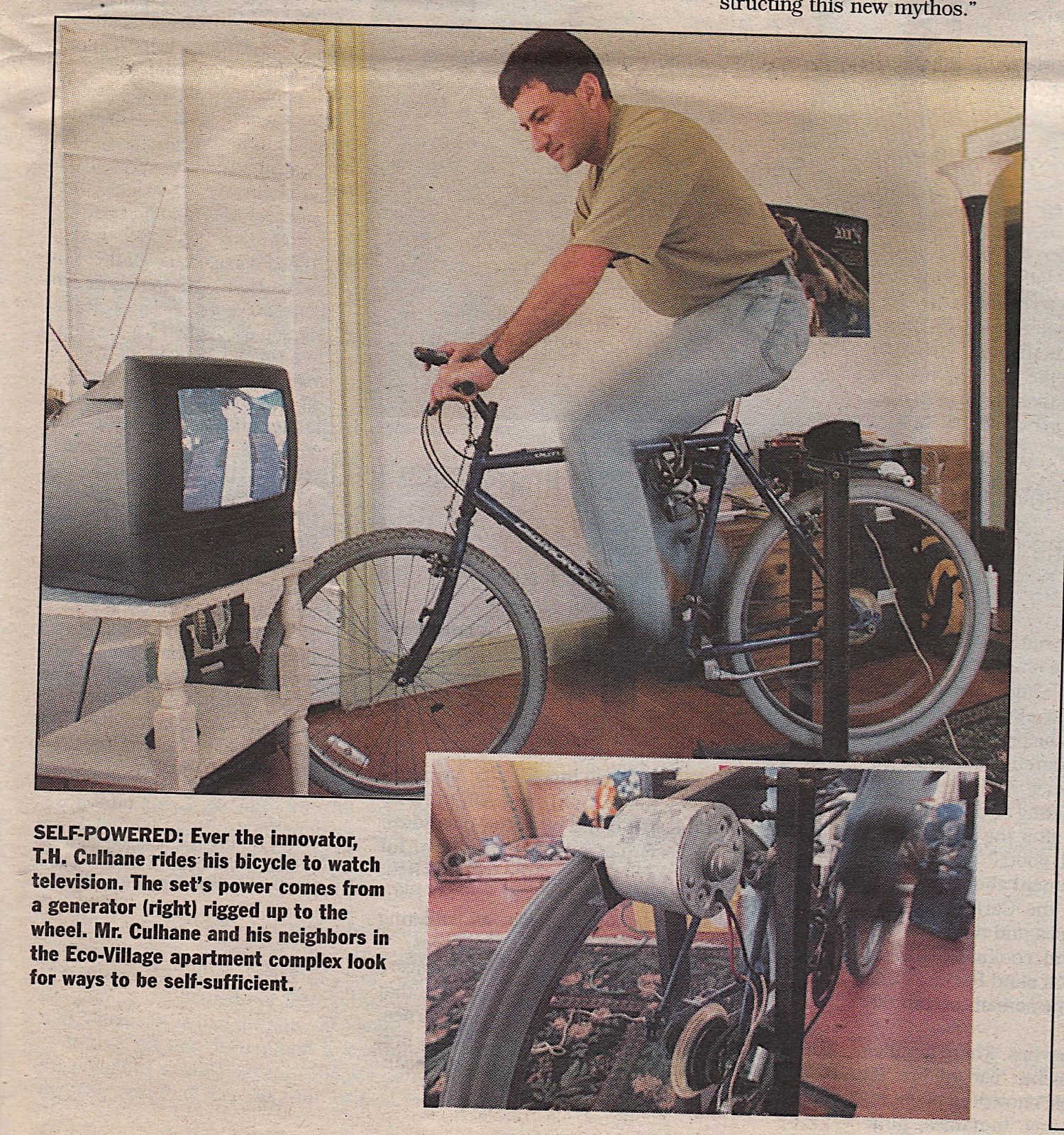
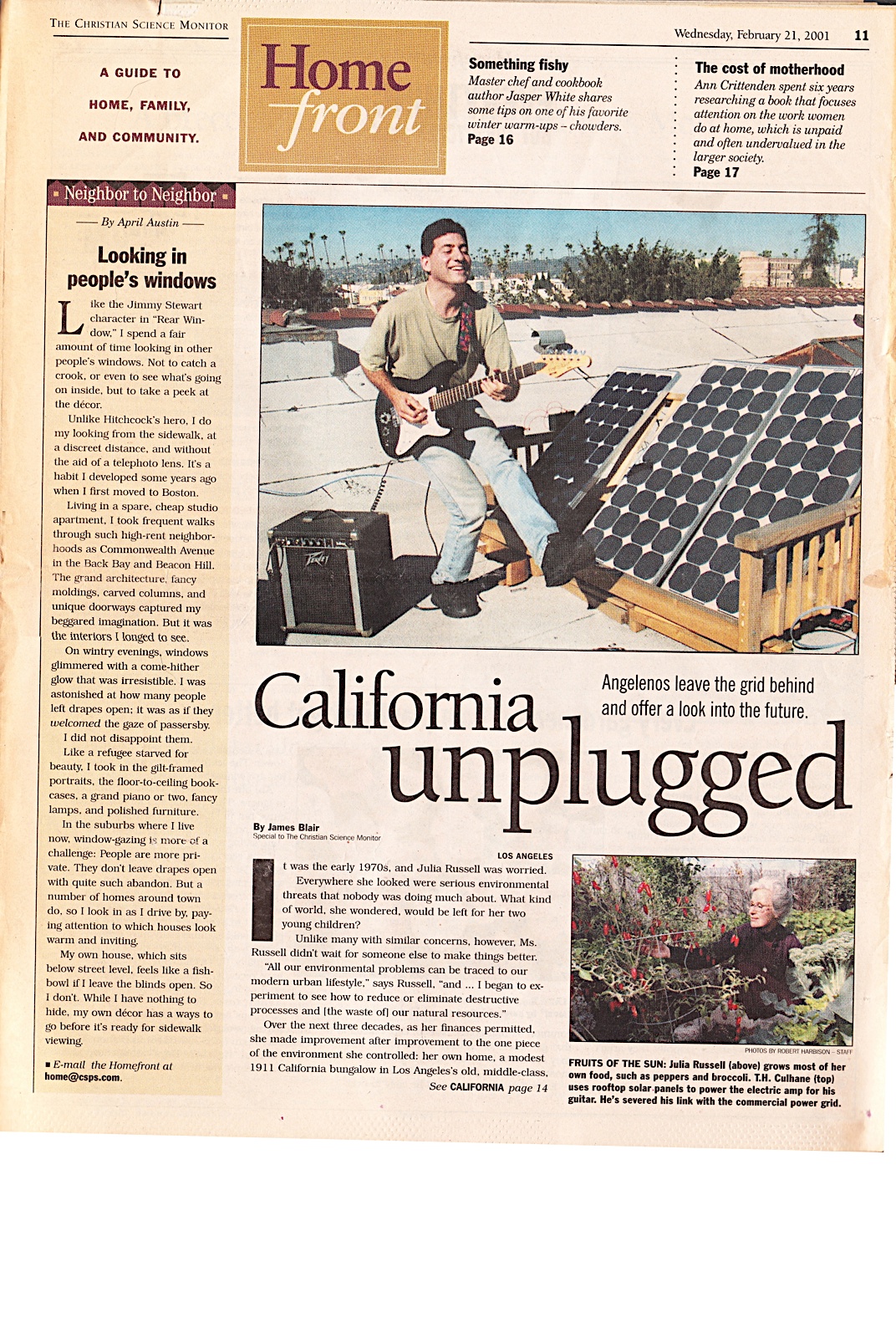
California Unplugged: Solar CITIES at the Los Angeles Eco-Village in 2001
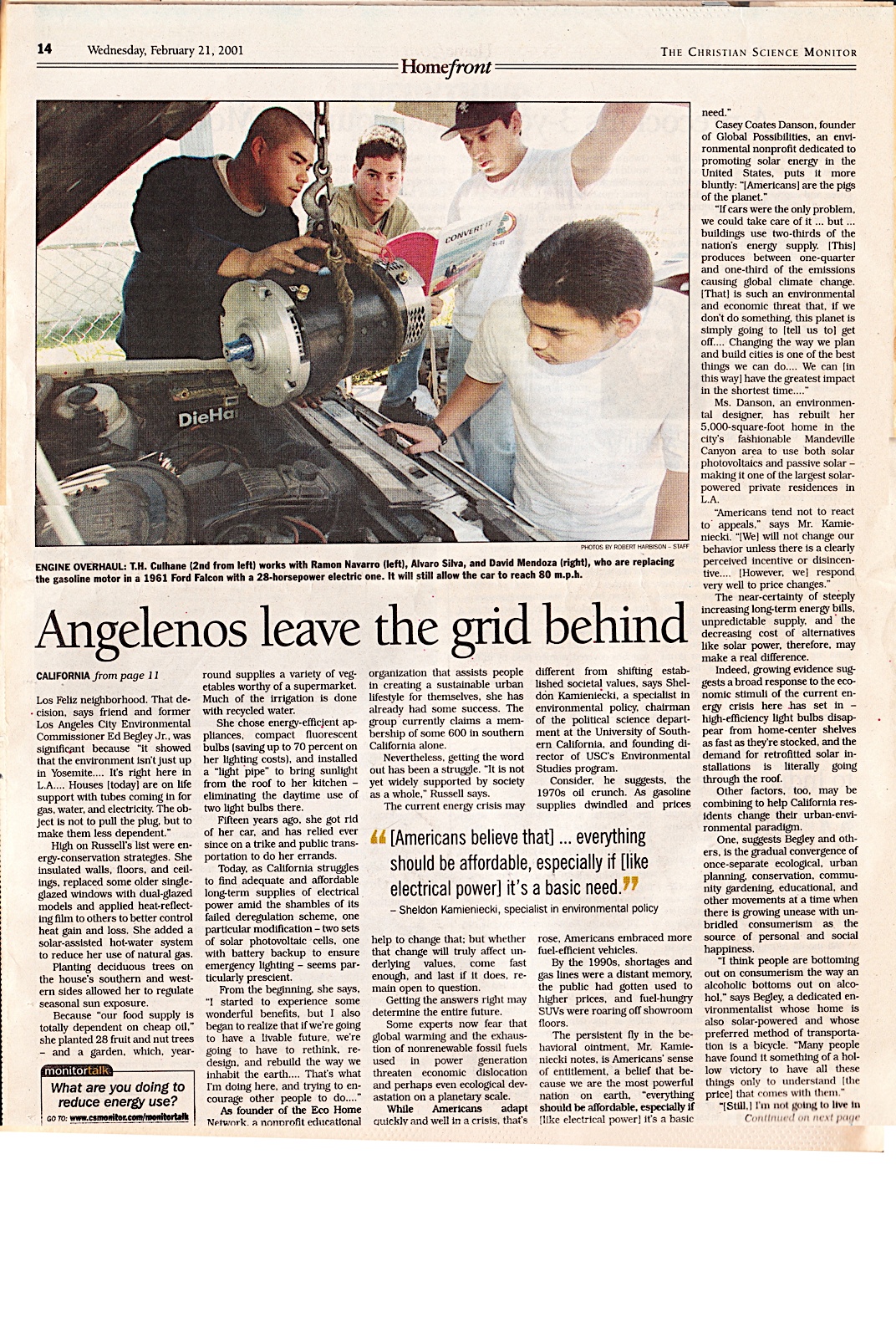
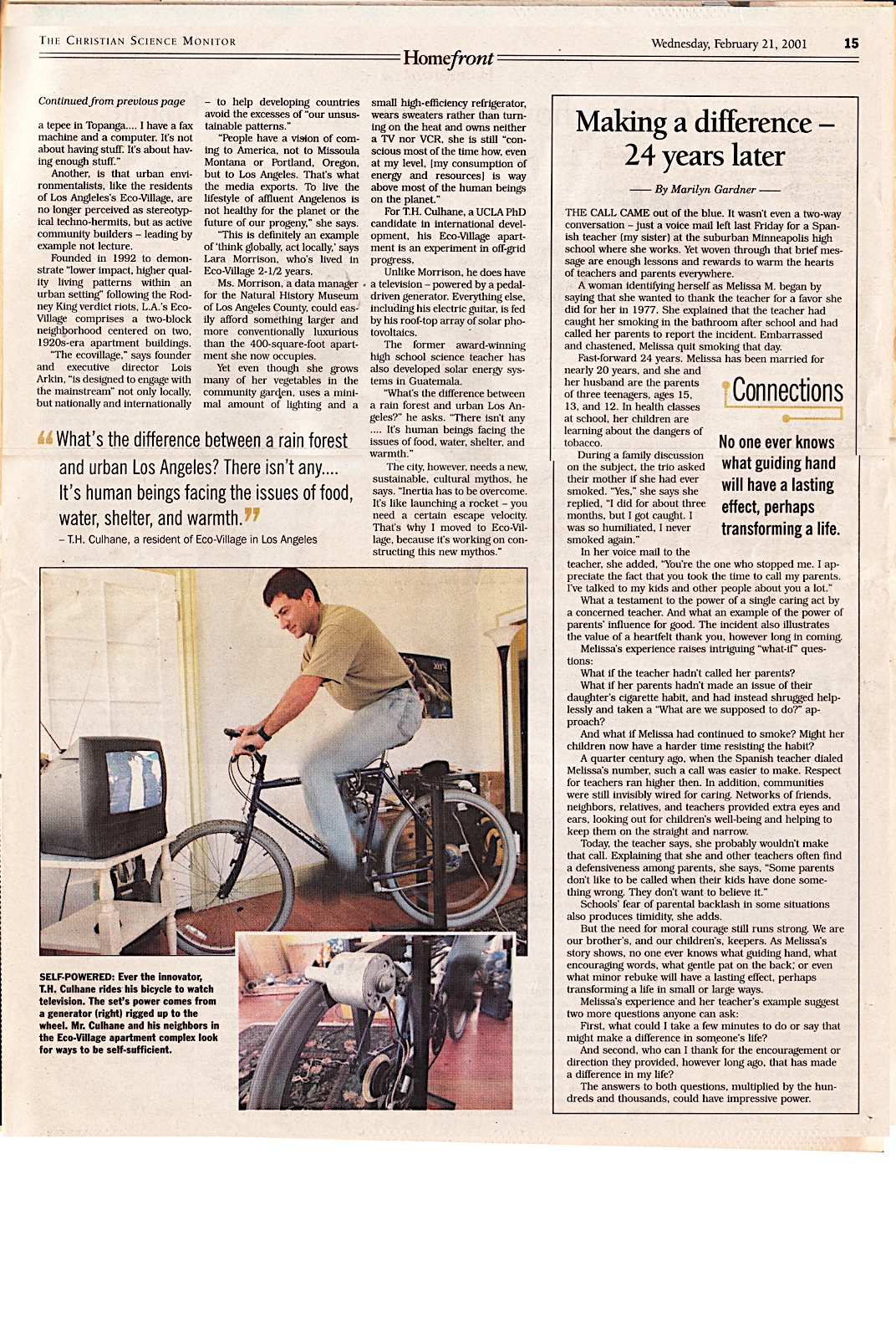
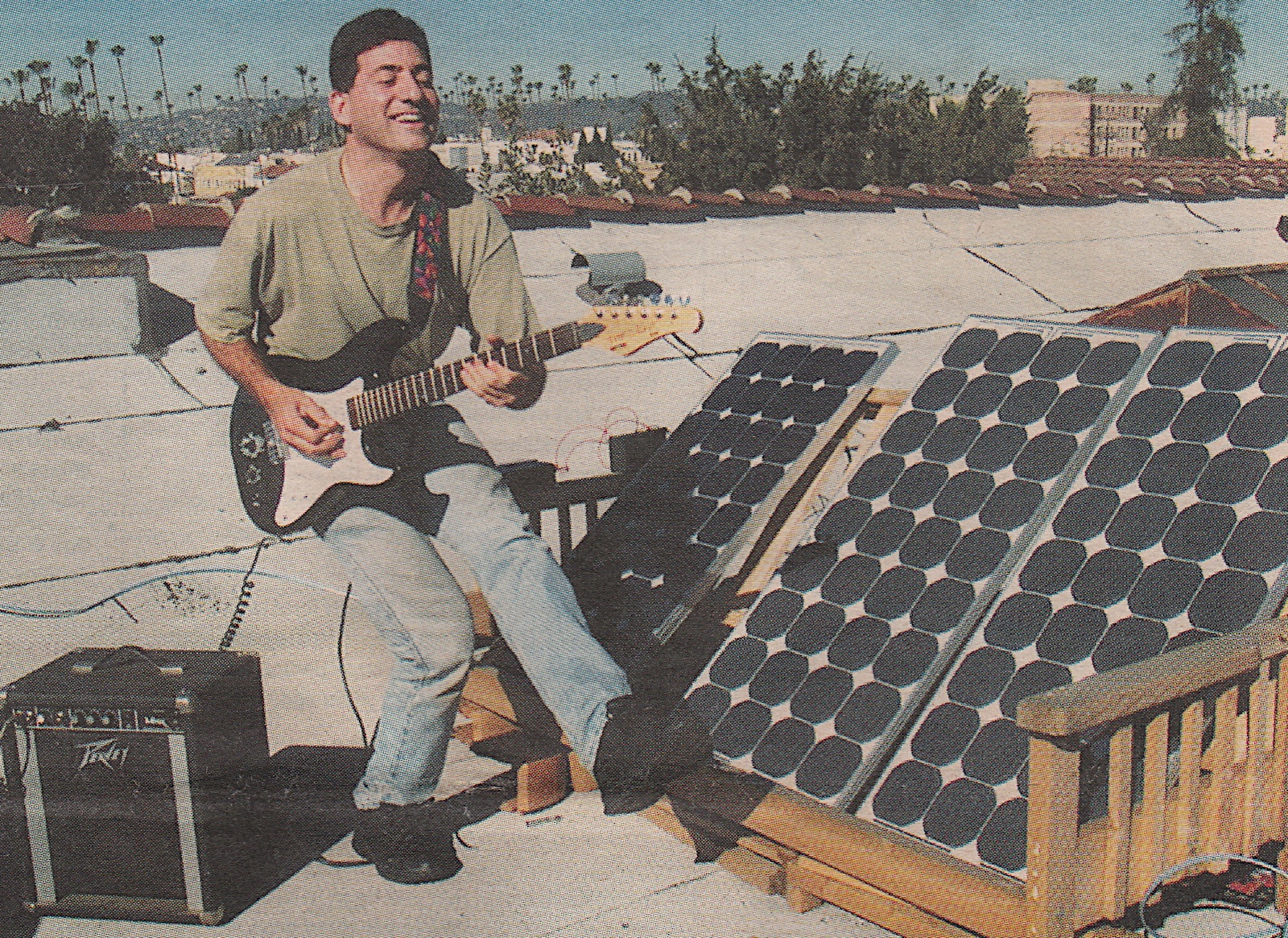
Digging through our archives we found this 8 year old Christian Science Monitor article talking about our activities at the Los Angeles Eco-Village at the turn of the century (!) which also features our colleagues, friends and inspirations, Julia Russell, (founder of the Los Angeles Eco-Home ), Lois Arkin (founder of the Los Angeles Eco-Village) and Lara Morrison (one of the guiding lights and board directors at the LAEV).
You can download a high-resolution PDF of the article here:
http://solarcities.eu/Articles/Christian Science Monitor.pdf
Now that we are working on eco-home/eco-village concepts in Cairo, Egypt, Essen, Germany and Santa Rosa, California it is great to go back and see how we started. Thought you might enjoy sharing the history too!
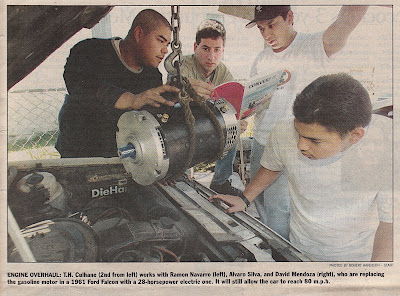
A special treat is seeing this picture (below) of Alvaro Silva from Solar South Central when we were working on an electric car conversion using Mike Brown's book "Convert It".
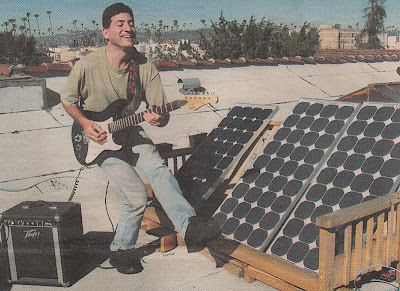
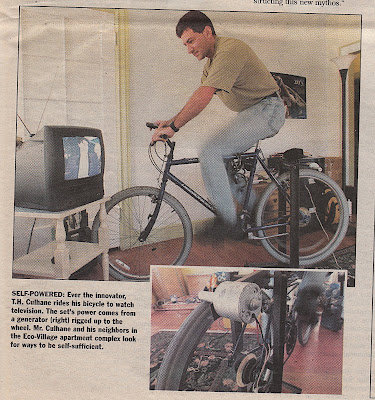
You can download a high-resolution PDF of the article here:
http://solarcities.eu/Articles/Christian Science Monitor.pdf
Now that we are working on eco-home/eco-village concepts in Cairo, Egypt, Essen, Germany and Santa Rosa, California it is great to go back and see how we started. Thought you might enjoy sharing the history too!
A special treat is seeing this picture (below) of Alvaro Silva from Solar South Central when we were working on an electric car conversion using Mike Brown's book "Convert It".
The actual electric motor shown in the picture made its way from the L.A. Eco-Village to Solar South Central, then all the way to Cairo for workshops there and is now here in Germany awaiting its chance to be part of an electric car conversion here.
Meanwhile Alvaro was recently working with us on the green-retrofit of the 460 Lucas home in Santa Rosa and will be coming to Cairo to work with us in October. What goes around the world, comes around the world!

Friday, September 11, 2009
Animation of a simple telescoping biogas digester
For this simple animation describing just how simple it is to build your own biogas digester I downloaded Google Sketchup 7 and then used Google 3D Warehouse to download a model of a digester by roilbilad130 called "Biogas untuk limbah dapur" (which is Indonesian for "Biogas for Kitchen Garbage"). I changed the food inlet pipe and the fertilizer output pipe in the model to reflect the way they work in the ARTI India systems we have been building in Cairo and Germany and set different sequence animation key frames in Sketchup and did screen capture in Snap Z Pro. Building real digester is about as easy as building a digital one in sketchup -- it really is just two plastic barrels, one inverted inside the other, with three pipes -- one to get the food in, one to take the liquid fertilizer out and one at the top to deliver the gas to your cookstove or generator. 1000 liter tanks should get you about 2 hours of cooking gas a day if you live in a warm climate. As shown, we intend to use psychrophilic bacteria at the bottom to increase cold weather production.
The psychrophils can be obtained from lake mud in the arctic circle area. We will be obtaining our samples working with Dr. Katey Walter Anthony and Laurel McFadden at the University of Alaska, Fairbanks.
Dr. Anand Karve, inventor of the household biodigester process in Pune India reminded me to "think like a sacred cow": cows eat food, not manure, he told me, and the bacteria in the cows stomach and intestines also eat that food, mixed with saliva and water. The goal is to replicate the inside of a cow's digestive tract to help the bacteria get the most energy from the food. We only use the dung/manure to"innoculate" the system on the first day because it is the easiest non-invasive way of getting the "bacterial biogas experts" out of the animals' guts and into the tank.
In many respects making biogas is similar to making yoghurt. If you have a friend who has an active culture of methanogens from their own biogas digester (or from a septic tank, or from their baby's diaper (:)) ) just put them in. If you don't use manure, however, I'm not sure what or how much to feed them in the beginning. We will let you know as soon as we do since to culture the psychrophils from the arctic mud we will need something to encourage their growth.
The process working with mesophils from animal dung, however, is started very simply by taking about 40 or 50 kg (maybe 4 to 6 10 or 15 liter buckets) of manure (we used horse manure in Germany, cow manure in Egypt, but any manure will do) and mix it into the bottom container with water (this is per 200 liters of water but we just go ahead and fill the whole thing even up to a 1000 liters of water; it may make the wait time for first flammable gas a bit longer as it takes the bacteria time to reproduce and fill that volume, but it worked fine for us as we didn't want to haul in more manure.). Then put the top barrel on and open the top valve so all the air escapes and the top barrel sinks down into the bottom barrel all the way.
You then close the valve at the top so no air can get in and just let it sit there for anywhere from 2 weeks to a month (depending on climate). During this boring period the bacteria will multiply. At first they will just produce CO2. After a few weeks open the valve and flame test with a candle (we didn't use a flashback arrestor! Doh! :) ) . The first couple of times the escaping gas will blow out the candle. Eventually, after a few days, the methane content will exceed 50%.
Once the gas starts to burn you can start feeding your digester ground up food waste (mixed in a blender with water, about 1 to 2 Kg a day, but start slowly so as not to overwhelm the bacteria; start with 200 grams then 400 the next day etc.). Soon the CH4 content at the top of the tank will exceed 60% (since CO2 is water soluble it can get up to 70%) and can be directly used in cook stoves and engines. Hope that helps explain it. It works well and is fairly simple you'll find. Give it a try !
Remember you only have to put the manure in THE VERY FIRST DAY. After this no more manure is needed (though our neighbor at Imbrahm Recycling who has a 1 million Euro commercial operation says adding some fresh manure every couple of months keeps the bacterial colony in top form. Logically the bacteria are symbionts in animal guts and, having co-evolved there, reproduce there best. In the artificial environment of a plastic tank there is no guarantee that succeeding generations of bacteria will be selected for the right traits.). To start another digester, however, you don't need manure, just the effluent from another active digester! Started with this active culture the waiting time is much shorter.
The following description of the process by inventor Dr. Anand Karve of ARTI India in his paper "Taking Action to Rid the World of Indoor Air Pollution" is very useful and can be found in its entirety at proceedings of the CleanAirSIGe-conference: 16 -27 July 2007:
"The current process of biomethanation, which uses feedstocks like cattle dung, human feces, distillery effluents etc. is highly inefficient, because the nutritionally available calories and nutritive value of those substances is quite low. Common sense tells us that the energy output of a system must be matched by the input. Methane has a calorific value of 11000 kcal/kg. If one wants a high output of methane from this system, it must also receive input having a correspondingly high calorific value. Nowadays, municipal solid waste (MSW) is also being used as a source of methane. Food rests in the MSW have a relatively high calorific value. But in the process currently being used MSW is subjected first to aerobic fermentation, in order to reduce its bulk. The predigested material, having very few calories left in it, is then fed into the anaerobic digester for producing methane. This is called a biphasic fermentation system. As a rule of thumb, one can state that biogas production systems operating on human or animal faeces, distillery effluent, or two phase digestion of municipal solid waste, all produce about 100 kg methane per ton of feedstock. The traditional biogas generating systems require about 40 days to complete the process. The time can be shortened by using thermophilic bacteria and digestion under higher temeperature, but the input to output ratio remains unchanged.
'Use of cattle dung as the feedstock is the main factor limiting widespread use of methane as household fuel in rural India. The present domestic biogas plant requires daily about 40 kg cattle dung (from 6 to 8 heads of cattle). Because the dung must ferment for about 40 days, the size of the biogas plant is also large. Restrictions of space, money and absence of sufficient animals prevent many aspirants for having a biogas plant based on this technology. The servicing of this plant requires mixing the dung with water to make the feedstock, filling it into the biogas plant and the disposal of about 80 to 100 liters of effluent slurry. These chores must be done daily and they are considered to be a bother by the users.
"ARTI developed in 2003 a new biogas technology which uses high calorie feedstock, consisting of starchy or sugary material. This material is capable of producing about 250 kg of methane per ton of feedstock (on a dry weight basis) and the reaction takes only 1 day to complete. In the case of a household biogas system, application of daily just 1 kg of feedstock is enough to provide a family with sufficient biogas to cook all the meals. The material that can be used as feedstock in the new biogas system consists of waste grain, seed of any plant species, oilcake of non-edible oilseeds as well as nonmarketable or nonedible fruits (wild species of ficus, overripe mango and banana). Even the flour mill can be used as feedstock.
"Because of the smaller quantity of feedstock and also because of the short reaction time, the digester size and also its price are drastically reduced. The gas holder of the domestic model of the new compact biogas plant has a capacity of just 750 to 1000 liters which is enough to cook two meals for a family of five. The user applies 1 kg feedstock in the morning and another kg in the evening. The total effluent slurry generated daily by this system is hardly 10 liters. Thus, this system does away with the daily drudgery of handling huge quantitities of cattle dung and the daily hassle of disposing of about 100 liters of spent slurry. The new biogas plant would be available at a cost ranging between Rp. 10,000 to 12,000. This technology brings cooking fuel in the form of methane within reach of every household.
"The apparatus itself consists of two plastic water tanks, which are generally available in shops selling sanitary ware and plumbing hardware. The top of each drum is cut open so that the smaller drum can nest in the larger one. The outer drum serves as the digester and the inner drum, which is placed upside down into the outer drum, serves as the gas holder. The inlet pipe for the input is a vertical pipe fitted inside the gas holder. It runs along the entire length of the gas holder. The gas outlet is also fitted on the inner drum.
"To begin with, the system is loaded with a slurry containing about 250 kg cattle dung and water. Then one waits about 2 weeks, til the gas emanation begins. The gas is tested by burning it. Once it starts producing combustible gas, one can start applying the high calorie input, as explained above.
"According to an estimate by the World Health Organisation, about 3 million people in the world die every year as a consequence of exposure to suspended particulate matter in the air, and that 85% of the deaths are due to indoor air pollution. The indoor air pollution is caused mainly by traditional cookstoves, using traditional biomass based fuels. Considering India's share in the world population, the estimated deaths due to indoor air pollution in India come to annually about 500,000. Although acute respiratory infection is the single largest category of deaths in children under 5 years of age, indoor air pollution remains a neglected topic in India, because the number of persons killed annually by polluted water is much higher than that killed by polluted air. It must, however, be emphasized, that while polluted water can be made potable by filtration, chlorination, boiling, reverse osmosis, distillation etc. there is no simple treatment to purify polluted air. It is therefore necessary to reduce the pollutant load in the air at the source itself. Methane as cooking fuel would prevent these deaths. It is nonpolluting, renewable, cheap and CO2 neutral.
"In addition to household fuel, it can also be used as fuel in internal combustion engines."
We at Solar CITIES urge you to build your own digester - even if you never used the fuel, you will find that it is much better than composting for dealing with kitchen garbage and making fertilizer!

T.H., Sybille and Kilian Culhane next to a telescoping digester they built with Hanna Fathy on his roof in Manshiyet Nasser's Zabaleen community, Cairo, Egypt.
Thursday, September 10, 2009
Running a small engine on household biogas (Biogas untuk limbah dapur) using "bricking' for gas pressure
A hearty thanks to British engineer Marcel Lenormand for prodding us to finish a project a long time overdue with a well timed blog comment: "Does 'bricking' the digester's floating dome produce insufficient pressure to feed the engine?".
We'd wondered the same thing but since we hadn't built a cage to hold the floating dome in place we couldn't test our intuition that the simple act of "bricking" would actually work because every time we put bricks on the gas filled dome it would tip over.
In India we had observed that some of the ARTI Urban Biogas systems families had built had various "cages" to keep the dome level as it fills but, swamped as we've been, we hadn't put in the time, effort or money to complete our own digester. Like many of the urban poor we engage in what the literature calls "Incremental Housing" and "bricolage" (putting things together in a hodge podge fashion using whatever materials are available or lying around).
But the day after we had done our first engine conversion trial and met with success using a hand-drill water pump for pressure we got so excited to see if mere "brickage" with the "bricolage" would do the trick we ran off to Bauhaus and bought the cheapest materials we could think of to make a cage to enable us to allow us to experiment with "bricking" -- a bunch of plastic plumbing pipes, elbows and fittings. Still it wasn't cheap -- 35 Euro for everything (this explains why so few people bother -- bricking isn't necessary for using the gas for cooking so the extra expense isn't needed if you aren't running a generator).
The results shown in the video above prove that 4 3.5 Kg bricks (so 14 kg) is enough to keep the generator going when the pressure regulator primer is depressed (this indicates that without the regulator it would work just fine at that pressure), while the addition of two more 4.5 kg bricks, bringing our total to 23 kg (about the max weight of a full suitcase on an airline) provided enough pressure to keep the engine running and producing electricity with the regulator attached without keeping the primer depressed.
We could adjust the regulator to allow more gas in under the 14 kg pressure but for now we want to keep it set the way it came from http://www.propane-generators.com/a-c_kits.htm so that if we need to use a standard CNG bottle we can. The idea is to be able to use our biogas when we have it but also be able to run the household using the most climate friendly fuels available on the days when sunshine is not enough here in cloudy Germany.
(A note to our critics and to fossil fuel and nuclear industry shills and lobbyists: we concede that home-made biogas electricity generation and cooking fuel from garbage , do-it-yourself solar hot water, and self-wired PV systems may not be "economical". Thus we will try to build our own backyard nuclear power plant, rooftop oil refinery and basement coal gasifier next and see how they pencil out. We hear Ahmadinejad has some extra centrifuges; anybody got the other feedstocks?)
Tuesday, September 8, 2009
Generating electricity from biogas made from household kitchen garbage turns out to be "child's play"
Summary:
On September 7 2009 we made family history by running a 650 Watt 2 stroke electric generator on kitchen-garbage-produced-methane on our porch in Germany. The procedure turned out to be pathetically simple, calling into question why many members of our species think we have to fight wars for foreign oil, and why we risk our children's futures with climate change and nuclear proliferation and the poisoning of our air, land and water when we can turn our "garbage" into clean burning fuel.
The engine was converted using a $189 type A carburetor kit from
http://www.propane-generators.com/a-c_kits.htm
in a couple of hours on a Saturday.
Converting an engine to run on biogas is child's play...


O.K., it isn't something a baby can do, but it certainly doesn't take any special training! We are not mechanics or engineers yet we found it extremely easy. The work consisted of removing the bowl float from the carburetor and then drilling out the carburetor with a hand drill. We then inserted a simple pipe connected to a gas fitting and stopped up all vents and holes (including the gasoline inlet) with black silicone. It was amazing that all the delicate engineering that goes into a carburetor for getting the right fuel-air ratios and getting the gasoline to vaporize correctly become superfluous. We found that converting a carburetor to allow an engine to run on biogas (or any source of methane) is actually a process of radically simplifying the carburetor.

The only unresolved issues are how to lubricate this two-stroke engine (our 4 stroke kit won't 't have those problems) and the best way to increase the pressure of the biogas. All are fairly trivial problems. The point is you CAN generate home power using your kitchen garbage and eliminate waste and filth and pollution and greenhouse gases.

Details:
The natural gas kit conversion for small engines is rather easy to apply. The kit cost $189, the engine/generator cost $110.
I used a two-stroke engine because it was cheaper, but we may run into problems with lubrication.
When we get to Cairo in October I will convert a larger 4-stroke engine. I bought another conversion kit for the same price for the 4-stroke engine/generator that will have no lubrication problems (and it allows hybrid tri-fuel use -- gasoline, propane and methane (biogas) can all be used, so when one is unavailable you simply switch to the other fuel).
I'm NOT a mechanic.
I'm NOT an engineer.
Far, far from it.
I was a musician, a writer, an actor and a high school teacher who later studied Urban Planning and Public Policy.
If I have any skillset is simply that I know how to read and I'm not afraid of manuals; this was my first attempt to do anything like this. A qualified week-end mechanic could use the same principles to convert their car to run on biogas.
Producing the biogas took 24 hours but the bacteria did all the work for us
-- from Saturday's kitchen garbage (food waste) we got Sunday's clean generator fuel (and fertilizerfor our rooftop garden).
Biogas is climate neutral and releases no toxic byproducts when burned.
Producing electricity from biogas using off-the shelf items is so pathetically easy
it is almost scary. It makes me wonder why people think we have to go to war for foreign oil, poison and pollute our land, air, fresh-water and oceans with oil spills, endure climate change, risk our children's lives with potential nuclear meltdowns, radiation and threats of terrorists
acquiring "dirty bombs" etc.
We know now that we can produce our own clean electricity using our own kitchen garbage, solving our energy and waste problems at the same time. Yes, quantity is an issue and it is doubtful that a family of four could produce enough waste to generate all their electricity (even saying "super size me!" all the time!) but the principle can be applied to community energy management; if all the wastes from kitchens, cafeterias and restaurants were used it would scale up nicely.
Improvements and scale-ups will come in time.
Help and suggestions are welcome.
We will continue this work in Egypt in October using a 4 stroke engine so we won't have to worry about oiling. When we get back to Germany we will purchase a 6.5 HP Hercules 4 stroke 2000 Watt generator and do the tri-fuel conversion on that.
But two-stroke engines are less expensive and more durable, and more common in developing countries
So, on behalf of the world's poor, we want to figure out how to use them.
What energy crisis?
Let's get out of this mess, shall we?
Subscribe to:
Posts (Atom)