This blog describes the activities of global nomad Dr. T.H. Culhane as he works on the Solar C.3.I.T.I.E.S. mission: "Connecting Community Catalysts Integrating Technologies for Industrial Ecology Solutions"
When I came to the attention of
National Geographic in 2008 I was living in the slums of Cairo Egypt,
working on my Ph.D. studying the micro-economics of hot water demand
among the crafstmen of old Islamic Cairo and the trash recycling
coptic Zabaleen community across the “city of the dead”. They
taught me a new way of seeing the world – a one in which there can
be zero waste because waste is a fiction that exists only in our
minds.
To quote my hero, Bucky Fuller, “There is no energy crisis,
food crisis or environmental crisis. There is only a crisis of
ignorance.” Many residents of old and informal Cairo, driven by necessity, seemed to be able to sidestep various crises through an optic that valued wasted outputs as useful inputs, the old "one man's trash is another's treasure philosophy". Living in these communities transformed my own Western wastefulness and egotistical ignorance into a deep appreciation for the possibilities inherent in trash recycling.
I wrote a song about what I learned
among the garbage pickers of the world called Talking Trash with the
refrain “Look beyond the garbage in the streets to see the garbage
in your mind...”. Let me take you into their world for a moment.
Working with the Zabaleen I discovered a world where domestic animals
live with people in the city in homes they built themselves. Microlivestock like ducks,
chickens, goats and rabbits hang out on the roof, sheep graze in the streets, even cows,
pigs and donkeys dwell on the first and second floors of my friends apartment buildings, transforming all
the wastes they can into valuable products and food. It may not look
pretty, but I have to say I never ate so well. We never had to worry about malnutrition or going hungry. With a bit of
investment these self created recycling urban ecologies could sustain
a lot of people. We just don't have a good model for it yet. Without best practice models we fall into low level equilibrium traps that kind of work at present but doom us when our pipes and pipelines and cables and wires and the centralized systems they connect us to fail and they become bridges to nowhere. We need resilient cities, cities that can sustain themselves and that grow stronger, not weaker, the more people and animals and plants that move into them.
The Pulitzer prize winning
microbiologist and environmentalist Rene Dubos famously said
“creating a desirable future requires more than foresight – it
demands vision”. The vision I offer you today is a vision of anti-fragility powered by the ability to see everything and everybody as beautiful and useful. A world that has no garbage.
I'd like to talk to you today about a
different way of looking at things, a new narrative, a toy story
alternative to our species' tortured his-story. It is a story of
previsualization, of thinking about something you desire, then
thinking out loud by talking about it, and then thinking out louder
by making it so others can see what you are thinking about, and then
thinking out loudest, by making it real, by making your dreams come
true. And dreams can come true for humanity, not just nightmares. But we have to be able to envisage where it is we want to go. But then, as Oscar Wilde said, "“A map of the world that does not include Utopia is not worth even
glancing at, for it leaves out the one country at which Humanity is
always landing. And when Humanity lands there, it looks out, and, seeing
a better country, sets sail. Progress is the realisation of Utopias.”
We live in a world of uncertainties,
yes, but we have our imaginations and, for the first time in history,
the ability for any one of us to take our imaginations and make them
easy to communicate to others. We don't just have writing or paintins, as did Wilde and others who wrote or painted utopian themes, from Thomas More to Leonardo DaVinci to B.F. Skinner, have 3d modelling and animation and virtual world physics simulation software and laptop movie making software and 3d printing available to every man, woman and child. And speaking of children, we have lots of lots of toys. Toys that can be used to play eutopia!
(Picture of Globe).
As a National Geographic Explorer I get
to see a lot of the pieces of what I call “the sustainability
puzzle”. I have been to over 60 countries – this year alone I
travelled to 10 different lands, and many of them, like Turkey, I've
had the blessing to visit multiple times and make friends;
One thing I've learned through so much
travel is that we have all the technologies and ideas we need to
truly make the world a better place, we have all the pieces to the
puzzle – we just haven't put it all together yet.
In January of
2009 I joined Solar Punch and the India Youth Climate Network on a Sustainability
Solutions tour of the Indian subcontinent where we literally saw "here and now
solutions" to each and every problem humanity and wildlife are
facing.
As an Urban Planner that tour had a tremendous impact because I learned how all organic wastes in a congested city could be
transformed, through simple industrial ecology technologies available
everywhere, into life and industry sustaining raw materials. I
traveled the length of the country playing in a solar powered
musical group in solar assisted electric cars with a waste vegetable
oil powered truck carrying our amplifiers, saw concentrated solar
Scheffler Mirrors and photovoltaic lanterns made by illiterate women
at the barefoot college, gasifiers turning yard waste into clean
electricity, and learned about my favorite of all technologies –
the urban home-scale biogas digester that miraculously turns kitchen
garbage into clean fuel and fertilizer.
I had heard of
biogas technology before -- I had
attended a
biogas conference in the Sinai at Bassasissa Solar Village in 2004
where Indian, Chinese and Egyptian experts explained different
systems and let us visit a typical fixed dome digestor. I had seen
large commercial digesters in Germany in the countryside-- but it had always been presented to me as a
rural solution, a way of dealing with the dung of domestic farm
animals by transforming it from a fly and odor creating problem into
a way of getting energy and maintaining soil fertility. I hadn't
thought of it as an urban solution so I had dismissed it. My focus
was on solar energy for the city. But when I realized that there
were animals in some cities I began to think we could apply the
technology to urban systems. But then I asked myself “what about
parts of cities unlike Cairo that don't have animals?”. And then
it occurred to me that there was no city anywhere on earth that
didn't have animals, because we humans are also animals, and our
wastes have the same microbes within them. Dr. Karve of the
Appropriate Rural Technology Institute said to me “everybody has
been getting biogas wrong for hundreds of years. The bacteria that
make biogas don't want to eat dung, they make dung. They live in a
cow's stomach and intestines, not in his butt. They want to eat food.
But don't give them the food you eat, for God's sake, they are just
bacteria. Give them the food you can't eat. The food waste! That is
where the energy is”. The first time
I had a meal cooked on biogas in the slums of India, when the family
showed me the small home made system on their roof, made from a
couple of used plastic water tanks, and I learned that a family of 4
to 6 people produces enough organic waste to cook for nearly 2 hours
a day, I cried. In decades of studying sustainable development
nobody had told me about this simple and effective solution – about
how it can eliminate the need for firewood or charcoal and thus
thousands of deaths each year from smoke and indoor air pollution,
and the massive deforestation and flooding that wood based fuels
cause. About how it can help reduce diseases like cholera, reduce the
threat of energy poverty when oil and gas prices go up or supplies
are cut. About how the gas can be used for cooking, lighting,
heating, refrigeration and running emergency generators.
I came back from that tour and started
building the biodigesters in the slums of Cairo, and even wrote a
song about it, which I would like to play for you now.
All the pieces to the puzzle were somewhere to be found in India, in China, in Egypt, in Nepal, in Kenya.... the more I traveled the world the more optimistic I became. The problem was that nobody had put
the entire solution set together in one place. But there is no technical reason that can't be done.
The architect and inventor Buckminster
Fuller, creator of the Geodesic dome, declared after the first earth
day back in the early 1970s,
“it is now physically and
metaphysically demonstrable that the chemical elements resources of
Earth already mined or in recirculation, plus the knowledge we now
have, are adequate to the support of all humanity and can be feasibly
redesign-employed [...] to support all humanity at a higher standard
of living than ever before enjoyed by
any human.”
He concluded that therefore war and
the politics surrounding it were obsolete.
It may be ironic that one of his
greatest inventions – a so-called geodesic dome designed to make
affordable earthquake proof housing available to everyone, is most
often employed by the military, and even makes its way into our war
toys, as you can see here in this play set from Call of Duty.
But it is also the iconic center of
Disney's EPCOT Center – the Experimental Prototype Community of
Tomorrow, a place where children come to play and get an idea of what
the future could be.
And that brings me to the subject of
models. And... TOYS.
Mammals play. Many birds do too. But
mammals – large brained warm blooded creatures who nurse our
young.... we are particularly good at play. That is how we learn
what we need to know to survive. Long before there was school there
was play.
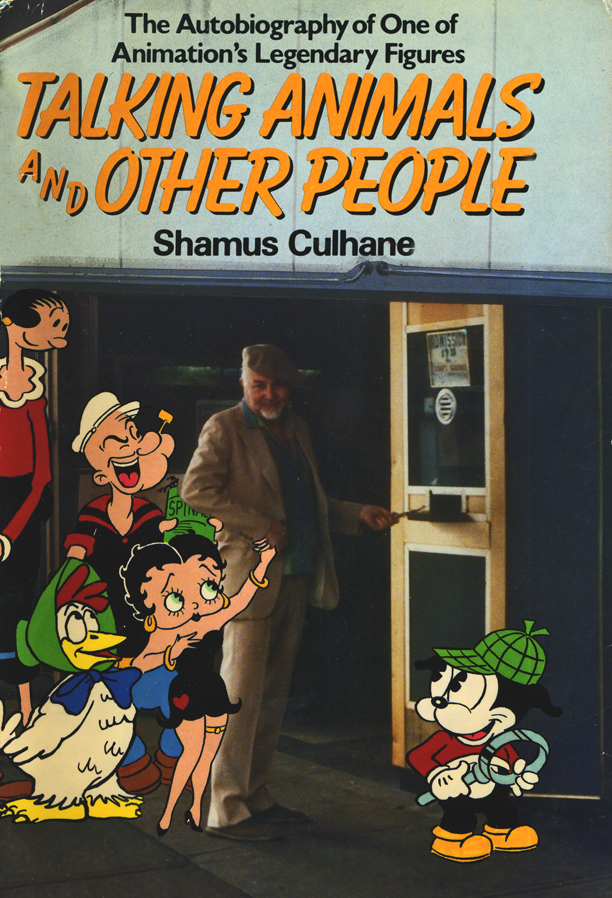
Often, when I am playing with my 5 year
old son and my 18 month old daughter, watching them make the animal
toys talk (following perhaps in the footsteps of their granduncle Shamus Culhane?), I find myself reflecting on what a privilege it is to be
human. After all, there are at least 4 hominoid creatures on earth
right now besides us – the gibbon (Hylobates lar, for example), the
orangutan (Pongo pygmaeous) , the chimpanzees (Pan troglodytes and
Pan paniscus) and the gorilla (Gorilla gorilla). Any one of them
could have ended up in our shoes, standing upright, using their hands
and big brains to make tools, inheriting the earth. It's just that
we got there first. But in play my son will often substitute this
model of a gorilla with this one – and play “Planet of the Apes”
and ask me why they aren't the ones designing cities. In his mind a
world where gorillas were in charge would be a world of tree houses,
like the LEGO one he plays with here.
I can't answer him why gorillas weren't chosen
for the special gifts of reason our creator bestowed on us, but I can
show him the tree house village in Damanhur in northern Italy where
I did a renewable energy workshop last year, and where I will take
him to visit this summer, a tree house village built by a group of
artists and environmentalists who once had a gorilla living with
them.
He also knows his Daddy spent a year at a National Geographic
research site in Borneo studying orangutans and that they are very
easty to get along with if we chose to design our living spaces to
accommodate rather than hurt them.
I can't answer him why the other
“manimals” in his toy collection haven't come true – lion-men
evolving from lions, tiger-men from tigers. He knows that bears already spend
part of their lives bipedal, he knows that polar bears are in danger of
extinction and will have to adapt to human conditions or go extinct,
so when he sees them in a circus he figures that this might be the beginning of domestication and adjustment to co-existence in the anthropocene era. He accepts that crocodile men
probably wouldn't be feasible, despite the hundreds of millions of
years that reptilians ruled the earth before the dinosaurs went
extinct, because he gets that brain size relative to body size has
something, if not everything, to do with creating a civilization.
For the same reason, hermit crab pirates and octopus pirates don't
seem realistic to him, despite the complexity of the brains and eyes
of cephalopods. But cetaceans – dolphins, orcas and whales – both delight and
confuse him. He knows they have a sophisticated language and that even Humpback Whales are tool users, cooperatively constructing bubble nets to trap fish. He feels that they are only limited by their lack of
hands, and after playing “Ecco the Dolphin” on his playstation 2,
in which humans and dolphins cooperate to save the earth, and hearing
how his father once spoke sign language to the dolphin Akimake in a
laboratory in Hawaii when I graduated from Harvard, he is convinced
we CAN work together.
But of course, it
is we humans who are the dominant species among the millions of life
forms on Earth, and as we know from Spiderman, another tale of
hybridity between non-humans and humans that is part of our popular
mythology “with great power comes great responsibility”. In an
age of genetic engineering we must think through our role as stewards
of the genetic heritage of our living planet. But we have to stop
blaming human beings and stop thinking of ourselves as the problem,
as though the world would be better off without us. Of all the
creatures with which we share this animal planet, only we have the
capacity to protect life and civilization from the inevitable
destruction that another meteor or the expansion of the sun will
cause. Only we have the capacity to bring macrocellular life out
beyond our solar system. So we do have a great responsibility. We
just have to think a little differently, and remember, as the Chinese
are fond of saying “every new child born on the planet comes not
only with a mouth to feed but with two hands to feed it... and to
help others”.
I keep these toy
animals around me so that I never forget that helping others includes
helping those without hands, helping those with paws and wings and
flippers and four, six or eight or more feet. If we don't include
all creatures, great and small, in our planning, we break the great
chain of being and tear asunder the web of life that subtends all we
do as human beings. And we must also plan for the invisible
creatures of this biosphere that actually make the world go round
with their constant processes of transduction through cycles of
decay. They alone can help us survive.
Kids get it. Even today they play with
toys that teach them about how fun it can be to work with garbage,
like these “Trash Pack” figures that I bought here in Istanbul,
which celebrate toilets and kitchen garbage as something fascinating
and alive and worth paying attention to... a definite pre-requisite
if we are going to teach our children that we can turn the trash that
our ever growing population in our burgeoning cities into assets
rather than liabilities. Toys like this are paving the way for a
brighter future, they just have to be properly contextualized by
parents and educators and policy makers. Then the leaders of
tomorrow will know, because of the narratives they played out as
kids, what to do with these incredible resources that today we
simply throw away.
Through play we model future realities
and through play we can try them out in safe environments in which,
as the economists put it, the “transaction costs are low”. That
just means that the consequences of any given failure aren't so bad.
A belief in cooperation between humans and non-humans, and betweeen civilization and nature can be fostered through the proper use of tools like toys and video games and cartoons. Through play and fantasy we model future
realities so that we can try them out in safe environments in which,
as the economists put it, the “transaction costs are low”. That
just means that the consequences of any given failure aren't so bad. And as Bucky said, "I only learn what to do when I have failures.. There is no such thing as a failed experiment, only experiments with unexpected outcomes."
In toyland, children and child-like
adults (engineers,scientists, architects, urban planners like myself)
get to make models to play out given scenarios and test them against
others. We get to think out loud through models. We get to role play
and adopt different points of view.
If there are problems with current reality one
solution is to let as many people as possible in on the planning of a
desirable future by letting them play the alternatives so they can
choose what works best.
Again Fuller told us,
"We have reached the point where we are now possessed of sufficient
information for each individual human to dare to exercise the option
to ``make it'' rather than having to depend on the decisions of an
educated elite."
Most kids and lots of adults know this, and
it is no accident that so many of us spend countless hours playing
video games and playing with LEGO, and no mystery that the LEGO Movie
is one of the top grossing films of the year. The LEGO movie has a
message that is similar to Bucky Fuller's and to my own – everything CAN be awesome, the
world can be a super place, if we allow creativity to flourish and
stop looking at things in a rigid way. In the LEGO Movie, Emmet, a
“common builder”, and President Business both learn that we can
all be special and work together to make life better once we allow
ourselves to go sometimes go off plan and embrace the unanticipated
results of synergy and creativity. "It is not for me to change you. The question is, how can I be of service
to you without diminishing your degrees of freedom?" said Fuller, and whether we are talking about the LEGO Universe or the one we live in, we are each "local Universe
problem-solvers in support of the integrity of eternally regenerative
Universe."
As in LEGO, our universe consists of
ever-changing interchangeable parts. All the bricks, all the parts
exist, and can be put together in myriad ways, sometimes creating
great functionality and beauty, sometimes according to predefined
directions that replicate what others discovered and liked, and
sometimes according to our own personal whims and explorations. When we take
what already exists and do a mash up with what we would like to
exist, we find new ways of looking at the world.
This is what I have attempted to do
here, with this playful model, wherein I have taken some pieces from
LEGO, some from a dollhouse at FAO Schwartz, and some that I and
students from our Envisaj Mercy College Environmental Sustainability
and Justice Club created from art supplies and even 3D printing.
Let's first take a look at some of the
toys available to kids today illustrating our dystopian nightmares.
The first, as I've mentioned, is a Call of Duty set with a geodesic
dome. What my students have done, however, is taken the geodesic
domes from the games and make them into classrooms and dorms, just
like we saw this January when I took them on a trip to the Green
Apprenticeship Program at Kibbutz Lotan in southern Israel. There
the students are trained to build low cost dome houses with metal
frames and straw bales that not only can withstand earthquakes and
storms, but have a high insulation value, making them require almost
no air conditioning in the summer and only solar heating in the
winter.
Kids around the world are actually familiar with earth
dwellings and other well insulated structures that integrate into the
landscape and provide shelter and food – they are found in movies
like Star Wars, which was filmed in real earth dwellings that I
stayed in in Tunisia, and in fantasies like the Hobbit. What most
kids don't know is that these types of structures are real, are
comfortable and are practical.
Fantasy is built from bits of reality and the two turn around each other like a Mobius strip. Artists try out scenarios in fantasy that can act as reservoirs of ideas for times when we face crises or changing environmental needs in reality. In another popular set from the Call of Duty game, for example, players learn that they can better survive a zombie apocalypse
with the use of a wind generator. Of course this model wind
generator is a mere prop, but it gets the idea across. And we don't
have to wait for the dead to rise and take over the earth in order to
implement renewable energy.
As it turns out there are lots of toys
on the market that enable young people to build their own functioning
wind generators, and this illustrates a key concept here –
SCALABILITY! Once you have built something in miniature it is fairly
easy to bring it up to scale until you can take care of your own
needs or even those of a community or a city. As I like to say,
start small, then grow bigger. The principles can be almost the same.
And why stop there? Once you understand
the principles of the dynamo through a toy wind generator, it becomes
obvious that you can use a lot of other things to turn the dynamo.
This toy kit shows the “hydroelectric” solution – it is
essentially the same as the wind generator except that it uses water
pressure to turn the dynamo. Kids playing with these toys quickly
realize that they could use bicycles or their hands, and that steam
engines, coal burning and oil burning and nuclear power plants are
all variants on the same theme – simply ways of getting turbines to
spin in order to spin a magnet around a copper coil. In fact many
toys incorporate the magnet and the copper coil as part of the
lesson.
The problem, once again, is a lack of
integration.
In the LEGO Architecture series, for
example, we have the famous Frank Lloyd Wright ecological house
“Falling Water”. But whereas the idea of the real house was to
simply make a house that fit aesthetically into the wilderness
landscape, Wright himself seems to have had no idea that he could
have powered the entire house with the water that he built into the
design. But a kid with these two toys can put them together and,
voila, we have a beautiful and sustainable house!
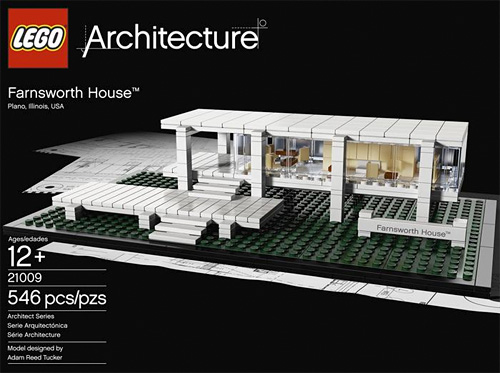
Similarly, in the same architecture
series, we see the Farnsworth House, also a classic of environmental
architecture. What we don't learn from the traditional narrative, is
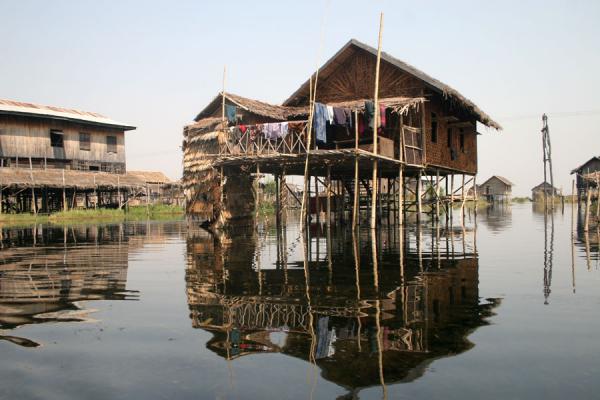
the importance of building houses on elevated platforms. When I was
building a research lodge in Guatemala in the rain forest, and when I
was living in Borneo, we took our cues from the Belizeans who
traditionally built their houses on stilts on in the trees.
The idea
was simple – a house on stilts is safe in a flood and also permits
greater biodiversity and soil fertility. Where most human habitations
are seen as barriers to the non-human world, elevated houses permit
not only water but other animals to pass underneath. Root systems are
not damaged and ecological cycles of decay and regeneration are
maintained. In Borneo we didn't have to worry about snakes or
scorpions in the house, and we frequently had giant monitor lizards
and tortoises hanging out under the house. In a Dyak village I
stayed in, the people lived above the forest floor and their Babi
Hutan, or forest pigs, lived beneath the house, transforming toilet
wastes into food. This kind of integrated ecology can only be
achieved by using vertical space.
The traditional house, shown here, has
all sorts of improvements that need to be made if it is to be
sustainable, many of which are shown in this diagram from the
textbook we use in my class.
Lego has a new Creator House with Solar Panels, so that part is becoming mainstream.
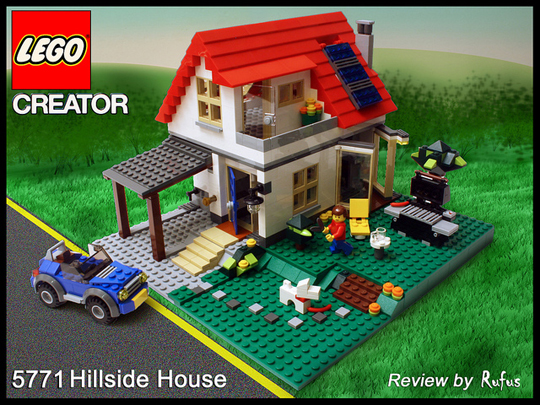
But there are many other ways to play our way to sustainability!
Because sustainability is part of the
curriculum in my class, we can take a LEGO house like this and make little movie
scripts where we say, “hey, did you know you can take a so-called
“normal” house like this and retro-fit it to make it more
efficient. For example, just by adding overhangs on south facing
windows, considerable energy savings can be achieved – in the
summer when the sun is high, the windows are shaded, while in the
winter when the sun is low the house gets heat and light from the
sunshine. The addition of decidious trees on the south side also
helps with this – the leaves of the trees in the summer block the
suns rays when they aren't needed, but they fall in the fall and so
by the winter the sun reaches the house, heating it up. This kind of
up-front planning and design is the essence of the “Permaculture”
or permanent culture design philosophy.
Retrofitting existing houses is also
the philosophy of Bosch. With ever more efficient appliances that
save energy and water, almost any house can be made more
eco-friendly.
Besides producing solar panels and
energy efficient water heaters and refrigerators and washing
machines, Bosch also makes “ground-source heat pumps”, a type of
geothermal energy you can install at home that enables you to both
heat and cool your house with a fraction of the energy a typical
house uses. We have a friend in Germany who put a vertical loop heat
pump in his house with radiant floor heating and now the entire house
can meet its needs with rooftop solar panels that even power the
robotic electric lawn mower. And we ourselves have a highly
efficient inverted gas powered tankless water heater that works perfectly with our vacuum
tube solar hot water system – a system that can even boil water in
winter on a sunny day.
In my house, of course, we focus on the
two rooms of the house that, in my opinion, hold the key to
sustainability. They are the places in our civilization that consume
the most energy and the most water and create the most waste. They
are where the battle for survival of life as we know it can be won –
and they are places within our control, places where everybody can
pitch in and make a difference, because they are sometime we all
have: kitchens and bathrooms.
In our bathrooms and kitchens we use
up electricity, gas and water and produce contaminated water and
garbage bins filled with organic materials that don't just create bad
smells, but attract vermin and can create disease. But as we learned
in India, those wastes, the grey and black water, and the piles of
smelly organic trash are really sources of nutrients and embedded
solar energy and useful microbes and can be harnessed to make
fertile soil and clean fuel.
All one has to do is look beyond the
garbage in the kitchen and bathroom to see the garbage in our minds.
In my house the shower and bathtub and washing machine are sources of
warm, saponified fatty acid and glycerol rich grey water to keep my
biodigester at a happy temperature throughout the winter. And my
kitchen sink is the key to my success in making biogas – under the
sink is the humble “garbage disposal” or “food grinder”. This
is a piece of technology that I describe as being, in my opinion, the
“most important environmental technology of the 21st century”.
By the simple act of grinding up our food wastes at their source, we
keep tons of garbage out of landfills, dramatically reduce the need
for garbage trucks, with all the noise and pollution and street wear
and tear they make, and eliminate pests. The food wastes can go down
the drain and be carried by gravity and regular water pumping to the
waste water treatment plant where they can be turned directly into
biogas, as we do in parts of the US, or they can be ground and put
directly into the compost, as my parents in law in Germany do, in
which case you get perfect compost soil not in 3 to 6 months but in 3
to 6 days. This makes devices like the Insinkerator brand food
grinder my family uses the perfect 'compost companion'. Or you can
take it a step further, as my wife and I do, and grind into your own
home biogas system. In this case you get a liquid compost tea that
permits great aquaponics, hydroponics and aeroponics, and you get
between a half an hour to two hours of cooking gas every day, for as
long as you live.
Ultimately, and finally our goal is to
create Centers for Sustainable Practice at our college and at other
institutions around the world, places where best practices can be
tried out and demonstrated and the entire puzzle can be put together.
We have envisioned such a place for Mercy college, shown in this
model here.
In our model, everything starts with
kitchen wastes as the first line of defense because they are so easy
to come by and treat. We've already used these small 1 cubic meter
international bulk containers around the world, with Indian floating
drum digesters, and linked them to these vertical aeroponic tower
gardens in this greenhouse. This is the low hanging fruit. The next
piece of the puzzle, which we have already built in an elementary
school in Brazil and are now building for a restaurant in the
favelas, is the ten cubic meter Chinese Puxin biodigester system, a
simple system made from cement poured over reusable steel molds. We
use one for the cafeteria waste and two for the toilet wastes. The
liquid fertilizer from the food waste digester is used for gardening,
while that from the toilets goes into a constructed wetland with
banana trees and natural vegetation to clean it up and create beauty
for the landscape. To keep the systems warm we use two types of
solar hot water panels – flat plate and vacuum tube, the former
self built and the later purchased. We have solar electric panels
that have charged my electric bikes and we've experimented with
building our own electric cars which turns out to be quite easy –
the principles can all be learned building and playing with toys like
this supercapacitor car. We have a real GEK Gasifier at Mercy College
that transforms our yard wastes, pine cones, acorns, wood chips etc.
into synthetic gas for running a generator, and finally we have a
real Blest Plastic to Oil machine that transforms plastic bags and
cups and bottle caps and wrappers and packaging back into oil that
can be used in a generator. With these and other technologies we are
demonstrating that there need be no waste at all.
We are demonstrating many of these
options already in real life, step by step, as locations and funding
become available. In our fantasy world however, in the world of toys
and imagination, we can put it all together in endless combinations
and figure out the best placements and scenarios. The marvelous
thing is that as my students and I create our “sustainability
miniatures” and get ready for the “Green Dollhouse”
competitions, we are actually learning the real science and
engineering behind the eutopian dream.
I'll close with a final quote from
Buckminster Fuller and then a song I wrote about the optimism I share
with him,
The quote is
“We humans are
manifestly here for problem-solving and, if we are any good at
problem-solving, we don't come to utopia, we come to more difficult
problems to solve.You can't better the world by simply talking to it.
Philosophy to be effective must be mechanically applied.You never
change things by fighting the existing reality. To change something,
build a new model that makes the existing model obsolete".
(from the archives of T.H. Culhane, Ph.D. January 8 2011 reprinted after working with WMST Public Charter School
9th grader and Porpoise Robotics Blender Protege Benjamin Standfield to
create the Sea Perch and Sea Sparrow/MantaRay Robosub and Roboboats in a
3D gaming environment. This kid really knows
how to "speak 3D!")
Do you speak 3D?
Can you talk in "animated object"? Can you communicate in "graphic novel"? Do you speak in pictures?
Moving pictuers?
Pictures that move people?
Today's children are growing up in a world where those may soon be legitimate questions.
We often say that "a picture is worth a thousand words" but we still
assume that only a small percentage of humanity will ever really develop
the skills to be considered a true "artist". Speaking in pictures,
moving or static, 2d or 3d, is still considered
the domain of "experts".
But it needn't always be.
On January 8, 2011 in the German newspaper, "Stellen" (nrw.stellenanzeigen.de) the front page article was
"Experten fur 3D-Welten: Qualifikation -- Neue Technologie wird in vielen Branchen gebraucht."
The English translation: "Experts for 3D Worlds: (Get) qualified -- these new technologies will be needed in many fields".
The accompanying picture shows a worker wearing a special three
dimensional visualization technology that allows him to manipulate
virtual objects in thin air. The caption reads, "Das Arbeiten mit
virtuellen und 3D Welten ist gefragt -- mit Qualifikationen
kann man sich fit dafur machen." (My loose translation: "Working with
virtual and 3D worlds is in demand -- with the right qualifications one
can make oneself fit for the new jobs").
The article goes on to inform the readers in this historical working
class area of Germany that many of the new jobs -- in the auto industry,
in medicine, in architecture and planning, to say nothing of film and
games -- demand facility with 3D visualization.
But they point out that getting qualified can take more than 6 months of
intense study, and that the education system is not yet equipped to
equip students (much less retrain the rest of us) for this sudden
demand. In addition, training courses can cost as
much as 400 Euros a day and the software is very expensive. However,
they conclude, for those who are truly motivated, there are tutorials
on-line and there is open source software available.
An interesting state of affairs. There is a tacit assumption that the
ability to translate an idea into three dimensions requires special
training and that certain barriers to entry for this heretefore domain
of experts will (should?) always exist. But is
this so?
Whenever I think of 3D worlds my imagination takes me to a place I've
only ever seen in a two dimensional landscape -- the Sea of Monsters in
the Peter Max designed Beatles cartoon "Yellow Submarine". There,
amidst a host of marvelous beings, a quadrupedal
winged clown walks around "speaking" three dimensional objects into
existence. When we first see him he opens his mouth and we see him
produce an ice cream cone. The vacuum monster ambles over and sucks it
up. With consternation he then speaks a gas station,
an Egyptian pyramid and a colorful tie into existence. Then the
marvelous 3D talking clown gets sucked into oblivion ("or even further"
as John Lennon quips...).
But while this incredible talent for reifying thought gets annihilated
and lost to the sea monster gene pool in Yellow Submarine, that great
two dimensional representation of the way the Beatles made people feel
in the late 1960s , it may in fact be evolving
right here in our own three dimensional world here on Earth in the early
two-thousand-teens.
I envision a day not long from now when technology and our facility with
it allows us to answer questions by conjuring objects and animated
processes into audio-visual existence in real time. We would describe a
building or a motor or even an emotion by instantly
placing the object or representational graphic in front of the people
with whom we are conversing.
On the road to that version of reality we still have a lot of work to
do, but in my mind it starts with teaching our children (and ourselves)
that it is normal to "speak 3D". Rather than continuing to operate in
linear 2d spaces, painstakingly training ourselves
and our youth to put letters together into words and words into
sentences and then paragraphs and then pages, all from left-to-right (if
you are in the Western tradition) with the proper punctuation and all
just for the purpose of describing a room, setting
up a scene or describing a vector of motion and emotion, we can start
now training them to operate in what my post-modern urban planning
professor Ed Soja calls "third-space" -- a non linear environment where
the medium truly is McCluhan's massage and our message.
The problem with descriptions of third space (also the title of one of
Ed's highly stimulating books) is that they normally are only ever done
in second space. Ed writes about this brave new world using normal
textual conventions. In lectures he speaks about
it from "left to right", from "beginning to end", following the normal
prepared-speech-for-the-lecture-hall format. "Speech" is still two
dimensional. And we need people who can think, and act, in 3D.
So what do we do?
One of my first stabs at training myself to think and speak 3D was to
read and study Scott McCloud's mind-opening "Understanding Comics -- The
Invisible Art" (and moving on to his equally riveting sequels
"Reinventing Comics: How Imagination and Technology Are Revolutionizing an Art Form" and "Making Comics").
Now I am toying with writing reports using the software program "Comic
Life" rather than Microsoft Word, and trying to think not only about how
to use pictures and graphs to illustrate points better, but how to use
layout and space, size and color, and other
design principles like gradation, repitition, unity, contrast, and
harmony (what my father, animation historian John Culhane, used to call
"GRUCH" so I would remember them!).
My next steps are doing all the tutorials I can find and find time for
to better my skills in the Gimp, Sketchup, Blender, Unity 3D, Celtx,
CamStudio, Suicidator City Generator, MakeHuman, Scribus, Elder Scrolls
Construction Set, Sims3 and other animation,
game engine, 3d visualization audio and video production software (like
many in the NGO/Philanthropy world I can't afford Maya, 3D Studio Max or
Cinema 4D so I use what I can find).
When I answer questions about our work on solar hot water systems and
biogas systems in the real world, I try more and more to answer them
using these software resources and the techniques of audio-visual
production and graphic representation I'm learning
from book's like McClouds.
In effect I am trying to learn to speak 3D. And to carry on a
conversation or give an explanation using hypertext, illustrative
hyperlinks and some good 2D and moving representations of the three
dimensional (really n-dimensional) reality we inhabit.
In my line of work it is actually very important to develop these skills
now, not in the future, because so many of the people we are trying to
reach (in our sustainable development efforts) are separated from us by
language barriers and cultural barriers and
class barriers and lots and lots of real three dimensional space.
The use of multi-media, of music and video and gaming and -- let's face
it -- FUN -- are paramount in importance if we want to share real
solutions for empowering people and preserving or creating healthy
environments. This is a point His Excellency former
Nigerian President Olusegun Obasanjo made both publically, when we
presented together at the melody-dialouge for civilization conference in
Geneva, and privately when I stayed at his home last summer building
biogas digestors with his family and community.
We are both on the board of the UNESCO sponsored Melody Dialouge
organization because we and many others (like Melody Dialouge founder
Mehri Madarshahi and 5D founder Tali Krakowsky and I think all of us who
participated in the FMX conference) believe that
we must act now to use all available channels of communication for the
necessary dialogue about real things that humanity must come together on
to preserve (and better) civilization.
And so this was the intent of creating this forum on Blending Realities
here on facebook -- to create multiplier effects and accelerators, share
insights and skills so that we can be part of that evolving generation
of human beings who not only thinks, but
who eventually, inevitably will speak, in surround sound, melodic and
musically intoned, audio-visually enhanced, animated 3D.
Or should we say 5D?
Can you speak 5D?
Dr. Thomas H. Culhane
Visiting Facuty Researcher
School of Health and Natural Sciences and Social and Behavioral Sciences
The following is the presentation T.H. Culhane of Solar CITIES Solutions gave at the Insinkerator International Marketing Strategy Meeting in London. England, Monday October 21st, 2013.
Hi, I’m T.H. Culhane, and behind me in the picture on the left are live hippos in the Okavanga Delta in Botswana, while behind my wife and son in the picture on the right is an elephant. The reason we both have food waste grinders in our arms is because we humans don’t have the mighty teeth and jaws that these behemoths have, and without such teeth and jaws it is very difficult to chew up organic matter to the point where bacteria can quickly and efficiently turn it into energy and fertilizer. Because of this, organic garbage tends to build up faster than nature can properly recycle it, and this creates environmental and social problems that need to be solved.
But once equipped with machines that act as the same powerful teeth and jaws, we human beings, like the giant herbivores of the African savannah from which we all developed, can become powerful transformers of the abundant solar energy that plants absorb each day, making it readily available as fuel and fertilizer to make our lives better. And that’s why we and our friends take food waste grinders with us wherever we go.
From the the urban shantytowns, jungles and savannahs of the Middle East and Africa to the last villages at the base of Mt. Everest in Nepal, I have been using food waste grinders as the essential tool in my arsenal to fight poverty, disease, deforestation, malnutrition, and pollution while guaranteeing energy security. Because of the importance of this technology I treat food grinders in a “don’t leave home without ‘em” way. This is no exaggeration. --
Because food grinders are not available in many countries, because they are usually unknown as part of an environmental solution set, and are since they are often prohibitively expensive in developing countries because of high poverty levels, constrained markets and extraordinarily high import duties and other trade restrictions -- factors that sometimes make an equivalent unit cost up to 5 times the cost we can buy it for in the US - I am frequently seen on airplanes and buses carrying a food waste grinder like these Insinkerators with me wherever I go.
Even my wife, when she brought our baby to visit me in the slums of Cairo where I was working on solving food waste issues, brought a food waste grinder in her backpack. She carried from the US to Germany and on to Egypt so that our Solar CITIES colleagues Mostafa Hussein, a young carpenter and Hussein Farag a retired metal worker and accountant whom we trained as renewable energy experts, could install the first food grinder in the thousand year old Islamic city to serve the solar heated rooftop biogas system we had built on Hussein’s roof. While doing my Ph.D. studies on hot water and cooking fuel, when my wife and I were living in this vermin and fly infested slum a place where our friend’s baby was actually bitten and killed in her crib by rats that couldn’t get into the sealed garbage can, we learned that the best way to deal with such plagues was to grind organic wastes and put them in a tank on the roof to be transformed into safe clean fuel and fertilizer.
In fact for the past 4 years I’ve presented the importance of food grinding on stages around the world, like the stages in these pictures from National Geographic in Washington DC, in Spain, in Egypt and at environmental conferences from Aspen to Istanbul, declaring that the most important environmental technology for solving our environmental challenges in the 21st century is actually the humble “garbage disposal”, which I have been calling “compost companion and biogas feedstock preparation device”.
At home in Germany, at a National park in Botswana, at a healing center in the Swiss Alps and aSolar Village in Portugal, and in Brazil we showed people that after grinding food it no longer takes 3 to 6 months to create a humus rich compost, but merely 3 to 6 days. We also demonstrate that the usual prohibitions against using meat and bones in urban composters or citrus and acidic fruit for vermiculture worm composting no longer apply. All organic wastes, once ground up, can rapidly be turned into value added products for the garden or landscaping. Our first line of defense therefore is to teach people that the so-called "garbage disposal" really is the best compost companion and that they can immediately start grinding and putting all food wastes into the compost bin or, if they don’t have one, they can even pour the ground up scraps directly into the garden and simply cover with mulch. But once this local use of ground up food wastes has been established it becomes a simple matter to show people that much more can be done with the high value of the ground up food scraps. We teach people how to construct an anaerobic digester so that from that same food waste one can win not just fertilizer but clean, safe and effective renewable energy through biogas.
I have long believed that biogas digesters were the "elephant in the room" that few people seem to see; an ancient, natural simple solution to literally all of our organic waste problems, from toilet wastes to food wastes, available instantly everywhere, turning liabilities into assets, eliminating deadly diseases and deforestation and plagues of rats and flies and other vermin, and indoor air pollution and environmental pollution and providing inexhaustable clean renewable energy and returning vital nutrients to the soil, actually creating soil and making deserts bloom and feeding humanity. Yet despite these tremendous low cost high impact advantages, this solution has been “hidden in plain sight” for literally thousands of years? What is it, I asked myself, that makes this elephant invisible...?
A biodigester, like the Puxin family sized digester shown here at the Ministry of Science and Technology in Baghdad, Iraq, that I've altered for illustration, is simply an artificial stomach -- a chamber into which put ground up food and a starter culture of the archaea and bacteria that are found in all animal manures and even lake mud. You use an insinkerator as the sacred elephant or sacred plastic cow’s mouth, put a pipe at the back for the fertilizer to come out, and another out the top to let out the gases that naturally occur as food is fermented -- just like what happens in you when you eat too many beans, and shazam, you have a biogas system.
When I visited an urban slum in Pune India in 2009 and learned how easy it was to build a home-scale biodigester that could turn food wastes into methane and liquid compost it was a revelation to me. I had visited large scale biodigesters in the early 2000s but had never really understood the sheer simplicity of the design. One needs a stomach with a mouth, a fertilizer outlet and a gas outlet, I realized that, but in India in 2009 they showed that a small family could make their own from two simple water tanks, one upside down inside the other. A feeding pipe served as the throat and an overflow pipe for the fertilizer. The gas collected in the upside down tank floating on the water that filled the tank, and this rose as the gas was produced, taken out of the top, and sank as the gas was used. It turned out to be something anybody could do at any scale and even the little one my wife and I made here produced about two hours of cooking gas every day from the previous day’s leftovers and scraps. That same amount of gas could also be used to run a 2 kW electric generator for about 45 minutes, enough to charge batteries to run the lights all evening.
This was a revelation to me because while studying for my UCLA Ph.D. in Urban Planning and international development I had spent years living and working in the slums of Cairo teaching people how to build their own solar hot water systems from local materials thinking that this was the most efficient way to use Egypt’s abundant sunshine. What I didn’t know until my trip to India was that fermenting food wastes is really the easiest and most efficient way to obtain and use solar energy. Worldwide we waste between 40 and 60% of the stored sunshine that photosynthesis puts into our food . Capturing that energy for use as heat or electricity is not only easier and less expensive to do than building solar thermal or photovoltaic panels, but takes care of solid waste and health problems at the same time. So it is a clear win win.
Once I learned this and began to apply my energies to teaching others how to build small scale biodigesters in urban as well as rural areas an incredible world of possibilities began to open up. In India we had seen how the people would soften their food waste in buckets in the sun and then mash it up by hand but we realized that the labor involved and the need for larger more expensive tubes to keep the system from clogging would deter most people from adopting home scale food waste digesters en masse. When we burned up several blender’s in Egypt just as the systems were getting popular, I started making trips to the US and bringing Insinkerators in my luggage. Ultimately, through the vision of US Embassy Director of Public Affairs Frank Finver, we began working with Al Najah University and the Palestinian Wildlife Society in Palestine and Eco-Gas in Israel and started promoting the idea of integrating food waste grinders into the digester design.
There are now many small scale biogas business starting up around the world. Our friends at Eco-gas in Israel, who are now working in partnership with the Palestinian Wildlife Society, have patented a “kitchen island biodigester” for indoor or outdoor use that has a built in food grinder, faucet, cutting board, stove and even an hydroponic garden that turns the fertilizer into food for the kitchen, making a complete cycle. While there they let me take biogas heated showers; the energy came from the previous day’s ground up food scraps. The secret really is getting the surface area to volume ratio between microbes and food particles maximized and we predict that someday soon biodigesters will become common home appliances, winning useful quantities of supplemental energy and nutritious food at the head of the waste stream before sending any surplus to the waste treatment plant.
In the meantime Solar CITIES Solutions continues our work training people around the world in the creation of food-waste-based biodigesters at the home and community scales. Through Insinkerator’s generosity we have been able to introduce food waste grinders to policy makers as well as local families and NGOs all over the planet, from village chiefs from the Maasai tribe shown above to the former president of Nigeria, Oluwasegun Obasanjo shown below. Working with Ohio State University/Berkley Urban Planning professor Charisma Acey (photo right) and her students the work has expanded to Ghana. In places, such as the Great Plains Conservation field camp in Africa shown above, we installed food grinders along with macerating toilet pumps to carry all organic wastes, including fecal material, into local community built biodigesters that turn all of the wastes into clean burning methane gas and nutrient rich liquid fertilizer, dramatically reducing the potential for water borne diseases like cholera, typhoid and dysentery.
Because of the dramatic potential for small scale biogas to immediately address life threatening challenges in waste management, sanitation and energy security, the US Embassy and the Iraqi Ministry of Science and Technology brought us to Baghdad and Erbil in Iraq last spring to work with engineers like Dhia Baiee and Taha Majeed from MOST, shown here, and engineers and humanitarian officers like Karin Mayer and Deputy Special Representative of the United Nations Secretary-General for Iraq, Ms. Jacqueline Badcock from UNAMI, the United Nations Assistance Mission in Iraq, to introduce rapid deployment food-waste fed biogas systems throughout the country based on the ARTI India and Puxin China models. With the expertise of our Iraqi colleagues, who had already been working with and proving the value of both wet-waste biogas and dry biomass gasification, confidence in the potential of the systems led to the insertion of this highly effective "low hanging fruit" solution into the worldwide "Greening the Blue" campaign of the United Nations, starting with builds we did at the UN compound in Baghdad.
This summer Insinkerator corporation sponsored my trip to
the Puxin biogas company in Shenzhen China, whose products we had introduced to the Philippines and Iraq, and based on our experiences and needs in the field the inventor and
engineers developed a new improved turnkey mold based biogas system for us to use
in our Brazil favela sanitation improvement initiative and elsewhere. This system
enables us to build 4, 6 or 10 cubic meter digester tanks with the same
metal plates, used over and over again, for just the cost of cement and
pipes. With this system we can rapidly replicate effective digesters
throughout the poorest sections of Rio in time for the World Cup and
Olympics.
In Rio, sponsored by Insinkerator, we are working with Architecture for
Humanity, Catalytic Communities, Viva Rio and 4 favela communities to
build and train others to build food and toilet waste Puxin systems that
will turn the nightmare of garbage and raw sewage from a problem into a
solution. We start this fall with an elementary school in Niteroi
which will receive all the cooking fuel and some electricity for its 80
students from the cafeteria and bathrooms. Then we move on in our
trainers of trainers model to a montane forest community like the one
seen in the movie “Rio” , a coastal shantytown, and a congested urban
slum that was once the site of drugs and crime, like the one featured
in the movie “The Hulk”. Here we will prove the model of small scale
urban biogas for the world, just in time for the world cup where the
world will be watching. On Twitter we tweeted, "Something big and green
is coming to the favelas of Rio to help everybody win as we prepare for
the Olympics... and no, it is not the Hulk!"
To make this a reality of course, we need food waste grinders to be
the teeth and jaws of our new Elephant-sized biodigesters. And in true
Emerson solutions fashion, we were blessed to have Julio Porta (gerente de desenvolvimento de negócios da InSinkErator no Brasil)
volunteer his time and fly all the way down from Emerson in Sao Paulo
to Rio and spend all day with us, not just hand delivering Brazilian
Insinkerators as gifts for our partners, which would have been gift
enough, but engaging in a thorough training presentation in Portuguese
for all stakeholders AND actually working with us through the night to
build a functioning mini-biodigester for the day-care center whose
owners donated the land for the elementary school where we will build
the big biogas tanks. This is the kind of commitment to excellence,
quality and social welfare that makes the Emerson/Insinkerator team
stand out in the world.
Finally, in that same spirit, Insinkerator engineers led by Dane
Hofmeister and Don Gapko worked over time for our relief effort and
invented this extraordinary bicycle powered insinkerator for our work in
parts of Brazil and Africa and the Middle East and other regions where
electric power is in short supply. This is the most ecologically
sustainable, green food grinding technology in the world. We are now
experimenting with this great new appropriate technology -- a true case
of “Design for the Other 90%” -- trying out the prototypes with our
digesters at Mercy College in New York. We will be field testing them
in Brazil this spring.
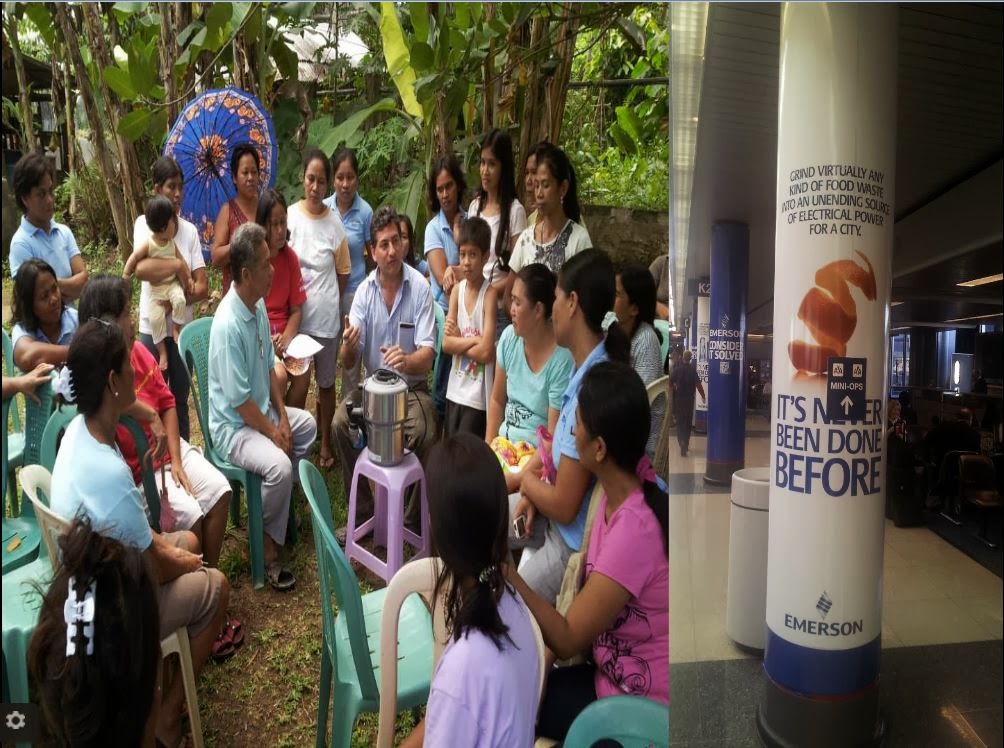
So when I go around the world telling people that we really can “grind virtually any kind of food waste into an unending supply of electrical power for a city, or cooking fuel for a village” and they say “but it’s never been done before” I can say with complete confidence that, thanks to this wonderful partnership with Emerson/Insinkerator, “Consider it Solved!”
Hieroglyph shows Echnaton, the Egyptian Pharoah, working with solar energy
How to build your own Solar CITIES solar heater
Click on the image to see detailed plans for building your own Solar CITIES system like we build them in Cairo with the Zabaleen
How to build your own Solar CITIES brand HDPE Biogas Digestor
We've just completed 6 of our signature Solar CITIES designed cold-climate Biogas digestors with scientist Adam Low and the students of Cordova High School in Alaska. You can build one too! Click for a list of the materials you need.
How to build your own ARTI style "Zaballa Al Matbakh" (Kitchen Garbage) Biogas Digester
Anybody can build a kitchen waste biogas generator using simple everyday materials in one afternoon. Click here to learn how.(Picture: Culhane's first self-built ARTI digester in Egypt, shown with ex-wife Sybille and baby son Kilian Aurelius Culhane
Actually, it turns out that this assumption isn't true! Go back and reread David Ricardo and the principle of COMPARATIVE ADVANTAGE, then look at this map in the 1/08 edition of "Welt der Wunder" Magazine. While economist Paul Craig Roberts notes that comparative advantage principles do not hold where the factors of production are internationally mobile (such as solar collectors), the solar radiation potential of different countries varies considerably. The yellow regions on this map show very clearly who will "own the sun" in Ricardian terms. (Note that Portugal could also produce wool and England wine, but Ricardo's logic turned England into an economic powerhouse.)
This cartoon, on a bulletin board at the entrance of the Aga Khan Trust for Culture as you leave the posh Al Azhar park and enter the slum community of Darb El Ahmar, reads "Just look at those poor fools, THEIR side of the boat is sinking!"
Hybrid rooftop animal shelter and solar hot water system
Solar CITIES coordinators Mahmoud Dardir and Hana Fathy building a temperature regulating goat shelter and solar hot water system on the roof on Zabaleen informal school teacher Adham Fawzi in Cairo
Contact Us!
A welcome message from T.H. Culhane:
For questions, comments or suggestions regarding in-the-field activities in Cairo (or if you are planning a visit):
So please, join us in this win-win situation by letting us be your link to Amazon.com whenever you buy books, DVDs, home and garden products or anything else! And don't forget to tell your friends!
Thanks!
The Solar CITIES team
Our vision in brief: The Solar CITIES five year plan
2008: Year One, first half (completed):$25,000US AID Small Infrastructure Grant: Domestic Solar Hot Water Capacity Building, 15 of 30 systems completed, serving 17 households (the professional system in Darb El Ahmar feeds 3 households) and 1 monastery cafeteria.
2008: Year One, second half: $25,000 US AID Small Infrastructure Grant:Finish additional 15 systems, Integrating Roof Top Gardening with Rooftop Solar Water Provision (Hot and Cold for bathing and drip irrigation and storage) in close cooperation with the AKTC Environment NGO and the Darb El Ahmar Development Company in seven beneficiary households. 2009:Year Two, first half:Rooftop Urban Biogas production to be integrated into Solar and Gardening Program by following in the footsteps of the successful ARTI model from India (see http://www.arti-india.org/content/view/46/43/ for details and diagrams).
The External Relations Manager in charge of the CSR program of Procter & Gamble has committed to helping us find funding for the initial pilot project. Pig waste and organic garbage are going to be used as raw material for this project, which serves homes that cannot benefit from solar energy as the sun does not reach them. 2009: Year Two, second half:Integrated Solar Hot Water, Rooftop Gardening and Biogas (from garbage) merges with household source separation and rooftop composting & fertilizer production. This project will demonstrate how households can use sunlight and garbage to provide heat, cooking fuel, as well as food. 2009: Year Two - Follow up from Year 1- The Spirit of Youth Association intends to secure a grant to revive the ancient public baths of Darb El Ahmar, providing a large solar hot water system much as the zabaleen used to provide the heating fuel from waste paper in the past. DONORS NEEDED AND WELCOME!
2010: Year Three first half,Capacity building for domestic electricity production; workshops in creating small-scale wind generator construction and solar electric installation (following the engineers without borders and Solar Energy International workshop model, see http://www.solarenergy.org/workshops/wind.html).
2010: Year Three Second half, Innovations and applications in domestic WATER RECYCLING. FUNDING WILL BE SOLICITED TO PURCHASE "SOLAR CUBES" FROM RSD TECHNOLOGIES AS A MODEL, AND GRANT APPLICATIONS WILL BE WRITTEN TO FUND MATERIALS FOR LOCAL CREATION OF FUNCTIONALLY SIMILAR SYSTEMS FROM INDIGENOUS AND RECYCLED MATERIALS.
2011: Year Four,Scaling up to light industrial: The Spirit of Youth Association having successfully demonstrated their capacity for self-provisioning at the household level, starts training and supplying small business and factory owners in Sareib with the ability to generate their own heat and power to keep production costs down and make small businesses competitive in the area even as inflation rises. 2012: Year Five, The team of the Association, expanded and experienced, tours the region offering workshops and training throughout the Middle East and North Africa. Members of the NGO will be recognized as the "environmental technology experts of Egypt."
Thomas Taha Rassam Culhane (a.k.a "T.H.") was born near the Museum of Science and Industry on the south side of Chicago to an Iraqi-Lebanese mother and an Irish-American father and developed his love of engineering by almost religiously attending the museum's forward-thinking science exhibits.
When his Newsweek journalist father, John Culhane, moved the family to New York, Culhane was chosen by Ringling Bros. Barnum and Bailey Circus president Irvin Feld to be the youngest graduate of their Clown College at the age of 13 and he joined the "Greatest Show on Earth" the following summer. In the circus, during the Cold War, Culhane toured with Russian and Chinese acrobats, with Elephants, Chimpanzees and other wonderful animals and people from every country and culture, who all got along.
These experiences instilled in Culhane a belief that all God's creatures, Great and Small, could cooperate peacefully and harmoniously toward the creation of joyful productions, and that science, art and industry could be the drivers of positive social transformation.
After graduating with honors from Harvard in Biological Anthropology, this conviction was confirmed during a year spent on a Rockefeller Fellowship in the primary rainforests of Borneo where Culhane worked with Harvard Professor Mark Leighton studying orangutans and gibbons and then lived with Missionaries and Melayu and Dyak tribespeople. In the jungle Culhane found that most organisms in environments with large biodiversity and cultural diversity quotients adopted "evolutionarily stable strategies" that led to long term sustainability.
This experience led Culhane into "the urban jungles" of inner-city education in the ghettoes of Los Angeles where for nearly a decade he applied his insights to working with multi-cultural "at-risk" youth and gang kids and discovered that a focus on common urban environmental challenges and their technological solutions created a context for cooperation, improving young people's education and their peace making skills. (He and his ex-wife, Dr. Sybille Fruetel Culhane, who taught negotiation and conflict resolution at the Sadat Academy for Management Sciences, later applied those insights to connecting Egyptian youth with Israeli, Jordanian and Palestinian youth at the Arava Institute for Environmental Studies.)
In the late 1990s Culhane immersed himself in Urban Planning at UCLA, conducting field work in rural rain forest villages in Guatemala and earning a Masters in Regional and International Development. He then entered a Ph.D. program in Environmental Analysis and Policy to explore how recent immigrants from rural areas to inner-city slums could transform their adaptive knowledge-base to facilitate survival in degraded urban environments while Culhane performed urban ecology experiments of his own in waste recycling, water and energy management and self-provisioning, living among the poor at the Los Angeles Eco-Village.
When his mother, Hind Rassam Culhane, a professor of psychology, returned to Iraq in 2003 to head their educational reform campaign, Culhane, eager to find a good dissertation topic nearby, moved to Egypt to work on environmental science education and training among the urban poor. He chose to work with Professor Randall Crane on hot water demand among the poor as a topic for his Ph.D. and with the Zabaleen community of garbage recyclers on local construction of solar energy systems for his "Ph.-do". He believes this is the easiest and most logical first step toward creating sustainable grass-roots industrial ecology systems, something that he feels could unite people of all faiths toward a common goal.
He believes, in true circus fashion, that though things may get tough, "the show must go on."
Solar Cities Surveys
Solar Power Isn't Feasible?? Amazingly, many government and business leaders and ordinary people in Cairo actually believe this! Some policy makers have gone so far as to try and block funding for training local communities to build solar hot water systems saying that "the poor don't need hot water"!
The following surveys are about household demand for solar energy services, so that we can see how Cairo residents compare with other people around the world.
We start with Hot Water Demand. We use this data to compare with an official Ph.D. dissertation survey being conducted in the poor communities of Cairo, Egypt, where 3/4 of the population report having no hot water heaters and where dozens of lives are lost and hundreds of people suffer third degree burns every year trying to boil water on gas stoves for bathing. It is hoped that the data will help us to change policy in Egypt so that the poor can begin to afford and use solar energy infrastructure to create a healthier , happier life. Your participation is greatly appreciated!
T.H. Culhane (shown above in Athens, Greece, by the poster to the movie "Stealth" which he contributed vocal music to while working with his friend,composer Brian Transeau) lived in Egypt, Germany and the United States where he founded "Solar Cities".
Referring to Herman Daly's comments on the sustainability of Spaceman Economies and Cowboy Economies, we are committed to Boulding and Fuller's notions of helping to maintain "spaceship earth" as a viable home. Thus
T.H. completed his Ph.D. at UCLA in Urban Planning looking at issues surrounding microeconomic analysis of demand for hot water technologies. Ultimately it is hoped that this will help address implementation challenges for Solar Energy Policy while helping create an Environmental Economics Institute at AUC and a Sustainability Center at Mercy College in New York, in partnership with mentor professors (among them Randall Crane and Lois Takahashi (UCLA Institute of the Environment and UCLA Urban Planning) Jeff Miller (AUC Biology),Salah Arafa (AUC Physics) Tarek Selim (AUC Economics) Salah El Haggar (AUC Engineering) Nick Hopkins (AUC Anthropology) and Moshira Hassan (AUC Marine Ecology)